Banner
Pilot Study: Fibromyalgia Fatigue Improved By TENS Therapy

Fibromyalgia is the term for a poorly-understood condition where people experience pain and fatigue...

High Meat Consumption Linked To Lower Dementia Risk

Older people who eat large amounts of meat have a lower risk of dementia and cognitive decline...

Long Before The Inca Colonized Peru, Natives Had A Thriving Trade Network

A new DNA analysis reveals that long before the Incan Empire took over Peru, animals were...

Mesolithic People Had Meals With More Tradition Than You Thought

The common imagery of prehistoric people is either rooting through dirt for grubs and picking berries...

User picture.
News StaffRSS Feed of this column.

News Releases From All Over The World, Right To You... Read More »

Blogroll

For the first time, scientists have succeeded in developing human embryonic stem cells (hESCs) from a single cell, or blastomere, of a 4-cell stage embryo, the 24th annual conference of the European Society of Human Reproduction and Embryology heard today.

Dr. Hilde Van de Velde, from the Vrije Universiteit Brussel (VUB), Brussels, Belgium, said that their research meant that it might be possible in the future to produce hESC lines at an earlier stage without destroying the embryo.

If we told you that men in the morning had a better response to vaccinations for hepatitis A and influenza, you might think there was some biology bias at work, but that's what a study led by Anna Catriona Phillips of the University of Birmingham found. They assessed the response to a hepatitis A vaccine in young healthy adults and also examined responses to the annual influenza vaccination in older community-based adults.

In the first study, participants consisted of 75 University of Birmingham students who were vaccinated with the hepatitis A vaccine during a morning session (10 am to 12 pm) or early evening session (4 pm to 6 pm). In the second study, 90 older adults attended their medical practice for the annual influenza vaccination and received the vaccination in the morning between 8 am and 11 am or in the afternoon between 1 pm and 4 pm.

Most people who find a seashell during their summer holiday on the coast will probably not be aware that they have found a unique record of the climate. For paleontologists, those hard calcium shells provide a profound insight into the history of our earth and especially into the climate of the past.

Shells are a unique climate archive. The shells have clearly delineated growth patterns that show changing nutritional conditions, temperature fluctuations and environmental pollution. Shells are found all over the world, in the polar regions and at the equator, on land and in the ocean, in deeper waters and on ocean shelves, in tidal zones and in rivers, streams and lakes. "Shells are simply everywhere and, depending on their location, they provide us with important information about climatic developments.

They serve as records of volcanic eruptions in Iceland or the occurrence of a hurricane in Florida; they can, for example, even tell us whether the early Indian tribes on the western coast of Canada collected mollusks during full moon, crescent moon or new moon periods," states Schöne. Even though many types of shell are durable and survive for thousands of years, the mollusks themselves are extremely sensitive: In the presence of environmental pollution, they respond by lowering their rate of shell growth, which is why they can also be used for longer-term monitoring of water quality.

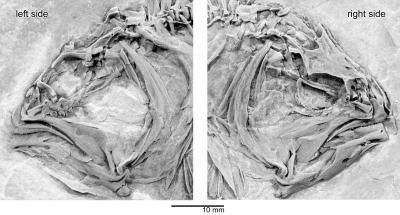
Hidden away in museums for more that 100 years, some recently rediscovered flatfish fossils have filled a puzzling gap in the story of evolution and answered a question that initially stumped even Charles Darwin.

All adult flatfishes--including the gastronomically familiar flounder, plaice, sole, turbot, and halibut--have asymmetrical skulls, with both eyes located on one side of the head. Because these fish lay on their sides at the ocean bottom, this arrangement enhances their vision, with both eyes constantly in play, peering up into the water.

 Skull of heteronectes chaneti, showing incomplete orbital migration intermediate between generalized fishes and living flatfishes.

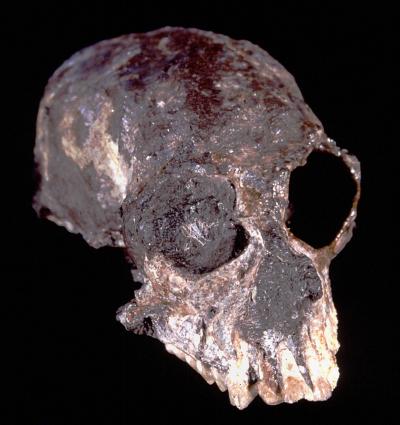
After taking a fresh look at an old fossil, John Flynn, Frick Curator of Paleontology at the American Museum of Natural History, and colleagues determined that the brains of the ancestors of modern Neotropical primates were as small as those of their early fossil simian counterparts in the Old World. This means one of the hallmarks of primate biology, increased brain size, arose independently in isolated groups—the platyrrhines of the Americas and the catarrhines of Africa and Eurasia.

"Primatologists have long suspected that increased encephalization may have arisen at different points in the primate evolutionary tree, but this is the first clear demonstration of independent brain size increase in New and Old World anthropoids," says Flynn of the paper that appeared in the Museum's publication Novitates this June. Encephalization is the increase in brain size relative to body size. Animals with large encephalization quotients (E.Q.'s) are those with bigger brains relative to their body size in comparison to the average for an entire group. Most primates and dolphins have high E.Q.'s relative to other mammals, although some primates (especially apes and humans) have higher E.Q.'s than others.

While it's true that the attractiveness of orthodontic braces is related to less metal, according to a recent survey, the least attractive ones remain the most effective. It's that old form versus function issue.

Study findings published in a recent issue of the American Journal of Orthodontics and Dentofacial Orthopedics found that the public's attitude about the attractiveness of various styles of braces indicates that the types of dental appliances with no visible metal were considered the most attractive. Braces that combine clear ceramic brackets with thin metal or clear wires were a less desirable option, and braces with metal brackets and metal wires were rated as the least aesthetic combination.