Banner
Pilot Study: Fibromyalgia Fatigue Improved By TENS Therapy

Fibromyalgia is the term for a poorly-understood condition where people experience pain and fatigue...

High Meat Consumption Linked To Lower Dementia Risk

Older people who eat large amounts of meat have a lower risk of dementia and cognitive decline...

Long Before The Inca Colonized Peru, Natives Had A Thriving Trade Network

A new DNA analysis reveals that long before the Incan Empire took over Peru, animals were...

Mesolithic People Had Meals With More Tradition Than You Thought

The common imagery of prehistoric people is either rooting through dirt for grubs and picking berries...

User picture.
News StaffRSS Feed of this column.

News Releases From All Over The World, Right To You... Read More »

Blogroll

"Don't tug on that, you never know what it might be attached to ...," said Buckaroo Banzai while doing brain surgery in an early scene from one of the greatest science fiction movies of all time.

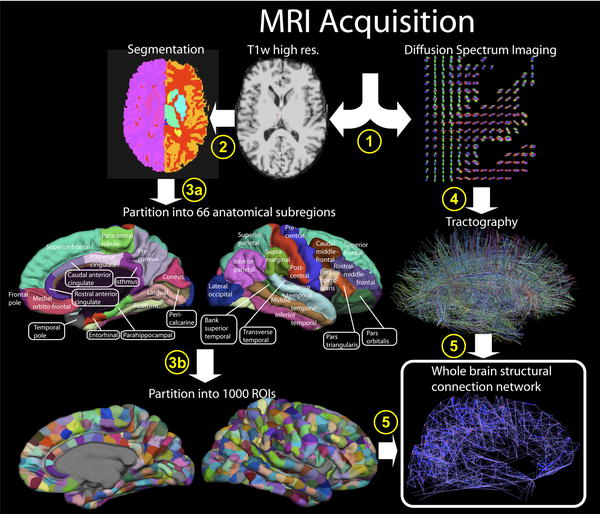
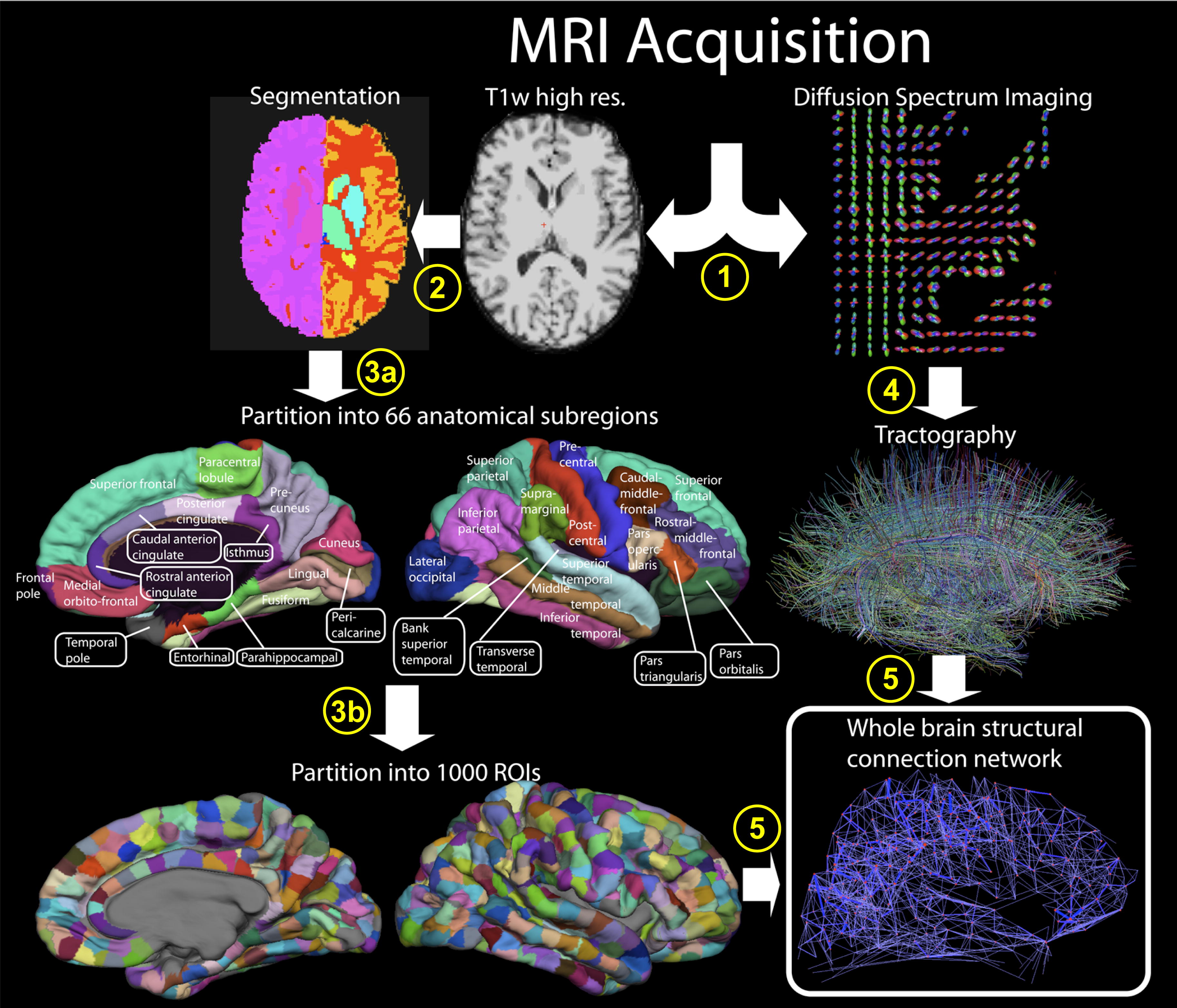
He couldn't have been more correct. A complete high-resolution map of the human cerebral cortex, the outer layer of the brain responsible for higher level thinking, has been created and it identified a single network core (or hub) that may be key to the workings of both hemispheres of the brain - detailing millions of neural fibers.

The work by the researchers from Indiana University, University of Lausanne, Switzerland, Ecole Polytechnique Fédérale de Lausanne, Switzerland, and Harvard Medical School marks a major step in understanding the most complicated and mysterious organ in the human body. It not only provides a comprehensive map of brain connections (the brain "connectome"), but also describes a novel application of a non-invasive technique that can be used by other scientists to continue mapping the trillions of neural connections in the brain at even greater resolution, which is becoming a new field of science termed "connectomics."

We all know that light effects the growth and development of plants but a new paper by Nathalie Hoang et al., published in PLoS Biology examines the effects light has on humans and animals.

In plants, cryptochromes are photoreceptor proteins which absorb and process blue light for functions such as growth, seedling development, and leaf and stem expansion. Cryptochromes are present in humans and animals as well and have been proven to regulate the mechanisms of the circadian clock. But how they work in humans and animals is still somewhat of a mystery.

When plants are exposed to blue light, they experience a reduction in flavin pigments. This reduction activates the cryptochromes and thus allows for growth and seedling development. Hoang et al. sought to study the effect of blue light on fly, animal, and human cryptochromes by exposing them to blue light and measuring the change in the number of oxidized flavins. After a prolonged exposure to blue light, the authors found that the number of flavins did in fact decrease, as they do in plants.

Children studying subjects like math, physics and chemistry have a harder time gettings A's than students of similar ability studying subjects like media studies and psychology, according to a new report that really doesn't surprise anyone.

Durham University researchers analyzed and compared data from nearly one million schoolchildren sitting GCSE and A-level exams and reviewed 28 different studies of cross subject comparison conducted in the UK since 1970.

They found significant differences in the relative difficulty of exams in different subjects with the sciences among the hardest. On average, subjects like Physics, Chemistry and Biology at A-level are a whole grade harder than Drama, Sociology or Media Studies, and three-quarters of a grade harder than English, RE or Business Studies.

"I want to say one word to you. Just one word," spoke Mr. Maguire to young Benjamin in the 1967 film The Graduate. That word was 'plastics' and it became a cultural litany meaning lots of different things but it's never been more true in its original form. Plastics are still the future.

With market analysts predicting an increase from £1.5 billion to £15.5 billion in the value of the organic light emitting display industry by 2014, it is no surprise that scientists and governments alike are keen to advance research into new 'plastics' - in this case the electronic kind.

For a long time, plastic was thought of as an insulating material that could not conduct electricity, but ground-breaking research in the 1970s proved that some plastics could do so. Now, more than thirty years later some of the potential applications of these breakthrough materials – electronic billboards, flexible laptops, high-definition television screens only one centimetre thick – are coming to light.

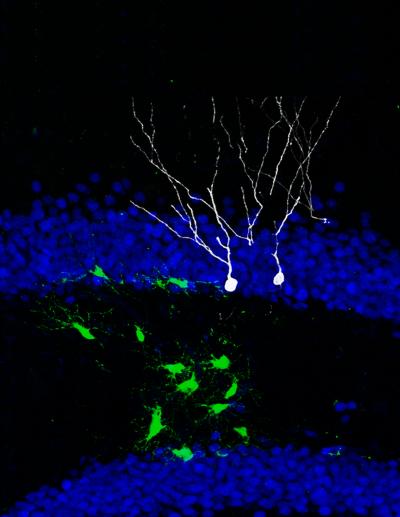
Researchers at the Salk Institute for Biological Studies have gone beyond manipulating adult stem cells cultured in the lab and achieved the same feat with adult neural stem cells - still in place in the brain. They successfully coaxed mouse brain stem cells bound to join the neuronal network to differentiate into support cells instead.

The discovery not only attests to the versatility of neural stem cells but also opens up new directions for the treatment of neurological diseases, such as multiple sclerosis, stroke and epilepsy that not only affect neuronal cells but also disrupt the functioning of glial support cells.

Throughout life, adult neural stem cells generate new brain cells in two small areas of mammalian brains: the olfactory bulb, which processes odors, and the dentate gyrus, the central part of the hippocampus, which is involved in the formation of memories and learning.

A laser-activated antimicrobial offers hope for new treatments of bacterial infections, even those that are resistant to current drugs. Research published today in the open access journal BMC Microbiology describes the use of a dye, indocyanine green, which produces bacteria-killing chemicals when lit by a specific kind of laser light.

Michael Wilson led a team from UCL (University College London) who carried out experiments showing that activated indocyanine green is capable of killing a wide range of bacteria including Staphylococcus aureus, Streptococcus pyogenes and Pseudomonas aeruginosa. The dye is safe for humans. The strength of this new approach lies in the variety of ways in which the chemicals produced by the activated dye harm bacteria.