Banner
Pilot Study: Fibromyalgia Fatigue Improved By TENS Therapy

Fibromyalgia is the term for a poorly-understood condition where people experience pain and fatigue...

High Meat Consumption Linked To Lower Dementia Risk

Older people who eat large amounts of meat have a lower risk of dementia and cognitive decline...

Long Before The Inca Colonized Peru, Natives Had A Thriving Trade Network

A new DNA analysis reveals that long before the Incan Empire took over Peru, animals were...

Mesolithic People Had Meals With More Tradition Than You Thought

The common imagery of prehistoric people is either rooting through dirt for grubs and picking berries...

User picture.
News StaffRSS Feed of this column.

News Releases From All Over The World, Right To You... Read More »

Blogroll

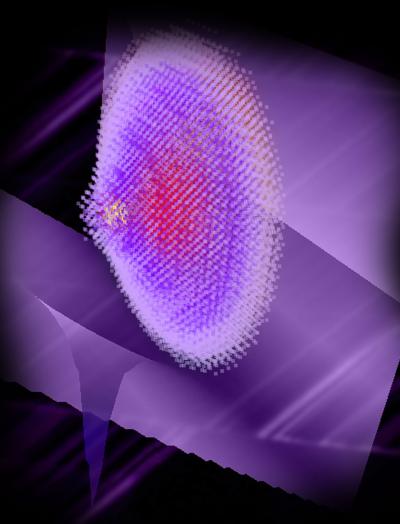
The odd behavior of a molecule in an experimental silicon computer chip has led to a discovery that opens the door to quantum computing in semiconductors.

In a Nature Physics journal paper currently online, the researchers describe how they have created a new, hybrid molecule in which its quantum state can be intentionally manipulated - a required step in the building of quantum computers.

"Up to now large-scale quantum computing has been a dream," says Gerhard Klimeck, professor of electrical and computer engineering at Purdue University and associate director for technology for the national Network for Computational Nanotechnology.

Due to concerns about greenhouse gases, compact fluorescent lamps (CFLs) have become the rage - even to a point where common sense has taken a holiday, namely when environmental sites fall back on Big Tobacco language like 'unlikely to hurt you' and 'no conclusive evidence' instead of realistically telling you that you should call in a Haz-Mat team if one breaks.

Introduced in the United States in 1979, they reached nearly 300 million last year. Experts expect that figure to rise steeply by 2012, when a federal law requiring energy-efficient lighting goes into effect.

There's just one catch to this energy conservation story: Each CFL contains a small amount (3 to 5 milligrams) of mercury, a neurotoxin that can be released as vapor when a bulb is broken. The gas can pose a minor risk to certain groups, such as infants, small children and pregnant women. Mercury can escape from plastic bags containing discarded bulbs, which makes long-term storage, disposal or recycling tricky.

Researchers at UT Southwestern Medical Center have determined that starvation blocks the effects of growth hormone via a mechanism that may have implications in treating diabetes and extending life span.

Using genetically altered mice, the researchers found that during fasting, the actions of growth hormone are blocked by a fat-burning hormone called FGF21.

Growth hormone has many functions in the growth and reproduction of cells, such as controlling the length of developing arm and leg bones in children.

A new publication answers centuries' old questions regarding the mechanism and function of humor, identifying the reason humor is common to all human societies, its fundamental role in the evolution of homo sapiens and its continuing importance in the cognitive development of infants.

Previous theories have only ever applied to a small proportion of all instances of humor, many of them stipulating necessary content or social conditions either in the humor itself or around the individual experiencing it. But this doesn't explain why an individual can laugh at something when no one else around them does, nor why two people can laugh at the same stimulus for different reasons.

Want to really store carbon? Get old ... and underwater. Researchers at the Missouri Tree Ring Laboratory in the Department of Forestry discovered that trees submerged in freshwater aquatic systems store carbon for thousands of years, a significantly longer period of time than in a forest, thus keeping carbon out of the atmosphere.

The team studied trees in northern Missouri, a geographically unique area with a high level of riparian forests (forests that have natural water flowing through them). They discovered submerged oak trees that were as old as 14,000 years, potentially some of the oldest discovered in the world. This carbon storage process is not just ancient; it continues even today as additional trees become submerged, according to Guyette.

"If a tree is submerged in water, its carbon will be stored for an average of 2,000 years," said Richard Guyette, director of the MU Tree Ring Lab and research associate professor of forestry in the School of Natural Resources in the College of Agriculture, Food and Natural Resources. "If a tree falls in a forest, that number is reduced to an average of 20 years, and in firewood, the carbon is only stored for one year."

Engineers working in optical communications bear more than a passing resemblance to dreamers chasing rainbows.

They may not wish literally to capture all the colors of the spectrum, but they do seek to control the rate at which light from across the spectrum moves through optical circuits.

This pursuit is daunting when those circuits contain dimensions measured in nanometers.

At the nanoscale, says Qiaoqiang Gan, a Ph.D. candidate in electrical engineering at Lehigh University in Bethlehem, Pa., engineers hoping to integrate optical structures with electronic chips face a dilemma.