Banner
Pilot Study: Fibromyalgia Fatigue Improved By TENS Therapy

Fibromyalgia is the term for a poorly-understood condition where people experience pain and fatigue...

High Meat Consumption Linked To Lower Dementia Risk

Older people who eat large amounts of meat have a lower risk of dementia and cognitive decline...

Long Before The Inca Colonized Peru, Natives Had A Thriving Trade Network

A new DNA analysis reveals that long before the Incan Empire took over Peru, animals were...

Mesolithic People Had Meals With More Tradition Than You Thought

The common imagery of prehistoric people is either rooting through dirt for grubs and picking berries...

User picture.
News StaffRSS Feed of this column.

News Releases From All Over The World, Right To You... Read More »

Blogroll

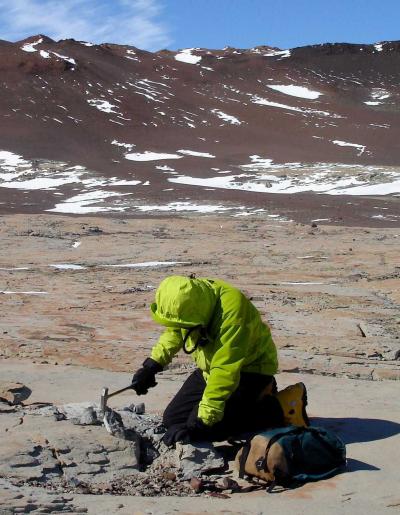
Paleontologists working in Antarctica have found fossilized burrows of tetrapods - land vertebrates with four legs or leglike appendages – dating from the Early Triassic epoch, about 245 million years ago.

The fossils were created when fine sand from an overflowing river poured into the animals' burrows and hardened into casts of the open spaces. The largest preserved piece is about 14 inches long, 6 inches wide and 3 inches deep. No animal remains were found inside the burrow casts, but the hardened sediment in each burrow preserved a track made as the animals entered and exited.

In addition, scratch marks from the animals' initial excavation were apparent in some places, said Christian Sidor, a University of Washington assistant professor of biology and curator of vertebrate paleontology at the Burke Museum of Natural History and Culture at the UW.

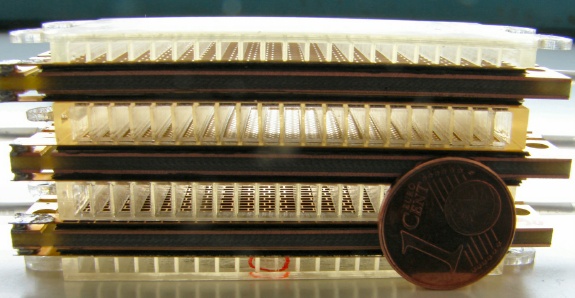
A chronic issue with fuel cells is that, in order to deliver a high enough power output, a lot of them have to be connected in series. Traditionally that has meant stacking the fuel cells – creating a structure consisting of several metal plates, each containing one channel for air and one for hydrogen - but this makes the fuel cell stack quite heavy.

Researchers from the Fraunhofer Institute for Reliability and Microintegration IZM, together with colleagues at the Technical University of Berlin, have developed a fuel cell that weighs only 30 grams yet has an output of 12 watts.

The high power density of 400 watts per kilogram has so far only been achieved in considerably larger systems weighing several hundred grams. The fuel cell is light enough to power a twenty-centimeter helicopter. It is being developed by the participants in an EU project, and will be used in future for missions such as locating victims trapped in fallen buildings, monitoring traffic or investigating tracts of land that have been contaminated by chemical accidents.

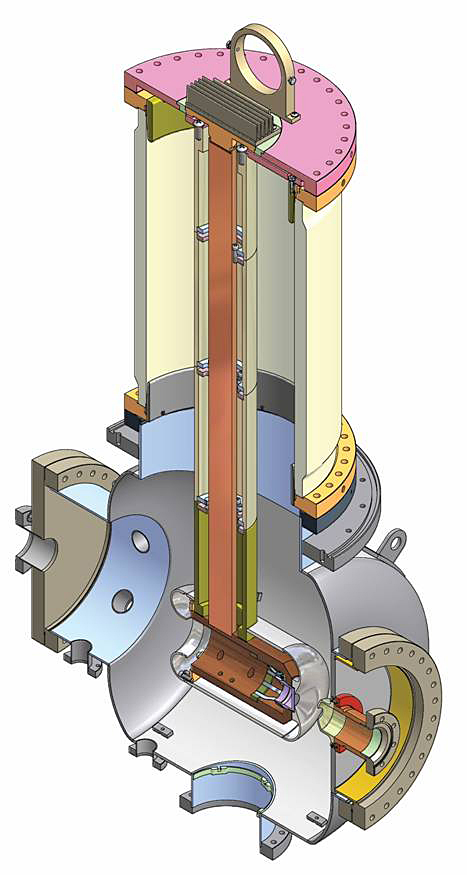
Technology-development studies at Cornell University and Jefferson Laboratory are showing how to use the brightest X-ray light ever generated for the scientific examination of everything from human proteins to forged art.

X-ray beams from an energy-recovery linac (linear accelerator) could be both a thousand times brighter and a thousand times faster--with pulses as brief as one ten-thousandth of a billionth of a second--than current state-of-the-art synchrotron X-ray sources.

"We're closer than ever to building a kind of universal toolkit for all the science and engineering disciplines," says Joel D. Brock, a Cornell University professor of applied and engineering physics.

The ruya, an inspirational night dream, is a fundamental part of the militant jihadist movement among Muslims, according to a study by Dr. Iain Edgar, a social anthropologist at Durham University.

The problem? He used the reported dreams of al-Qaeda and Taliban leaders who are, after all, in the business of inspiring terrorism. It may be that militant leaders do touchy-feely things like report their dreams accurately, but unlikely.

Speaking at the Cheltenham Science Festival on the cultural significance of sleeping and dreaming, Edgar said: "Islam is probably the largest night dream culture in the world today. The night dream is thought to offer a way to metaphysical and divinatory knowledge, to be a practical alternative and accessible source of inspiration and guidance, to offer clarity concerning action in this world."

A new study in Neuroscience Letters says that short-wavelength light, including natural light from a blue sky, is highly effective at stimulating the circadian system while exposure to other wavelengths — and thus colors — of light may necessitate longer exposure times or require higher exposure levels to be as effective at stimulating our biological clocks.

In some instances, exposure to multiple wavelengths (colors) of light simultaneously can result in less total stimulation to the circadian system than would result if either color were viewed separately, a phenomenon known as "spectral opponency." The LRC scientists have shown that the circadian system shares neurons in the retina — which exhibit spectral opponency and form the foundation for our perception of color — with the visual system. Thus, in principle, the circadian system may be able to distinguish between lights of different colors.

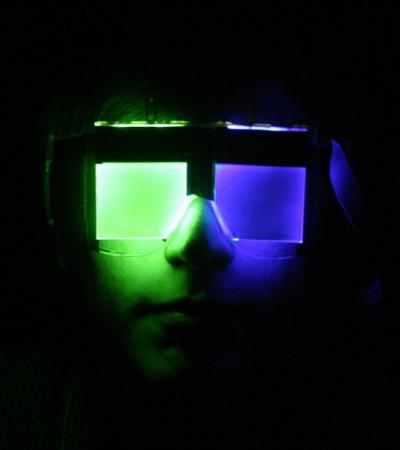
More than meets the eye To demonstrate that the circadian system exhibited spectral opponency formed in the retina, the researchers exposed 10 subjects to three experimental conditions: one unit of blue light to the left eye plus one unit of green light to the right eye; one unit of blue light to the right eye plus one unit of green light to the left eye; and half a unit of blue light plus half a unit of green light to both eyes and then measured each individual's melatonin levels, a natural indicator of the circadian clock.

Was Judgment Day at hand? At noon, it was black as night, there was lunch by candle light, the night birds came out to sing while flowers folded their petals and the animals behaved strangely. They called it 'New England's Dark Day' and it's been a mystery for almost 230 years.

The mystery has been solved, according to researchers at the University of Missouri, who say evidence from tree rings reveals massive wildfires as the likely cause, one of several theories proposed after the event but previously dismissed as 'simple and absurd.'

Limited ability for long-distance communication prevented colonists from knowing the cause of the darkness.