Banner
Pilot Study: Fibromyalgia Fatigue Improved By TENS Therapy

Fibromyalgia is the term for a poorly-understood condition where people experience pain and fatigue...

High Meat Consumption Linked To Lower Dementia Risk

Older people who eat large amounts of meat have a lower risk of dementia and cognitive decline...

Long Before The Inca Colonized Peru, Natives Had A Thriving Trade Network

A new DNA analysis reveals that long before the Incan Empire took over Peru, animals were...

Mesolithic People Had Meals With More Tradition Than You Thought

The common imagery of prehistoric people is either rooting through dirt for grubs and picking berries...

User picture.
News StaffRSS Feed of this column.

News Releases From All Over The World, Right To You... Read More »

Blogroll

It’s stronger than steel and nylon, and more extensible than Kevlar.

What is this super-tough material? Spider silk; and learning how to spin it is one of the materials industries’ Holy Grails.

John Gosline has been fascinated by spider silks and their remarkable toughness for most of his scientific career. He explains that if we’re to learn how to manufacture spider silk, we have to understand the relationship between the components and the spun fibre’s mechanical properties; which is why he is focusing on major ampullate silk, one of the many silks that spiders spin. According to Gosline, spiders use major ampullate silk for draglines and to build the frame and radial structures in webs, all of which have to deform and absorb enormous amounts of energy without fracturing.

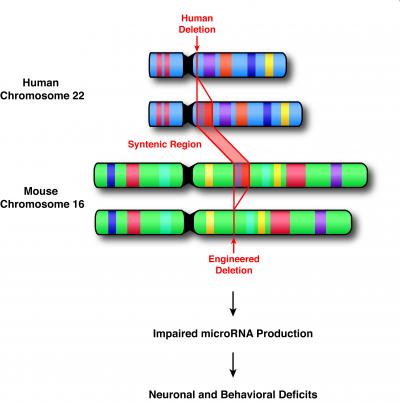
Researchers at Columbia University Medical Center have illuminated a window into how abnormalities in microRNAs, a family of molecules that regulate expression of numerous genes, may contribute to the behavioral and neuronal deficits associated with schizophrenia and possibly other brain disorders.

Maria Karayiorgou, M.D., professor of psychiatry, and Joseph A. Gogos, M.D., Ph.D., associate professor of physiology and neuroscience at Columbia University Medical Center explain how they uncovered a previously unknown alteration in the production of microRNAs of a mouse modeled to have the same chromosome 22q11.2 deletions previously identified in humans with schizophrenia.

Ecosystems are constantly exchanging materials through the movement of air in the atmosphere, the flow of water in rivers and the migration of animals across the landscape. People, however, have also established themselves as another major driver of connectivity among ecosystems.

In the June 2008 Special Issue of Frontiers in Ecology and the Environment, titled “Continental-scale ecology in an increasingly connected world,” ecologists discuss how human influences interact with natural processes to influence connectivity at the continental scale. The authors conclude that networks of large-scale experiments are needed to predict long-term ecological change.

The transport of many types of materials, including gases, minerals and even organisms, can affect natural systems. This movement results in “greenlash,” which occurs when environmental changes localized to a small geographic area have far-reaching effects in other areas. For example, a drought in the 1930’s caused small-scale farmers to abandon their farms across the U.S. Midwest. The absence of crops intensified local soil erosion, leading to powerful dust storms. Large amounts of wind-swept dust traveled across the continent, causing the infamous Dust Bowl and affecting air quality, public health and patterns of human settlement throughout the country.

A whole generation of World War II soldiers endured the same trauma as soldiers in any war but for the most part kept quiet about it with little ill effect. Somewhere after that it became normal and healthy to relive bad experiences, like war or a school shooting or terrorist attack, by discussing it publicly or in therapy.

A new study says it is okay not to express one's thoughts and feelings after experiencing a collective trauma. In fact, people who choose not to express their feelings after such an event may be better off than those who do talk about their feelings, according to University at Buffalo psychologist Mark Seery, Ph.D., lead author of a study to appear in the June issue of Journal of Consulting and Clinical Psychology.

The study investigated the mental and physical effects of collective traumas on people who are exposed to a tragedy but who do not experience a direct loss of a friend or family member. It focused on people's responses to the terrorist attacks of Sept. 11, 2001, but the results may generalize to include responses to other collective traumas.

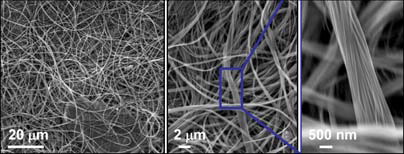
MIT scientists say they have created a membrane, a mat of nanowires with the touch and feel of paper, that can absorb up to 20 times its weight in oil, and can be recycled many times for future use. The oil itself can also be recovered. Some 200,000 tons of oil have already been spilled at sea since the start of the decade.

In addition to its environmental applications, the nanowire paper could also impact filtering and the purification of water, said Jing Kong, an assistant professor of electrical engineering in the Department of Electrical Engineering and Computer Science and one of Stellacci's colleagues on the work.

She noted that it could also be inexpensive to produce because the nanowires of which it is composed can be fabricated in larger quantities than other nanomaterials.

Nautiloids are the sole surviving family of externally-shelled cephalopods that thrived in the tropical oceans 450–150 million years ago. However, in the intervening years their modern soft bodied relatives dumped the shell and developed complex central nervous systems; which makes Nautilus ideally suited to discover the ‘evolutionary pathways that led to the development of the complex coleoid [soft bodied cephalopod] brains’ say Robyn Crook and Jennifer Basil.

Knowing that the simple Nautilus brain lacks the structures required for memory in more sophisticated cephalopods, Crook and Basil decided to test the living fossil’s memory.