Banner
Pilot Study: Fibromyalgia Fatigue Improved By TENS Therapy

Fibromyalgia is the term for a poorly-understood condition where people experience pain and fatigue...

High Meat Consumption Linked To Lower Dementia Risk

Older people who eat large amounts of meat have a lower risk of dementia and cognitive decline...

Long Before The Inca Colonized Peru, Natives Had A Thriving Trade Network

A new DNA analysis reveals that long before the Incan Empire took over Peru, animals were...

Mesolithic People Had Meals With More Tradition Than You Thought

The common imagery of prehistoric people is either rooting through dirt for grubs and picking berries...

User picture.
News StaffRSS Feed of this column.

News Releases From All Over The World, Right To You... Read More »

Blogroll

It's no surprise that a woman in a bikini can increase a man's sexual appetite but research in the Journal of Consumer Research says that men who watched sexy videos or even handled lingerie had more appetite for everything - and it impacted their decisions about soda, candy and even money.

Authors Bram Van den Bergh, Siegfried DeWitte, and Luk Warlop (KULeuven, Belgium) found that the desire for immediate rewards increased in men who touched bras, looked at pictures of beautiful women, or watched video clips of young women in bikinis running through a park.

The authors believe the stimuli bring men's minds to the present as opposed to the future. "The study demonstrates that bikinis cause a shift in time preference: Men live in the here and now when they glance at pictures featuring women in lingerie. That is, men will choose the immediately available rewards and seek immediate gratification after sex cue exposure."

Researcher at the Karolinska Institute in Sweden say golf is good for your health.

People of the same sex, age and socioeconomic status who golf can expect a 5 year increase in life expectancy compared to those who do not, they say. And great golfers live even longer, so work on your handicap.

Why so? People who are good at something tend to enjoy it and do it more and also practiced more to attain their skill, so they end up with better health.

The study does not rule out that other factors than the actual playing, such as a generally healthy lifestyle, are also behind the lower death rate observed amongst golfers. However, the researchers believe it is likely that the playing of the game in itself has a significant impact on health.

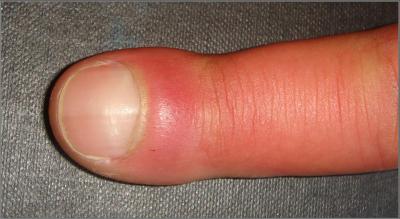
Researchers at the University of Leeds say they have solved a medical condition that puzzled Hippocrates more than 2,000 years ago. The phenomenon of "finger clubbing", a deformity of the fingers and fingernails, has been known for thousands of years, and has long been recognized to be a sign of a wide range of serious diseases.

Lung cancer, heart disease, hyperthyroidism, various gastrointestinal diseases and many other conditions all result in finger clubbing. But exactly why swollen, reddened fingers should be an indicator of serious illness has remained a mystery – until now.

"It's one of the first things they teach you at medical school," explained Professor David Bonthron of the Leeds Institute of Molecular Medicine. "You shake the patient by the hand, and take a good look at their fingers in the process."
center>

Nitrogen is the primary nutrient that dictates productivity (and thus carbon consumption) in boreal forests. In pristine boreal ecosystems, most new nitrogen enters the forest through cyanobacteria living on the shoots of feather mosses, which grows in dense cushions on the forest floor.

These bacteria convert nitrogen from the atmosphere to a form that can be used by other living organisms, a process referred to as "nitrogen-fixation." The researchers showed that this natural fertilization process appears to be partially controlled by trees and shrubs that sit above the feather mosses.

In the summer of 2006, the researchers placed small tubes, called resin lysimeters, in the moss layer to catch nitrogen deposited on the feather moss carpets from the above canopy and then monitored nitrogen fixation rates in the mosses. The studies revealed that when high levels of nitrogen were deposited on the moss cushion from above, a condition typical of young forests, nitrogen fixation was extremely low. In older, low-productivity forests, very little nitrogen was deposited on the moss cushion, resulting in extremely high nitrogen fixation rates.

Pavan Sukhdev of Deutsche Bank has laid out a case for what he called a "comprehensive and compelling economic case for the conservation of biodiversity" today.

Nature obviously provides human society with a vast diversity of benefits, like food, water, healthy soil and protection from floods but while we are totally dependent upon these "ecosystem services" they are predominantly public goods with no markets and no prices, so they often are not detected by our current economic compass.

As a result, due to pressures from population growth, changing diets and urbanization, biodiversity is declining.

The report presented today shows that if we do not adopt the right policies, the current decline in biodiversity and the related loss of ecosystem services will continue and in some cases even accelerate. Some ecosystems are likely to be damaged beyond repair. With a "business as usual" scenario, by 2050 we will be faced with serious consequences:

Don't put a down payment on that invisible plane just yet but a team of scientists from Boston College and Duke University developed a highly-engineered metamaterial capable of absorbing all of the light that strikes it – to a scientific standard of perfection.

The metamaterial uses tiny geometric surface features to successfully capture the electric and magnetic properties of a microwave to the point of total absorption.

The group used computer simulations based on prior research findings in the field to design resonators able to couple individually to electric and magnetic fields to successfully absorb all incident radiation, according to the findings in Physical Review Letters..