Banner
Pilot Study: Fibromyalgia Fatigue Improved By TENS Therapy

Fibromyalgia is the term for a poorly-understood condition where people experience pain and fatigue...

High Meat Consumption Linked To Lower Dementia Risk

Older people who eat large amounts of meat have a lower risk of dementia and cognitive decline...

Long Before The Inca Colonized Peru, Natives Had A Thriving Trade Network

A new DNA analysis reveals that long before the Incan Empire took over Peru, animals were...

Mesolithic People Had Meals With More Tradition Than You Thought

The common imagery of prehistoric people is either rooting through dirt for grubs and picking berries...

User picture.
News StaffRSS Feed of this column.

News Releases From All Over The World, Right To You... Read More »

Blogroll

Poor blood vessel function is recognized as an early stage indicator of cardiovascular diseases such as atherosclerosis. For more than 20 million Americans living with diabetes, these vascular impairments can eventually lead to heart disease and stroke, the cause of death for two-thirds of those who suffer from diabetes. Despite good diabetes control and medical treatment, adults with the disease often continue to experience vascular dysfunction. This has led scientists on a search for novel medical or nutritional options to improve the health and quality of life for people with diabetes.

Scientists funded by Mars, Inc. have determined that a cocoa flavanol-rich beverage made using the Mars Cocoapro® process experienced a 30 percent improvement in measured vessel function at the completion of a 30-day trial. Consuming a cocoa flavanol-rich beverage daily may have the potential to positively impact the blood vessel dysfunction associated with diabetes, they say.

The flavanol in cocoa is not to be confused with another compound spelled flavonol, which is found in some onions, grapes and green tea.

Scientists of the University of Almeria are developing a new system to eliminate carbon dioxide emissions using microalgae photosynthetic activity. This project, called CENIT CO2, is being developed by Spanish electricity company Endesa and is supported by the Spanish Ministry of Industry.

At the pilot plant, Las Palmerillas, Almeria-based researchers are trying to prove the validity of this new method for eliminating CO2 emissions. They expect to begin testing on an industrial level in the next year. Researchers say that ENDESA, which is promoting this research line, may test its application in some of the facilities which could show immediate results - small gas plants.

"The mechanism developed is simple on paper. By the gas emission points a water tank would be installed in order to retain the pollutant gases resulting from a specific industrial process. This polluted water would go through a system of bioreactors with a microalgae culture system, which would then transform the CO2 emissions into vegetal matter and oxygen through the photosynthesis process," the researchers say.

GOTHENBURG, Sweden, May 26 /PRNewswire/ -- Swedish SEKAB today announced that it is the first company in the world to supply verified sustainable ethanol. This ethanol from Brazilian sugarcane is quality assured from environmental, climate and social perspectives.

"Consumers and other stakeholders need guarantees that the ethanol is verified sustainable," says Anders Fredriksson, EVP of SEKAB BioFuels & Chemicals.

SEKAB has together with progressive Brazilian producers developed criteria that cover the entire lifecycle of ethanol from the sugarcane fields to its use in flexi-fuel (FFV) cars.

The criteria are in line with demands highlighted in the ongoing processes being led by organisations like the UN, EU, ILO and a number of NGOs.

Solar cells provide great opportunities for future large-scale electricity generation. However, there are currently significant limitations, such as the relatively low output of most solar cells (typically fifteen percent) and high manufacturing costs.

One possible improvement could derive from a new type of solar cell made of semiconducting nanocrystals (crystals with dimensions in the nanometre size range). In conventional solar cells, one photon (light particle) can release precisely one electron. The creation of these free electrons ensures that the solar cell works and can provide power. The more electrons released, the higher the output of the solar cell.

In some semiconducting nanocrystals, however, one photon can release two or three electrons, hence the term avalanche effect.

By adding an enzyme to adult stem cells 'in vitro', remarkable results can be booked 'in vivo', say scientists of the University of Twente in The Netherlands. Up to now, so-called mesenchymal stem cells could not succesfully be used to create new bone tissue, e.g. for repair. By adding PKA enzyme to the stem cells beforehand, a substantial amount of bone is grown after implanting the cells.

Hitherto it has been difficult to induce adult human stem cells to produce bone, e.g. in order to repair bone tissue. Researchers at the University of Twente have shown that if the enzyme PKA is previously activated in the stem cells in the lab, following implantation this results in substantial bone formation. This opens up new ways of repairing bone tissue using cell material from the patient.

In animals, ‘adult’ mesenchymal stem cells have already been used successfully to grow fresh bone. Bone formation using human adult stem cells, e.g. from bone marrow, has been less successful, which has hitherto limited the alternatives hospitals can offer for repairing damaged tissue other than spontaneous healing. Activating the PKA enzyme prior to implantation, however, produces a dramatic improvement in ‘in vivo’ bone growth. The cells can be observed maturing into bone cells already in the lab; once sown on a carrier and implanted in a mouse, the bone grows well.

People love Top 10 lists and a Top 10 list of new species is no exception. We love the idea so much we took the 2007 choices from the International Institute for Species Exploration at Arizona State University and an international committee of taxonomists and made them ... funnier.

We know you have other things to read, like a Top 10 list of String Theory jokes, somewhere so we'll get right to it.

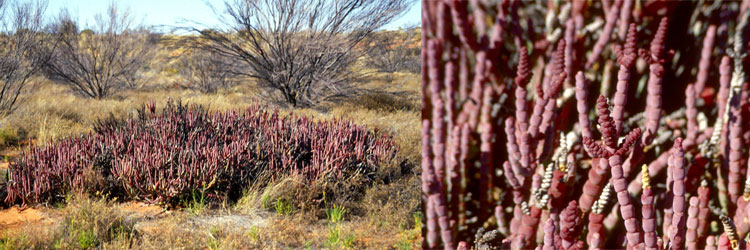
10. Tecticornia bibenda. One of two on this list that seems to have made it for no other reason than that press releases gave it a catchy nickname, in this case the "Michelin Man™" plant, and that really appeals to fame-seeking biologists who want to have mass appeal. If this actually looks like the Michelin Man™ to you, you're just being argumentative.