Banner
Pilot Study: Fibromyalgia Fatigue Improved By TENS Therapy

Fibromyalgia is the term for a poorly-understood condition where people experience pain and fatigue...

High Meat Consumption Linked To Lower Dementia Risk

Older people who eat large amounts of meat have a lower risk of dementia and cognitive decline...

Long Before The Inca Colonized Peru, Natives Had A Thriving Trade Network

A new DNA analysis reveals that long before the Incan Empire took over Peru, animals were...

Mesolithic People Had Meals With More Tradition Than You Thought

The common imagery of prehistoric people is either rooting through dirt for grubs and picking berries...

User picture.
News StaffRSS Feed of this column.

News Releases From All Over The World, Right To You... Read More »

Blogroll

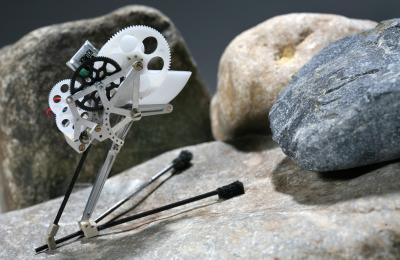
Researchers from the Laboratory of Intelligent Systems at Ecole Polytechnique Fédérale de Lausanne (EPFL) have unveiled unveiling a grasshopper-inspired jumping robot that weighs a miniscule 7 grams but can jump 1.4 meters - more than 27 times its body size. That's ten times farther for its size and weight than any existing jumping robot.

These jumpers could be fitted out with tiny sensors to explore rough, inaccessible terrain or to aid in search and rescue operations. "This biomimetic form of jumping is unique because it allows micro-robots to travel over many types of rough terrain where no other walking or wheeled robot could go," explains EPFL Professor Dario Floreano. "These tiny jumping robots could be fitted with solar cells to recharge between jumps and deployed in swarms for extended exploration of remote areas on Earth or on other planets."

A "CatCam” that captures feline-centric video of a forest and a new mathematical model are two elements of a new effort to explain how the brain’s visual circuitry processes real scenes.

The new model of the neural responses of a major visual-processing brain region promises to significantly advance understanding of vision.

The researchers sought to develop the new model because until now, studies of the visual system have used simple stimuli such as dots, bars and gratings.

Two new exoplanets mean that the COROT mission(1) has now found a total of four new exoplanets in its 510 day journey. COROT started observations of its sixth star field at the beginning of May and, during this observation phase which will last 5 months, will simultaneously observe 12,000 stars.

The two new planets are gas giants of the hot Jupiter type, which orbit very close to their parent star and tend to have extensive atmospheres because heat from the nearby star gives them energy to expand. But an oddity dubbed ‘COROT-exo-3b’ has raised particular interest among astronomers. It appears to be something between a brown dwarf, a sub-stellar object without nuclear fusion at its core but with some stellar characteristics, and a planet. Its radius is too small for it to be a super-planet.

We all know that coffee can cure everything.

Now it turns out that even a coffee roasting process - torrefaction - could give biomass a power boost, increasing the energy content of some energy crops by up to 20 percent, making biofuels merely bad instead of awful.

The study, carried out by engineers from the University of Leeds, examined the combustion behavior of crops grown specifically for energy creation when put through the mild torrefaction thermal process usually associated with coffee production.

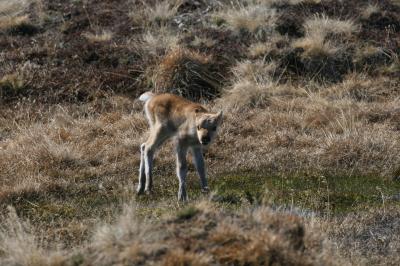
Plant-eating animals in highly seasonal environments, such as the Arctic, are struggling to locate nutritious food as a result of climate change, according to research in Proceedings of the Royal Society B.

The research, which focused on caribou, suggests that not only are these animals arriving at their breeding grounds too late in the season to enjoy the peak availability of food - the focus of previous research by Post - but they also are suffering from a reduced ability to locate the few high-quality plants that remain before these plants, too, become unavailable.

The team focused their research on caribou in West Greenland as an example of an herbivore species in a seasonal environment. Closely related to wild reindeer, caribou are dependent on plants for all their energy and nutrients. In the spring, they switch from eating lichens buried beneath the snow to munching the new growth of willows, sedges, and flowering tundra herbs. As the birth season approaches, they are cued by increasing daylight to migrate into areas where this newly-emergent food is plentiful.

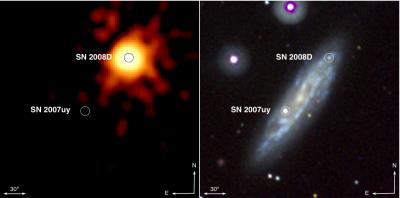
Astronomers have seen the aftermath of spectacular stellar explosions known as supernovae before, but until now no one has witnessed a star dying in real time. While looking at another object in the spiral galaxy NGC 2770, using NASA’s orbiting Swift telescope, Carnegie-Princeton fellows* Alicia Soderberg and Edo Berger detected an extremely luminous blast of X-rays released by a supernova explosion.

They alerted 8 other orbiting and on-ground telescopes to turn their eyes on this first-of-its-kind event.

“We were in the right place, at the right time, with the right telescope on January 9th and witnessed history,” remarked Soderberg. “We were looking at another, older supernova in the galaxy, when the one now known as SN 2008D went off. We would have missed it if it weren’t for Swift’s real-time capabilities, wide field of view, and numerous instruments.”