Banner
Pilot Study: Fibromyalgia Fatigue Improved By TENS Therapy

Fibromyalgia is the term for a poorly-understood condition where people experience pain and fatigue...

High Meat Consumption Linked To Lower Dementia Risk

Older people who eat large amounts of meat have a lower risk of dementia and cognitive decline...

Long Before The Inca Colonized Peru, Natives Had A Thriving Trade Network

A new DNA analysis reveals that long before the Incan Empire took over Peru, animals were...

Mesolithic People Had Meals With More Tradition Than You Thought

The common imagery of prehistoric people is either rooting through dirt for grubs and picking berries...

User picture.
News StaffRSS Feed of this column.

News Releases From All Over The World, Right To You... Read More »

Blogroll

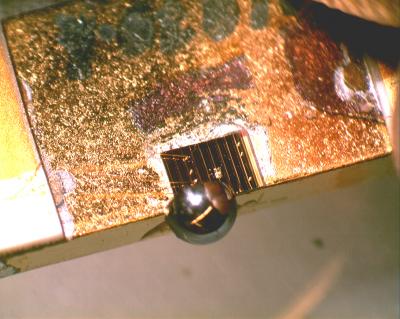
Engineers and applied physicists from Harvard University have demonstrated the first room-temperature electrically-pumped semiconductor source of coherent Terahertz (THz) radiation, also known as T-rays. The breakthrough in laser technology, based upon commercially available nanotechnology, has the potential to become a standard Terahertz source to support applications ranging from security screening to chemical sensing.

Spearheaded by research associate Mikhail Belkin and Federico Capasso, Robert L. Wallace Professor of Applied Physics and Vinton Hayes Senior Research Fellow in Electrical Engineering, both of Harvard's School of Engineering and Applied Sciences (SEAS), the findings will be published in the May 19 issue of Applied Physics Letters. The researchers have also filed for U.S. patents covering the novel device.

Using lasers in the Terahertz spectral range, which covers wavelengths from 30 to 300å, has long presented a major hurdle to engineers. In particular, making electrically pumped room-temperature and thermoelectrically-cooled Terahertz semiconductor lasers has been a major challenge. These devices require cryogenic cooling, greatly limiting their use in everyday applications.

A new report from Perth’s Telethon Institute for Child Health Research has found a strong link between childhood ear infections and exposure to tobacco smoke.

The families of 100 Aboriginal children and 180 non-Aboriginal children participated in the Kalgoorlie Otitis Media Research Project, allowing the collection of social, demographic, environmental and biological data to investigate the causes of otitis media (middle ear infections). The children had regular ear examinations from birth until 2 years of age.

Chief Investigator Dr Deborah Lehmann, who heads the Institute’s infectious diseases research, said ear infections were the most common reason that young children see a doctor and can cause life-long problems.

Pancreatic cancer, the fourth-leading cause of cancer death in this country, takes some 34,000 lives a year. It's usually detected after it has already spread and only 4 percent of individuals with pancreatic cancer live for five years after diagnosis.

An herb used in traditional medicine by Middle Eastern countries may help in the fight against pancreatic cancer, say researchers at Thomas Jefferson University in Philadelphia. They have found that thymoquinone, an extract of nigella sativa seed oil, blocked pancreatic cancer cell growth and killed the cells by enhancing the process of programmed cell death.

While the studies are in the early stages, the findings suggest that thymoquinone could eventually have some use as a preventative strategy in patients who have gone through surgery and chemotherapy or in individuals who are at a high risk of developing cancer.

The University of Rochester will mark another important step in the effort toward attaining sustainable fusion, the ultimate source of clean energy, Friday, May 16. University President Joel Seligman, along with special guests, will dedicate the new Omega EP (Extended Performance) laser facility at the Robert L. Sproull Center for Ultra High Intensity Laser Research at the Laboratory for Laser Energetics (LLE).

The Omega EP comprises a new set of four ultra-high-intensity laser beams that will unleash more than a petawatt—a million billion watts—of power onto a target just a millimeter across. Working in conjunction with LLE's original 60-beam Omega laser, the Omega EP will open the door to a new concept called "fast ignition," which may be able to dramatically increase the energy derived from fusion experiments and provide a possible new avenue toward clean fusion power. If successful, fast ignition could lead to the highest energy densities ever achieved in a laboratory.

Census of Marine Life-affiliated scientists, plumbing the secrets of a vast underwater mountain range south of New Zealand, captured the first images of a novel “Brittlestar City” established against daunting odds on the peak of a seamount – an underwater summit taller than the world’s tallest building.

Its cramped starfish-like inhabitants, tens of millions living arm tip to arm tip, owe their success to the seamount’s shape and to the swirling circumpolar current flowing over and around it at roughly four kilometers per hour. It allows Brittlestar City’s underwater denizens to capture passing food simply by raising their arms, and it sweeps away fish and other hovering would-be predators.

Discovery of this marine metropolis, announced today along with important new insights into seamount geology and physics, highlighted a month-long April expedition to survey the Macquarie Ridge aboard the Research Vessel Tangaroa of New Zealand’s National Institute of Water & Atmospheric Research, host of the Census of Marine Life seamount programme, CenSeam. The voyage was largely funded by the New Zealand Foundation for Research, Science and Technology.

With systems biology methods, CancerSys investigates molecular- and cell-biological processes in the formation of tumors in the liver

Systems Biology is a young field with the overall aim of creating a holistic picture of dynamic life processes with regard to all levels - from the genome via the proteome and the organisation of the cell organelles all the way to the complete cell or even an entire organism. In doing so, Systems Biology takes into consideration the dynamic interplay of the components involved. In order to achieve this high aspiration, Systems Biology combines quantitative methods used in molecular biology with knowledge gathered in mathematics, informatics and systems science.