Banner
Pilot Study: Fibromyalgia Fatigue Improved By TENS Therapy

Fibromyalgia is the term for a poorly-understood condition where people experience pain and fatigue...

High Meat Consumption Linked To Lower Dementia Risk

Older people who eat large amounts of meat have a lower risk of dementia and cognitive decline...

Long Before The Inca Colonized Peru, Natives Had A Thriving Trade Network

A new DNA analysis reveals that long before the Incan Empire took over Peru, animals were...

Mesolithic People Had Meals With More Tradition Than You Thought

The common imagery of prehistoric people is either rooting through dirt for grubs and picking berries...

User picture.
News StaffRSS Feed of this column.

News Releases From All Over The World, Right To You... Read More »

Blogroll

Sweden's mountains are growing greener. At the border between woods and bare mountain, trees that require warm temperatures, such as oak, elm, maple, and black alder, have become established for the first time in 8,000 years. This is shown in current studies led by Leif Kullman, professor of physical geography at Umeå University in Sweden.

Over the last century, the temperature has risen by more than one degree. The cooling trend over several thousand years is broken, and this has triggered changes in flora, fauna, and landscapes. In important respects, the present state is similar to what occurred directly after the latest ice age.

“Most noticeable, alongside the melting of glaciers, is an elevating of the timberline by 200 meters. Bare alpine areas are shrinking, and typical Nordic mountain birch forests are losing ground to spruce and pine, which are more competitive in a warmer and drier climate,” says Leif Kullman.

The human race was divided into two separate groups within Africa for as much as half of its existence, says a Tel Aviv University mathematician. Climate change, reduction in populations and harsh conditions may have caused and maintained the separation.

Dr. Saharon Rosset, from the School of Mathematical Sciences at Tel Aviv University, worked with team leader Doron Behar from the Rambam Medical Center to analyze African DNA. Their goal was to study obscure population patterns from hundreds of thousands of years ago.

Rosset, who crunched numbers and did the essential statistical analysis for the National Geographic Society's Genographic Project, said the team was trying to understand the timing and dynamics of the split into at least two separate groups.

Professor John Burn is Medical Director of the Institute of Human Genetics at Newcastle University, where some of the most controversial stem cell research in the UK takes place.

He's taking on a formidable task as the UK parliament debates controversial amendments to the 1990 Human Fertilisation and Embryology Act - namely helping determine at what point a cell becomes a human.

Concerns about the misuse of funds, threats to the structure of the family, and the dangers of admixed (hybrid) embryos can all be adequately addressed without an act of parliament. Stem cell research is done in a highly regulated environment, with statutory bodies such as the Human Fertilisation and Embryology Authority (HFEA) having access to the requisite expertise. The authority has already proved its ability to reach reasoned conclusions on similarly touchy subjects.

Identifying gene ancestry is crucial for computational genomics because genes passed down from a common ancestor tend to perform similar functions in the cell. Scientists exploit this similarity in tasks like predicting gene function, mapping human chromosomal regions to corresponding regions in model organisms, and reconstructing the regulatory circuitry that turns genes on and off.

Although computational biologists have developed methods to identify genes that share a common ancestor, current methods often lead to spurious conclusions when applied genes encode multi-domain proteins. Domains are sequence fragments that encode the basic building blocks of protein structure. Evolution makes new genes by mixing and matching domains in novel combinations, much like a child who builds a house, a car and a helicopter from the same LEGO kit by combining LEGO blocks in different ways.

This process, called domain shuffling, creates complex proteins that perform specific, critical tasks such as cell communication and binding to other cells. When one of these proteins fails, cancer is often the result. Domain shuffling allows rapid evolution of new proteins, but it also makes it close to impossible for scientists to determine their ancestry.

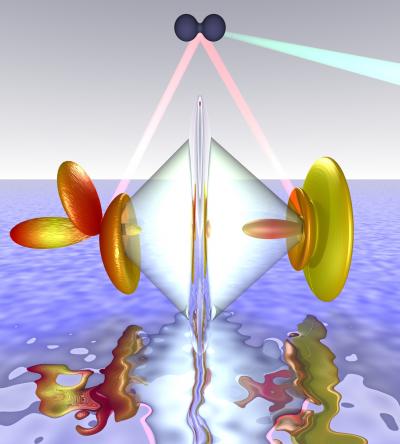
When atoms form molecules, they share their outer electrons and this creates a negatively charged cloud. The electrons buzz around between the two positively charged nuclei, making it impossible to tell which nucleus they belong to. They are delocalized.

Is this also true for the electrons located closer to the nucleus? And are those electrons spread out too, or do they belong to just one nucleus, i.e. are they localized?

These questions have been hotly debated for the last 50 years, and an international team of scientists says they have an answer - in true quantum theory fashion, they are both right.

MIT engineers have created ultrathin films made of polymers that could be applied to medical devices and other surfaces to control microbe accumulation. The inexpensive, easy-to-produce films could provide a valuable layer of protection for the health care industry by helping to reduce the spread of hospital-acquired infections, which take the lives of 100,000 people and cost the United States an estimated $4.5 billion annually.

The researchers found they could control the extent of bacterial adhesion to surfaces by manipulating the mechanical stiffness of polymer films called polyelectrolyte multilayers. Thus, the films could be designed to prevent accumulation of hazardous bacteria or promote growth of desirable bacteria.

“All other factors being equal, mechanical stiffness of material surfaces increases bacterial adhesion,” said Krystyn Van Vliet, the Thomas Lord Assistant Professor of Materials Science and Engineering.