Banner
Synchrotron Could Shed Light On Exotic Dark Photons

There are many hypothetical particles proposed to explain dark matter and one idea to explore how...

The Pain Scale Is Broken But This May Fix It

Chronic pain is reported by over 20 percent of the global population but there is no scientific...
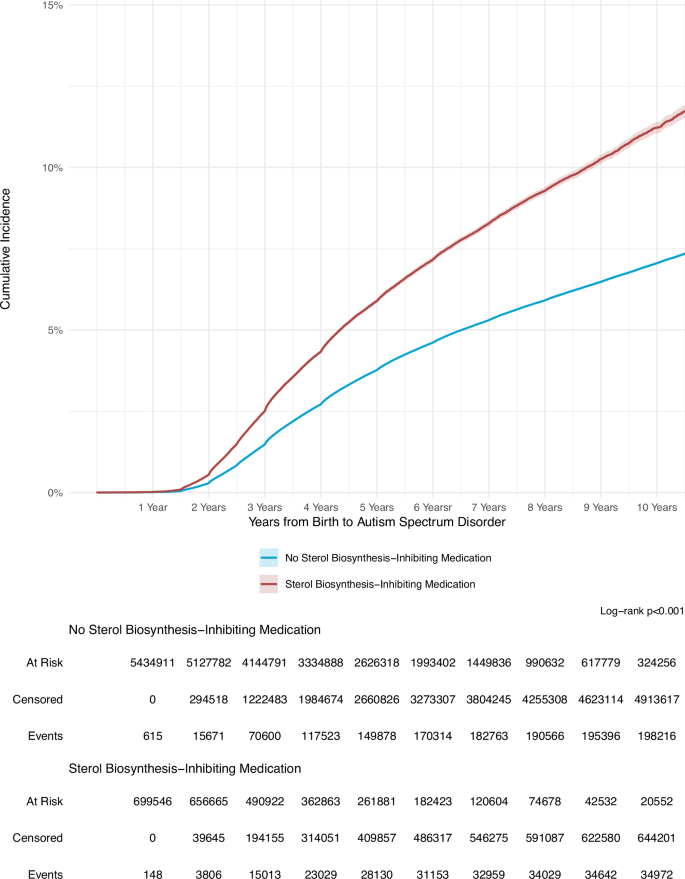
Study Links Antidepressants, Beta-blockers and Statins To Increased Autism Risk

An analysis of 6.14 million maternal-child health records  has linked prescription medications...

Pilot Study: Fibromyalgia Fatigue Improved By TENS Therapy

Fibromyalgia is the term for a poorly-understood condition where people experience pain and fatigue...

User picture.
News StaffRSS Feed of this column.

News Releases From All Over The World, Right To You... Read More »

Blogroll

PHILADELPHIA, PA, Nov. 9, 2015 - Self-weighing can be a useful tool to help adults control their weight, but for adolescents and young adults this behavior may have negative psychological outcomes. Researchers from the University of Minnesota tracked the self-weighing behaviors of more than 1,900 young adults as part of Project EAT (Eating and Activity in Teens and Young Adults) and found increases in self-weighing to be significantly related to increases in weight concern and depression and decreases in body satisfaction and self-esteem among females.

Would your ability to resist a tantalizing cookie improve if you had to wait a few seconds before you could reach for it? The idea that natural urges 'die down' with time seems intuitive, but new research shows that it's being reminded about what not to do, not the passage of time, that actually helps young children control their impulsive behavior.

The findings are published in Psychological Science, a journal of the Association for Psychological Science.

November 9, 2015 - In the largest genomic analysis of puberty timing in men, new research conducted by scientists at the University of Cambridge and 23andMe* shows that the timing of puberty in males and females is influenced by many of the same-shared genetic factors. The study results are the first to quantify the strongly shared genetic basis for puberty timing between the sexes.

A team of scholars recently looked at what emotional effects - if any - eating different yogurts had on people.

Their article in Food Research International claims that being pleasantly surprised or disappointed with a food product can actually change a person's mood, at least based on emotional responses. Eating vanilla yogurt made people feel happy, and that yogurt with lower fat content gave people a stronger positive emotional response. Yogurt with different fruits did not show much difference in their emotional effect.

An international team of scientists has discovered the first oceanic microplate in the Indian Ocean--helping identify when the initial collision between India and Eurasia occurred, leading to the birth of the Himalayas.

Although there are at least seven microplates known in the Pacific Ocean, this is the first ancient Indian Ocean microplate to be discovered. Radar beam images from an orbiting satellite have helped put together pieces of this plate tectonic jigsaw and pinpointed the age for the collision, whose precise date has divided scientists for decades.

Reported in Earth and Planetary Science Letters, the team of Australian and US scientists believe the collision occurred 47 million years ago when India and Eurasia initially smashed into each other.

New research shows how past abrupt climatic changes in the North Atlantic propagated globally. The study, led by researchers from Centre for Ice and Climate at the University of Copenhagen's Niels Bohr Institute, shows how interaction between heat transport in the ocean and the atmosphere caused the climatic changes to be expressed in different ways across the Southern Hemisphere. The results shows how forcing the climate system into a different state can trigger climate variations that spread globally and have very different impacts in different regions of Earth. This is important now, where rising atmospheric CO2 levels lead to global warming and may trigger abrupt climatic changes. The results have been published in the scientific journal Nature Geoscience.