

Banner
Synchrotron Could Shed Light On Exotic Dark Photons

There are many hypothetical particles proposed to explain dark matter and one idea to explore how...

The Pain Scale Is Broken But This May Fix It

Chronic pain is reported by over 20 percent of the global population but there is no scientific...
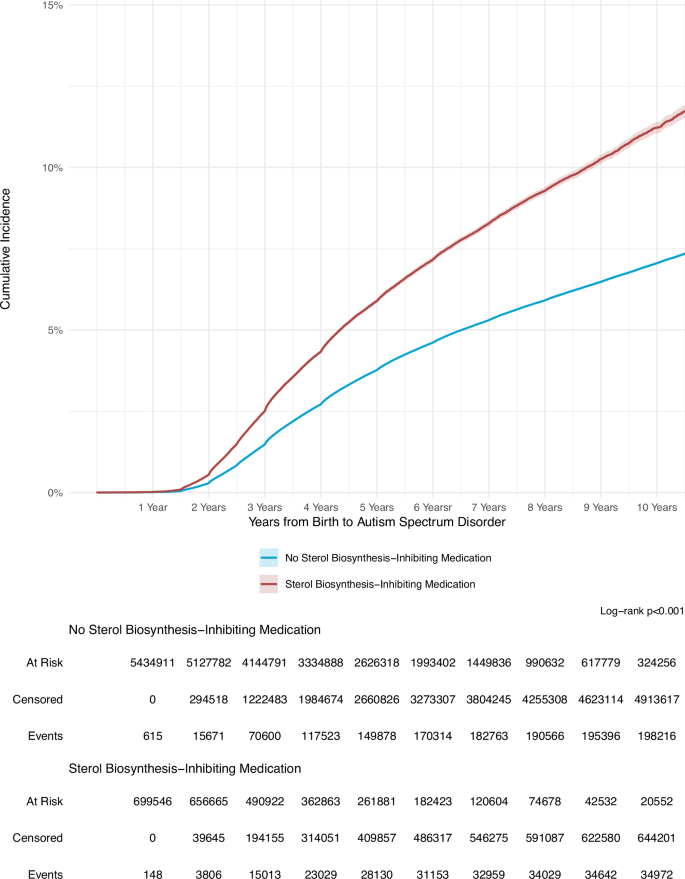
Study Links Antidepressants, Beta-blockers and Statins To Increased Autism Risk

An analysis of 6.14 million maternal-child health records  has linked prescription medications...

Pilot Study: Fibromyalgia Fatigue Improved By TENS Therapy

Fibromyalgia is the term for a poorly-understood condition where people experience pain and fatigue...

User picture.
News StaffRSS Feed of this column.

News Releases From All Over The World, Right To You... Read More »

Blogroll

 With the world population expected to reach 9 billion by 2050, engineers and scientists are looking for ways to meet the increasing demand for food without also increasing the strain on natural resources, such as water and energy, an initiative known as the food-water-energy nexus.

Many patients with serious diseases are not helped by their medications because treatment is started too late. An international research team led from Linköping University is launching a unique strategy for discovering a disease progression in its earliest phase.

The study, to be published in Science Translational Medicine, has been led by Professor Mikael Benson and Dr Mika Gustafsson at the Centre for Individualized Medication (CIMed).

"We're addressing one of the biggest problems in healthcare, one that leads to a great deal of suffering and enormous costs in terms of drugs and drug development. An important reason for this is that treatment is often not started until the patient has enough symptoms for a diagnosis using conventional methods," says Prof Benson.

How does our brain develop the ability to perform complex cognitive functions, such as those needed for language and reasoning? This is a question that certainly we are all asking ourselves, to which the researchers are not yet able to give a complete answer. We know that in the human brain there are about one hundred billion neurons that communicate by means of electrical signals. We learned a lot about the mechanisms of production and transmission of electrical signals among neurons.

Agriculturally rich nations are a little spoiled about food. A few years ago Europe even limited how 'ugly' fruit could be when it was being sold to the public, presumably because Europeans deserve pretty fruit.

For that reason, it's little surprise that there is concern about browning in apples. After being sliced open, the color starts to fade quickly, and in a hyper-vigilant culture where 99 percent of the public has never worked on a farm, parents and consumers may think that this 'browning' means the apple is bad. It gets thrown away, which leads to food waste.

Recent experiments at the Large Plasma Device (LAPD) at the University of California, Los Angeles, have successfully excited elusive plasma waves, known as whistler-mode chorus waves, which have hitherto only been observed in the Earth's near-space environment. These chorus waves were accidentally discovered as early as World War I by radio operators deploying long lines intended to intercept enemy communication, and were subsequently dubbed "dawn chorus" since the sound of the radio signal when played through loudspeakers sounded like the distant chirping of a rookery of birds.

For more than 60 years, fusion scientists have tried to use "magnetic bottles" of various shapes and sizes to confine extremely hot plasmas, with the goal of producing practical fusion energy. But turbulence in the plasma has, so far, confounded researchers' ability to efficiently contain the intense heat within the core of the fusion device, reducing performance. Now, scientists have used one of the world's largest supercomputers to reveal the complex interplay between two types of turbulence known to occur in fusion plasmas, paving the way for improved fusion reactor design.

