

Banner
Synchrotron Could Shed Light On Exotic Dark Photons

There are many hypothetical particles proposed to explain dark matter and one idea to explore how...

The Pain Scale Is Broken But This May Fix It

Chronic pain is reported by over 20 percent of the global population but there is no scientific...
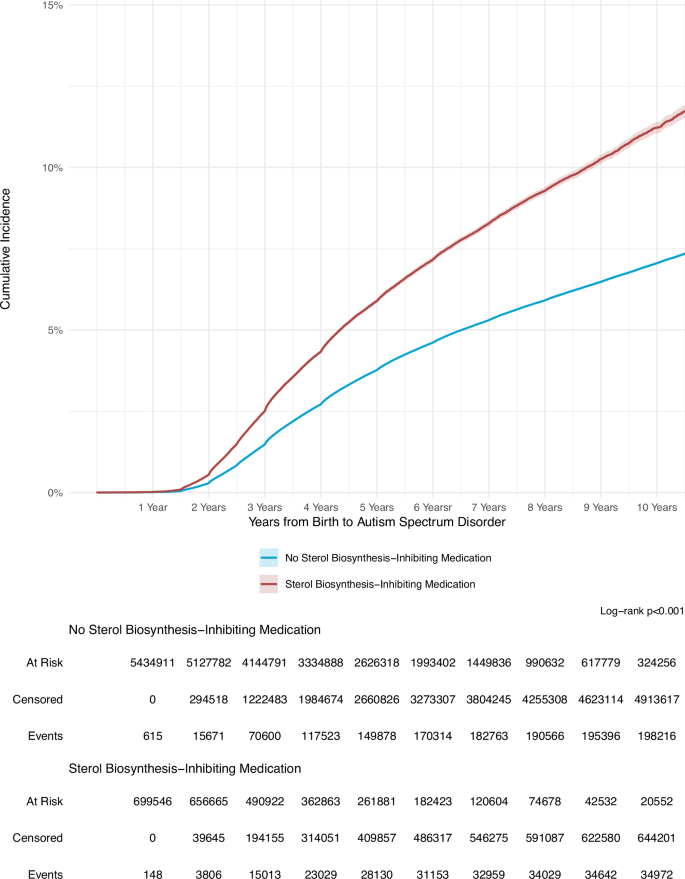
Study Links Antidepressants, Beta-blockers and Statins To Increased Autism Risk

An analysis of 6.14 million maternal-child health records  has linked prescription medications...

Pilot Study: Fibromyalgia Fatigue Improved By TENS Therapy

Fibromyalgia is the term for a poorly-understood condition where people experience pain and fatigue...

User picture.
News StaffRSS Feed of this column.

News Releases From All Over The World, Right To You... Read More »

Blogroll

Mood biases our judgments and perceptions, but this effect has usually been regarded as irrational or disadvantageous. New speculation in Trends in Cognitive Sciences argues that mood draws on experiences and can, in fact, help us quickly adapt to changes in our environment. For example, experiencing unexpected gains on the stock market should improve a trader's mood. That positive mood may then cause the trader to take more risks, essentially helping them adapt more quickly to a market that is generally on the rise. 

10 commercially available insect repellents were evaluated for their effectiveness at repelling mosquitoes. Three of the products (Repel 100® Insect Repellent, OFF® Deep Woods Insect Repellent VIII, and Cutter® Skinsations Insect Repellent) were mosquito repellents that contained DEET as the active ingredient, and four of the products (Cutter® Natural Insect Repellent, EcoSmart® Organic Insect Repellent, Cutter® Lemon Eucalyptus Insect Repellent, and Avon® Skin So Soft Bug Guard) were mosquito repellents that did not contain DEET. The other three products tested were Avon® Skin So Soft Bath Oil, Victoria's Secret® Bombshell perfume, and Mosquito Skin Patch®, a skin patch with vitamin B1 as the active ingredient.

The lipid ceramide, long known to help keep skin smooth, also helps algae swim toward the light and appears to enable one type of brain cell to keep cerebrospinal fluid moving, researchers report in a new paper. 

Ceramide helps make and keep in motion hairlike projections called motile cilia found in algae and in brains. 

"It's important to know how you regulate your cilia because they can become dysfunctional by stroke, by Alzheimer's, by inflammation, even by aging," said Dr. Erhard Bieberich, neuroscientist in the Medical College of Georgia Department of Neuroscience and Regenerative Medicine.

Chemsex, the unfortunately chosen term for sex under the influence of illegal drugs (unfortunate because it connotes chemistry with illegal, when love is clearly a chemistry event in the brain) - needs to become a public health priority, argue experts in The BMJ. This intentional sex under the influence of psychoactive drugs occurs mostly among gay men.

Chemsex usually refers particularly to the use of mephedrone, gamma-hydroxybutyrate (GHB), gamma-butyrolactone (GBL), and crystallized methamphetamine. The drugs are often used in combination to facilitate sexual sessions lasting several hours or even days, with multiple sexual partners.

Because light travels far faster than sound, we see distant events before we hear them. Perhaps as a child you learned to count the seconds between a lightning flash and the sound of thunder to estimate its distance. 

A new paper says that our brains can also detect and process sound delays that are too short to be noticed consciously. And they found that we use even that unconscious information to fine tune what our eyes see when estimating distances to nearby events. 

In a new study, infants remained calm twice as long when listening to a song as when listening to speech. The study involved thirty healthy infants aged between six and nine months.

Humans like music biologically, according to one hypothesis. In adults and older children, this "entrainment" may be displayed by behaviors such as foot-tapping, head-nodding, or drumming. 

"Emotional self-control is obviously not developed in infants, and we believe singing helps babies and children develop this capacity," says Professor Isabelle Peretz of the  University of Montreal.






