

Banner
Synchrotron Could Shed Light On Exotic Dark Photons

There are many hypothetical particles proposed to explain dark matter and one idea to explore how...

The Pain Scale Is Broken But This May Fix It

Chronic pain is reported by over 20 percent of the global population but there is no scientific...
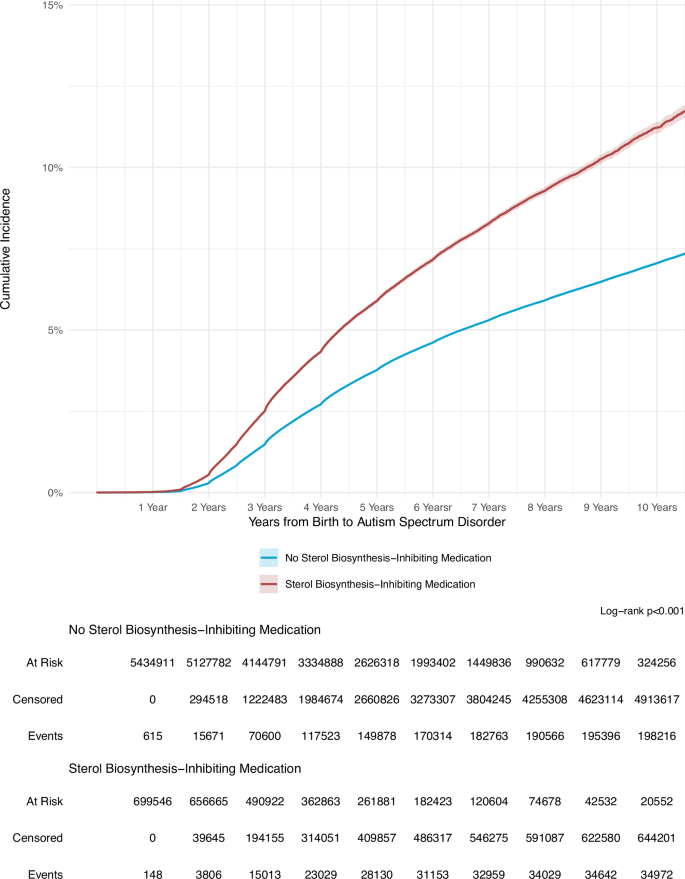
Study Links Antidepressants, Beta-blockers and Statins To Increased Autism Risk

An analysis of 6.14 million maternal-child health records  has linked prescription medications...

Pilot Study: Fibromyalgia Fatigue Improved By TENS Therapy

Fibromyalgia is the term for a poorly-understood condition where people experience pain and fatigue...

User picture.
News StaffRSS Feed of this column.

News Releases From All Over The World, Right To You... Read More »

Blogroll

Quebec City, October 27, 2015--After more than a century of speculation, researchers have finally proved that American eels really do migrate to the Sargasso Sea to reproduce. A team supervised by Professor Julian Dodson of Université Laval and Martin Castonguay of Fisheries and Oceans Canada reports having established the migratory route of this species by tracking 28 eels fitted with satellite transmitters. One of these fish reached the northern boundary of the Sargasso Sea, the presumed reproduction site for the species, after a 2,400 km journey. Details are published in the latest edition of Nature Communications.

When people talk or sing, they often nod, tilt or bow their heads to reinforce verbal messages. But how effective are these head gestures at conveying emotions?

Very effective, according to researchers from McGill University in Montreal. Steven R. Livingstone and Caroline Palmer, from McGill's Department of Psychology, found that people were highly accurate at judging emotions based on head movements alone, even in the absence of sound or facial expressions.

At the end of the Pleistocene mammoths of Northern Eurasia used to experience chronic mineral hunger. As a result they became extinct due to geochemical stress arising on a background of deep abiotic changes in ecosystems. Most likely they were receiving not enough of essential chemical elements. This hypothesis was developed by TSU paleontologists and based on a large-scale, 15-years long research. Detailed information you can find in an article of Sergei Leshchinsky, Head of Laboratory of Mesozoic and Cenozoic continental ecosystems, TSU Faculty of Geology and Geography. This article was published in Archaeological and Anthropological Sciences.

Ann Arbor, MI, October 27, 2015 - On average, 80% of American adults watch 3.5 hours of television per day and multiple observational studies have demonstrated a link between TV viewing and poorer health. In this new study published in the December issue of the American Journal of Preventive Medicine, investigators reported an association between increasing hours of television viewing per day and increasing risk of death from most of the major causes of death in the United States.

Vaccinations are often about children, but anti-science beliefs are often not caused by having them, which reaffirms the contention that ant-vaccine sentiment falls along predictable cultural lines, and includes a raft of other positions, like denial of GMOs and sentiments against energy production.

When the largest modern-day plant-eaters, elephants, are in an area, they devastate the vegetation, like has happened in a South African nature reserve. So 15,000 years ago, when the herbivores like the Columbian mammoth, mastodons and giant ground sloths were even larger, more numerous and more widely distributed, and there were no dentists with high-powered rifles to take them down, how did the landscape survive?


