Banner
Synchrotron Could Shed Light On Exotic Dark Photons

There are many hypothetical particles proposed to explain dark matter and one idea to explore how...

The Pain Scale Is Broken But This May Fix It

Chronic pain is reported by over 20 percent of the global population but there is no scientific...
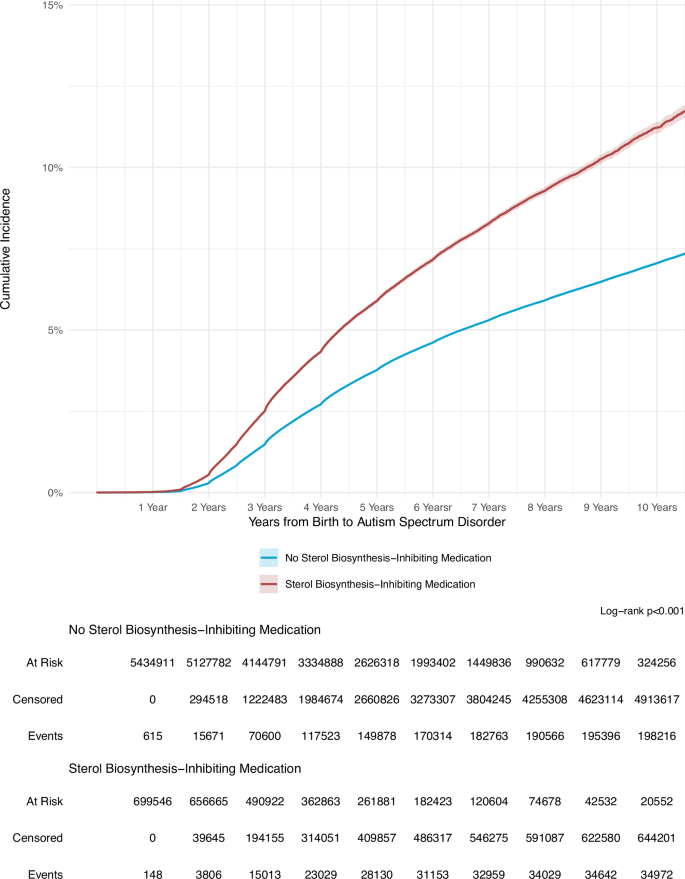
Study Links Antidepressants, Beta-blockers and Statins To Increased Autism Risk

An analysis of 6.14 million maternal-child health records  has linked prescription medications...

Pilot Study: Fibromyalgia Fatigue Improved By TENS Therapy

Fibromyalgia is the term for a poorly-understood condition where people experience pain and fatigue...

User picture.
News StaffRSS Feed of this column.

News Releases From All Over The World, Right To You... Read More »

Blogroll

REM sleep, the phase of night-time mammalian sleep physiology where dreams occur, has long fascinated scientists, clinicians, philosophers, and artists alike, but the identity of the neurons that control REM sleep, and its function in sleep have been controversial due to a lack of precise genetic methods to study the sleeping brain.

A demonstration of a recent brain technology provides the first answers to both questions, identifying a neural circuit in the brain that regulates REM sleep, and showing that REM sleep controls the physiology of the other major sleep phase, called non-REM (NREM) sleep.

Within modern cosmology, the Big Bang marks the beginning of the universe and the creation of matter, space and time about 13.8 billion years ago. Since then, the visible structures of the cosmos have developed: billions of galaxies which bind gas, dust, stars and planets with gravity and host supermassive black holes in their centres. But how could these visible structures have formed from the universe's initial conditions?

To answer this question, theoretical astrophysicists carry out cosmological simulations. They transform their knowledge about the physical processes forming our universe into mathematical models and simulate the evolution of our universe on high-performance computers over billions of years.

WASHINGTON, DC - Researchers at a Dallas children's hospital aim to show that nonpowder firearms such as airsoft, BB, and paintball guns should not be viewed as toys, but rather powerful weapons causing increasingly severe and sometimes life-threatening injuries in pediatric patients.

For hundreds of millions of people around the world, chewing betel nut produces a cheap, quick high but also raises the risk of addiction and oral cancer.

The betel nut, a seed of the areca palm, is grown and used throughout India, parts of China and much of Southeast Asia, including Indonesia and most of the Pacific islands. Chewing the betel quid -- a mixture of areca nut, spices and slaked lime wrapped in betel vine leaves -- has been a cultural tradition in those regions for centuries. In small doses, it creates a sense of euphoria and alertness. Prolonged use can create addiction and the World Health Organization classifies the betel nut as a carcinogen.

In a new thesis, 60 garments from Swedish and international clothing chains have been tested and though around a hundred chemicals were preliminary identified, several of the substances were not on the producers' lists and are suspected to be by-products, residues or chemicals added during transport.

Dependent on occurrence, quantity, toxicity and how easily they may penetrate the skin, four groups of substances were chosen for further analysis. The highest concentrations of two of these, quinolines and aromatic amines, were found in polyester. Cotton contained high concentrations of benzothiazoles, even clothes made from organic cotton.

Understanding of methane-metabolizing organisms might have to be rethought after researchers announced discovery of two new ones.

 The discovery of the novel methane-metabolizing microorganisms was made using techniques that sequence DNA on a large scale and assemble these sequences into genomes using advanced computational tools. 

"Traditionally, these type of methane-metabolizing organisms occur within a single cluster cluster group of microorganisms called Euryarchaeota. This makes us wonder how many other types of methane-metabolizing microorganisms are out there?" asked Gene Tyson, associate professor and Deputy Head of University of Queensland's Australian Centre for Ecogenomics in the School of Chemistry and Molecular Biosciences.