

Banner
Synchrotron Could Shed Light On Exotic Dark Photons

There are many hypothetical particles proposed to explain dark matter and one idea to explore how...

The Pain Scale Is Broken But This May Fix It

Chronic pain is reported by over 20 percent of the global population but there is no scientific...
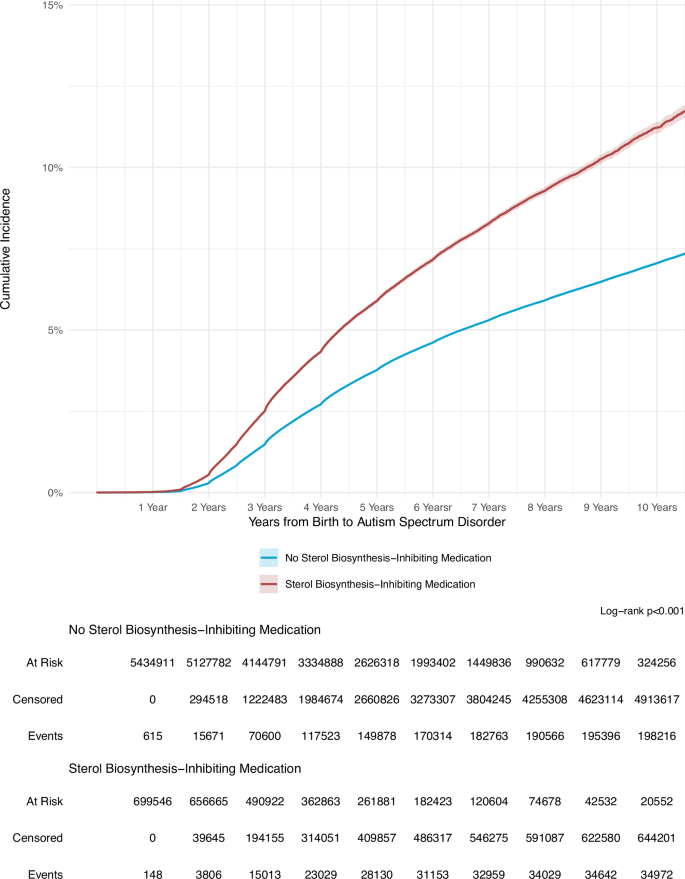
Study Links Antidepressants, Beta-blockers and Statins To Increased Autism Risk

An analysis of 6.14 million maternal-child health records  has linked prescription medications...

Pilot Study: Fibromyalgia Fatigue Improved By TENS Therapy

Fibromyalgia is the term for a poorly-understood condition where people experience pain and fatigue...

User picture.
News StaffRSS Feed of this column.

News Releases From All Over The World, Right To You... Read More »

Blogroll

Antipsychotic drugs are initiated in patients with Alzheimer's disease (AD) more frequently than in the general population - already 2-3 years before the Alzheimer's diagnosis, according to a new study from the University of Eastern Finland. Most commonly, antipsychotics were initiated during the six months following the Alzheimer's diagnosis; however, the incidence of new antipsychotic users was high also later on. 

A new challenges prevailing wisdom by identifying the atmosphere as the driver of a decades-long climate variation known as the Atlantic Multi-decadal Oscillation (AMO) and offering new insight on the causes and predictability of natural climate variations, which are known to cause wide-ranging global weather impacts, including increased rainfall, drought, and greater hurricane frequency in many parts of the Atlantic basin.

For decades, research on climate variations in the Atlantic has focused almost exclusively on the role of ocean circulation as the main driver, specifically the Atlantic Meridional Overturning Circulation, which carries warm water north in the upper layers of the ocean and cold water south in lower layers like a large conveyor belt.

Scientists have developed a blood test that could help pair cancer patients with the most suitable therapy for their disease and then track the tumor's progress to see if the treatment is working, according to research published today (Thursday) in Clinical Cancer Research.

Using the blood test throughout a patient's treatment gives a 'running commentary' of what is happening to tumors - giving scientists the lowdown on how well the treatment is working, how the cancer is changing and whether it is becoming resistant to treatment. It is the first time a blood test has been used in this way during clinical trials of targeted drugs, proving that the technique can monitor cancer simply and quickly.

The very act of tolerating some forms of soil pollution may give trees an advantage in the natural world, says University of Montreal plant biologists. Their findings were published this week in BMC Plant Biology.

Dopamine deficiency in the basal ganglia (a set of subcortical structures) causes severe motor dysfunctions, such as slowness of movements (bradykinesia), as observed in Parkinson's disease. Dopamine binds D1 and D2 receptors that are expressed in the nerve cells of the striatum (a structure of the basal ganglia), and exerts different effects on the nerve cells. However, how dopamine controls through these receptors the information flow in the basal ganglia and voluntary movements is still not clear.

A new study finds that rising placebo responses may play a part in the increasingly high failure rate for clinical trials of drugs designed to control chronic pain caused by nerve damage. Surprisingly, however, the analysis of clinical trials conducted since 1990 found that the increase in placebo responses occurred only in trials conducted wholly in the U.S.; trials conducted in Europe or Asia showed no changes in placebo responses over that period.






