

Banner
Synchrotron Could Shed Light On Exotic Dark Photons

There are many hypothetical particles proposed to explain dark matter and one idea to explore how...

The Pain Scale Is Broken But This May Fix It

Chronic pain is reported by over 20 percent of the global population but there is no scientific...
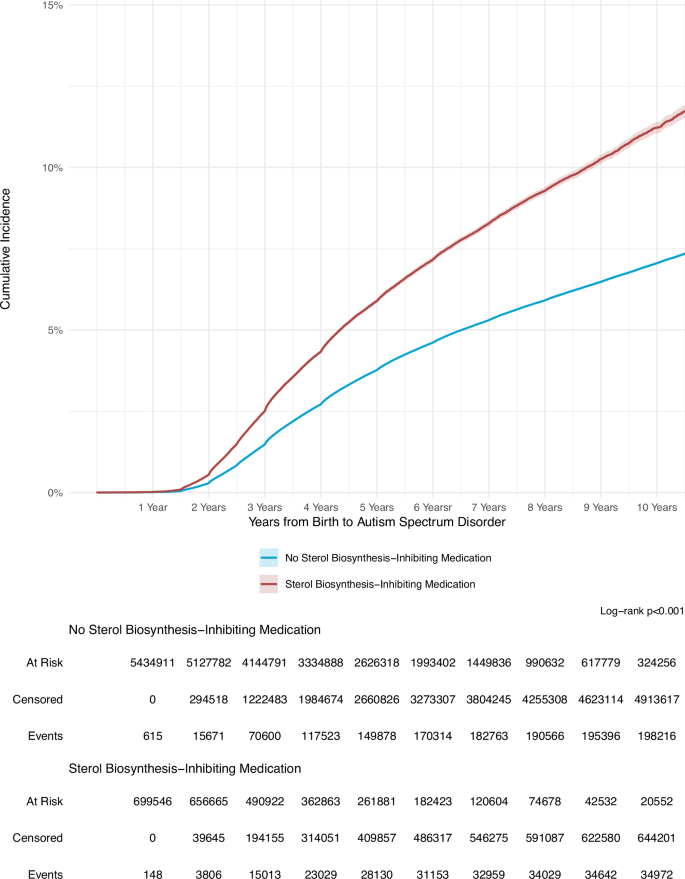
Study Links Antidepressants, Beta-blockers and Statins To Increased Autism Risk

An analysis of 6.14 million maternal-child health records  has linked prescription medications...

Pilot Study: Fibromyalgia Fatigue Improved By TENS Therapy

Fibromyalgia is the term for a poorly-understood condition where people experience pain and fatigue...

User picture.
News StaffRSS Feed of this column.

News Releases From All Over The World, Right To You... Read More »

Blogroll

Fresh research at Sahlgrenska Academy has found that antioxidants can double the rate of melanoma metastasis in mice. The results reinforce previous findings that antioxidants hasten the progression of lung cancer. According to Professor Martin Bergö, people with cancer or an elevated risk of developing the disease should avoid nutritional supplements that contain antioxidants.

Researchers at Sahlgrenska Academy, University of Gothenburg, demonstrated in January 2014 that antioxidants hastened and aggravated the progression of lung cancer. Mice that were given antioxidants developed additional and more aggressive tumors. Experiments on human lung cancer cells confirmed the results.

Scientists writing in Environmental Research Letters estimate that the onset of spring plant growth will shift by a median of three weeks over the next century - and global warming is to blame.

The scholars from University of Wisconsin-Madison applied the extended Spring Indices to predict the dates of leaf and flower emergence based on day length. These general models capture the phenology of many plant species.  Their results show particularly rapid shifts in plant phenology in the Pacific Northwest and Mountainous regions of the western US, with smaller shifts in southern areas, where spring already arrives early. Much of their data is available at http://silvis.forest.wisc.edu/

Researchers have developed a new strategy for helping African farmers fight a parasitic plant that devastates crops - plants in the genus Striga, also known as witchweed.

Though their purple flowers are pretty to look at, a field full of Striga plants is in fact a nightmare for a farmer who wants to grow corn, sorghum, rice or other subsistence crops. The problem affects more than 100 million people across 25 countries in sub-Saharan Africa.

 University of Toronto  chemical engineering professor Alexei Savchenko, along with professor Peter McCourt in the Department of Cell and Systems Biology, have created a genetically engineered plant biosensor, a tool that will help them hunt for molecules that could prevent Striga infestations.

By meticulously examining sediments in China's Yellow River, a Swedish-Chinese research group are showing that the history of tectonic and climate evolution on Earth may need to be rewritten. Their findings are published today in the highly reputed journal Nature Communications.

To reconstruct how the global climate and topography of the Earth's surface have developed over millions of years, deposits of eroded land sediment transported by rivers to ocean depths are often used. This process is assumed to have been rapid and, by the same token, not to have resulted in any major storages of this sediment as large deposits along the way.

A new paper gives psycholgists a unique glimpse at how humans develop an ability to use tools in childhood while nonhuman primates--such as capuchin monkeys and chimpanzees--remain only occasional tool users.

Dorothy Fragaszy, a psychology professor at the University of Georgia, created two studies to look at how non-human primates and human children differ in completing simple spatial reasoning tasks. 

Much like a game of Operation, human children ages 2, 3 and 4 and adult nonhuman primates were asked to fit a stick, a cross and a tomahawk into a matching cutout space on a tray. Children were also given an opportunity to complete this task by placing the sticks on a mat with a drawing of the matching shape, as well as into a space on a tray.

Renewable energy is not very sustainable in the European Union (EU) yet but the food industry, which is heavily reliable on subsidies to stay competitive with the rest of the world, needs renewable energy costs to come down to remain viable.

Until then, the food sector is going to resist using renewable energy, which is a scant 7 percent of their usage, compared to 15 percent in the EU overall. Instead of advocating basic research to improve renewable energy, the call is out to lower meat consumption in a new report. And of course to reduce food choices by shopping locally and seasonally.




