Banner
Here's Where Your Backyard Was 300 Million Years Ago

We may use terms like "grounded" and terra firma to mean stability and consistency but geology...

Convergent Evolution Cheat Sheet Now 120 Million Years Old

One tenet of natural selection is a random walk of genes but nature may be more predictable than...

Synchrotron Could Shed Light On Exotic Dark Photons

There are many hypothetical particles proposed to explain dark matter and one idea to explore how...

The Pain Scale Is Broken But This May Fix It

Chronic pain is reported by over 20 percent of the global population but there is no scientific...

User picture.
News StaffRSS Feed of this column.

News Releases From All Over The World, Right To You... Read More »

Blogroll

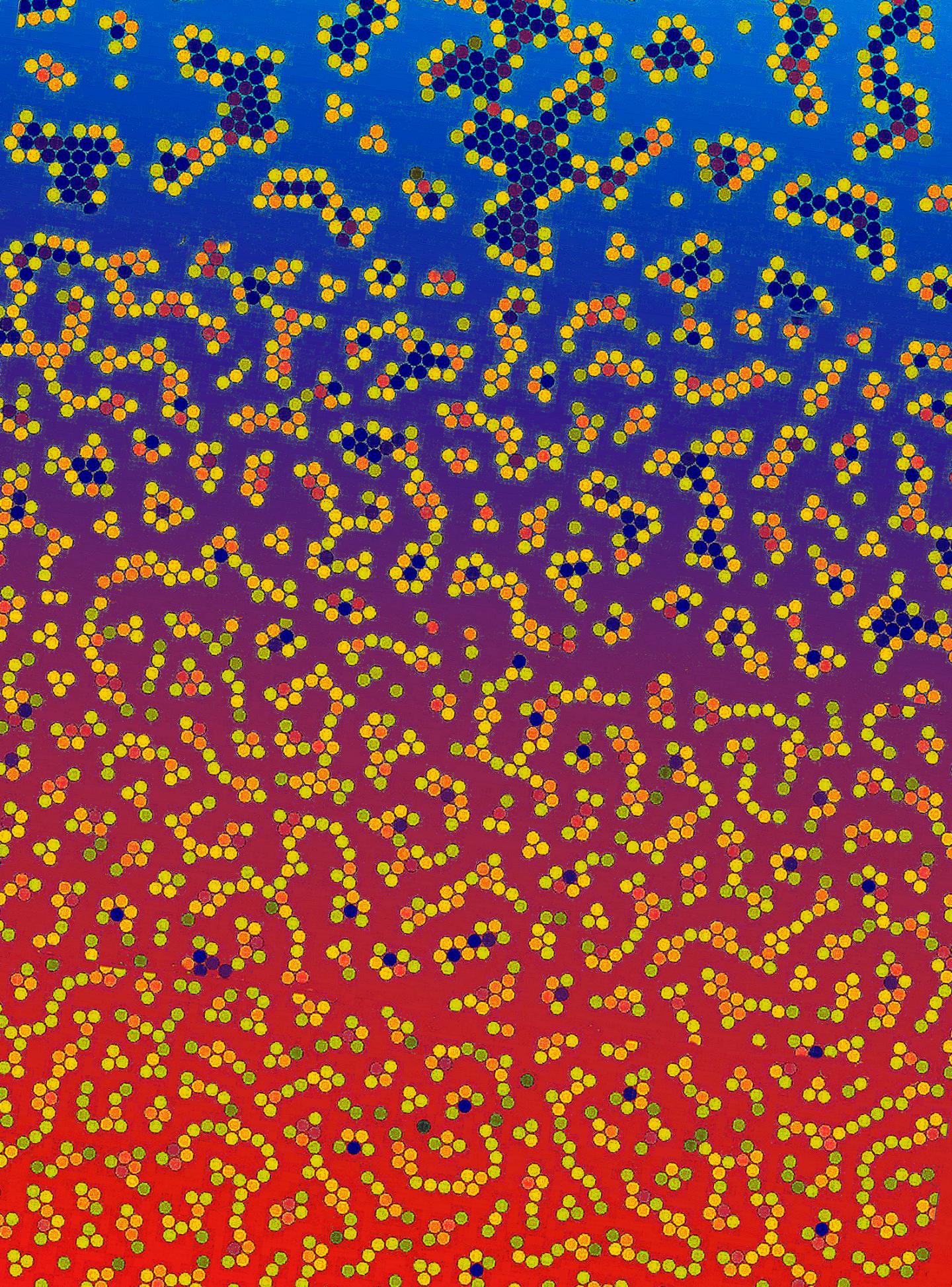
Churning raw milk sufficiently creates butter. Squirting lemon juice coagulates it into curd. These two phenomena are not as straightforward as they sound on the molecular level.

When milk is churned, the fat molecules in it come closer to form aggregates. Lemon juice increases milk's acidity and creates similar molecular lumps. Yet butter and curd are not solids because in both cases, the aggregated molecules still maintain consistent distances from each other, behaving as if they are part of a liquid.

Understanding how and why we evolved such large brains is one of the most puzzling issues in the study of human evolution. It is widely accepted that brain size increase is partly linked to changes in diet over the last 3 million years, and increases in meat consumption and the development of cooking have received particular attention from the scientific community.

In a new study, Dr. Karen Hardy and her team bring together archaeological, anthropological, genetic, physiological and anatomical data to argue that carbohydrate consumption, particularly in the form of starch, was critical for the accelerated expansion of the human brain over the last million years, and co-evolved both with copy number variation of the salivary amylase genes and controlled fire use for cooking.

Researchers investigated how frequent, long-distance travel is represented in mass and social media. They found that the images portrayed do not take into account the damaging side effects of frequent travel such as jet-lag, deep vein thrombosis, radiation exposure, stress, loneliness and distance from community and family networks.

Instead, the study found that those with 'hyper-mobile' lifestyles were often seen as having a higher social status. By assessing how first-class flights, 'must-see' destinations and frequent-flyer programs are represented, glamorizing hypermobility as exciting, appealing and exclusive, the study shows how the 'dark side' of travel is ignored. 

Prolonged spaceflight may give you a nasty case of diarrhea, at least if you are a mouse. Specifically, when mice were subjected to simulated spaceflight conditions, the balance of bacteria and the function of immune cells in the gut changed, leading to increased bowel inflammation.  

When it comes to vaccinating their babies, bees don't have a choice -- they naturally immunize their offspring against specific diseases found in their environments. And now for the first time, scientists have discovered how they do it.

Researchers from Arizona State University, University of Helsinki, University of Jyväskylä and Norwegian University of Life Sciences made the discovery after studying a bee blood protein called vitellogenin. The scientists found that this protein plays a critical, but previously unknown role in providing bee babies protection against disease.

Many people who are skeptical about vaccinating their children can be convinced to do so, but only if the argument is presented in a certain way, a team of psychologists from UCLA and the University of Illinois at Urbana-Champaign reported today. The research appears in the online early edition of the journal Proceedings of the National Academy of Sciences.

The finding is especially important because the number of measles cases in the U.S. tripled from 2013 to 2014. The disease's re-emergence has been linked to a trend of parents refusing to vaccinate their children.

What doesn't change their minds? Telling parents their fear of vaccinations is uninformed and erroneous.