Banner
Here's Where Your Backyard Was 300 Million Years Ago

We may use terms like "grounded" and terra firma to mean stability and consistency but geology...

Convergent Evolution Cheat Sheet Now 120 Million Years Old

One tenet of natural selection is a random walk of genes but nature may be more predictable than...

Synchrotron Could Shed Light On Exotic Dark Photons

There are many hypothetical particles proposed to explain dark matter and one idea to explore how...

The Pain Scale Is Broken But This May Fix It

Chronic pain is reported by over 20 percent of the global population but there is no scientific...

User picture.
News StaffRSS Feed of this column.

News Releases From All Over The World, Right To You... Read More »

Blogroll
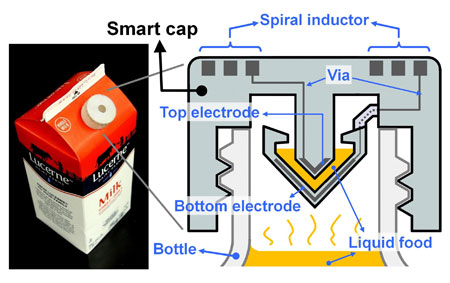
3D printing technology can now include electrical components, such as resistors, inductors, capacitors and integrated wireless electrical sensing systems, and researchers have put that concept to the test by printing a wireless “smart cap” for a milk carton that detected signs of spoilage using embedded sensors.

Prosthetics, medical implants and toys are all fantastic but what had been missing from the repertoire until now was the ability to produce sensitive electronic components.

The discovery of unusual foraging activity in bacteria species populating our gut may explain how conditions like Inflammatory Bowel Disease (IBD) link to changes in the populations of bacteria in our gut. IBD affects 1 in every 250 people but its causes are unknown. Studies have shown that IBD patients have a different profile of gut microbes, which is called dysbiosis.

All of us have trillions of beneficial bacteria in our gut, but the combination of different species, known as the microbiome, varies. A crucial question has been whether IBD causes our microbiome to change, or whether an imbalanced microbiome could be triggering IBD. And exactly how does one affect the other? We need to study these interactions to define new targets for therapeutics.

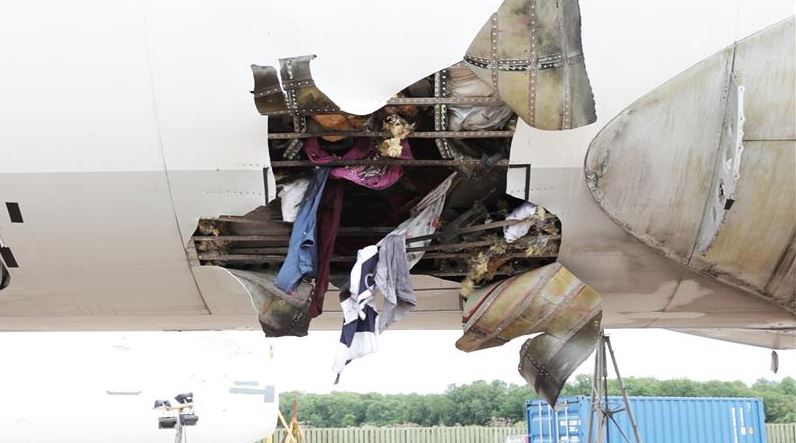
A bomb-proof lining called the  Fly-Bag has successfully contained blasts in a series of controlled explosions in the luggage hold of a Boeing 747 and an Airbus 321. Using this technology, tests show plane’s luggage hold may be able to contain force of an explosion if a device hidden in a passenger’s luggage detonates

The Fly-Bag lines an aircraft’s luggage hold with multiple layers of novel fabrics and composites and was tested under increasing explosive charges on disused planes at Cotswolds Airport, near Cirencester, this week.

A new small goby fish differs from its relatives not only in its size and colors, but also in the depth of its habitat (70-80 m) in the southern Caribbean. The scientists gave it the name Coryphopterus curasub in recognition of the Curasub submersible that was used in their deep-reef exploration.

Marine biodiversity inhabiting shallow Caribbean coral reefs has been studied for more than 150 years, but much less is known about what lives at depths just below those accessible with conventional SCUBA gear.

Thanks to the availability of a privately owned, manned submersible on the island of Curacao, the Curasub, scientists are now able to intensively study depths to 300 m (1,000 ft).

All those leftover pizza crusts you snatch from your kids' plates add up. Men gain weight after they become fathers for the first time whether or not they live with their children, reports a large, new study that tracked the weight of more than 10,000 men from adolescence to young adulthood. 

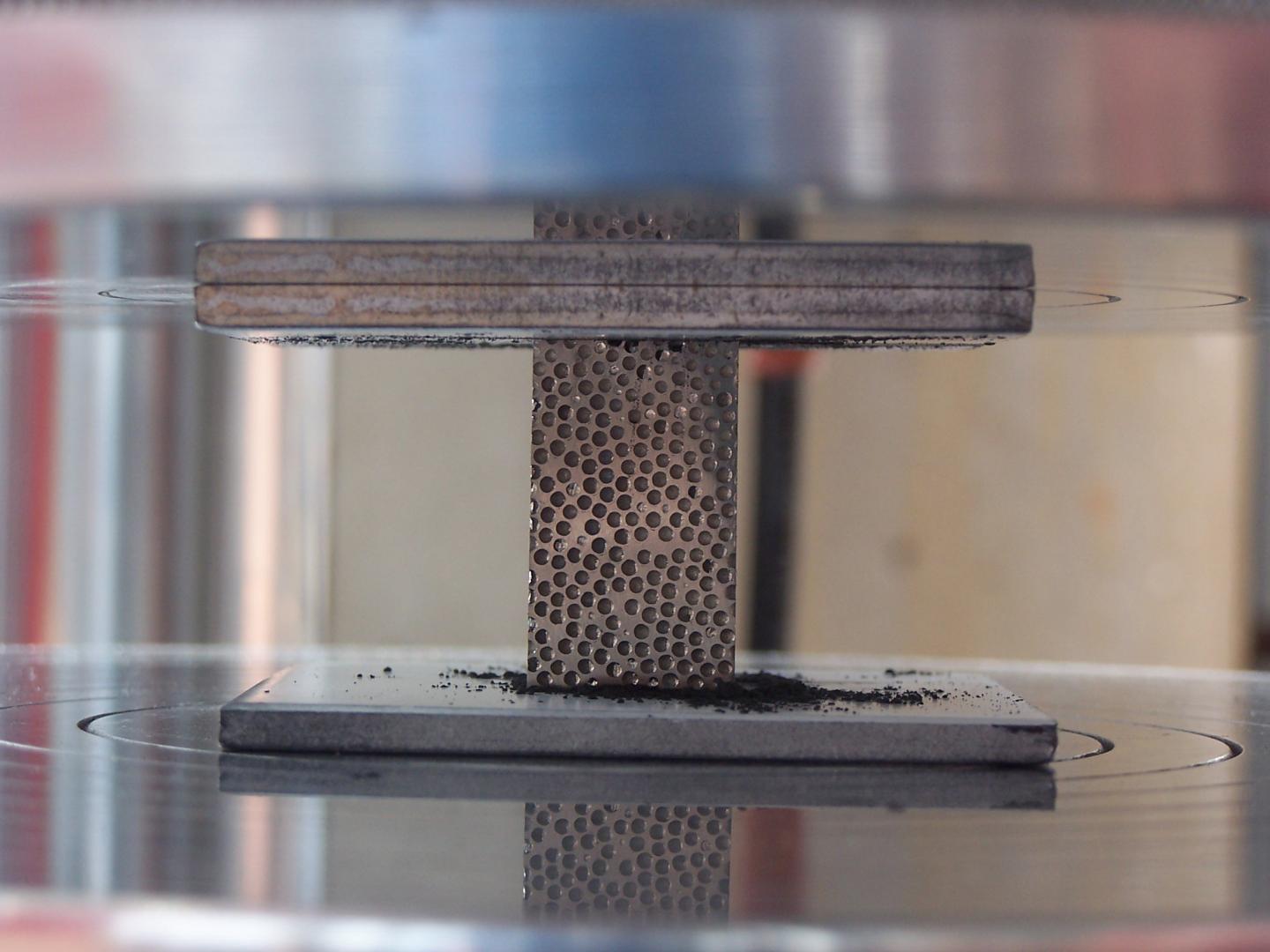
Lightweight composite metal foams are effective at blocking X-rays, gamma rays and neutron radiation, and are capable of absorbing the energy of high impact collisions, and a new finding means the metal foams hold promise for use in nuclear safety, space exploration and medical technology applications.

Researchers conducted multiple tests to see how effective it was at blocking X-rays, gamma rays and neutron radiation. She then compared the material's performance to the performance of bulk materials that are currently used in shielding applications. The comparison was made using samples of the same "areal" density - meaning that each sample had the same weight, but varied in volume.