Banner
Here's Where Your Backyard Was 300 Million Years Ago

We may use terms like "grounded" and terra firma to mean stability and consistency but geology...

Convergent Evolution Cheat Sheet Now 120 Million Years Old

One tenet of natural selection is a random walk of genes but nature may be more predictable than...

Synchrotron Could Shed Light On Exotic Dark Photons

There are many hypothetical particles proposed to explain dark matter and one idea to explore how...

The Pain Scale Is Broken But This May Fix It

Chronic pain is reported by over 20 percent of the global population but there is no scientific...

User picture.
News StaffRSS Feed of this column.

News Releases From All Over The World, Right To You... Read More »

Blogroll
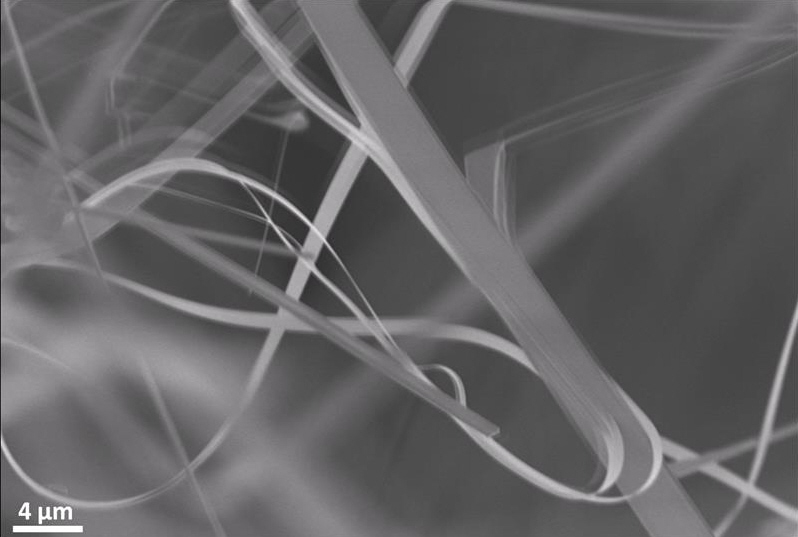
Scientists synthesizing nanoscale materials using simple and highly efficient flame technology have been able to “bake” nanostructures using tin oxide, which opens up a wide field of possible new applications.

Metal oxides in bulk form are generally brittle, which limits their desired utilizations. Their one-dimensional (1D) structures, such as belt-like nanostructures, exhibit much more application potential because of their high surface to volume ratio. This ratio induces extraordinary physical and chemical properties, including a high degree of bendability.

New research has shown that pH lowering of municipal water supplies, a common strategy used to control the release of soluble lead from plumbing materials, can affect corrosion of cast iron water mains, resulting in increased levels of both particulate iron and particulate lead in drinking water.

The results of intensive laboratory and field testing of samples from a municipal system following consumer complaints of "red water" and the link between iron corrosion and lead leaching are described in an article in Environmental Engineering Science.
Esophageal cancer rates in men have increased by 50 percent since the early 1980s, with new United Kingdom cases reaching almost 6,000, according to the latest figures which show that the number of men diagnosed with esophageal cancer has rapidly risen from around 2,700 cases three decades ago to 5,740 cases in 2012.

Given the changes in population size this equates to a 50 percent increase from 15 to 23 cases per 100,000 people. In women, the increase is much smaller with around 10 percent more now developing the disease compared to the 80s. Now 2,802 women are diagnosed with esophageal cancer.  Esophageal cancer rates in women for 2012 are 9 per 100,000. 
Currently different data formats between research centers pose a challenge to oceanographic researchers, but a new project is going to make marine data sets more easily accessible to researchers worldwide. 

The ODIP II project will use NERC’s vocabulary server to ‘translate’ between these different data semantics. ODIP II is a collaboration between the USA, Australia and the EU. By the time it is complete, in May 2018, it aims to have developed a means of seamlessly sharing and managing marine data and coordinating the existing regional marine e-infrastructures.
A Silicon (Si) quantum dot (QD)-based hybrid inorganic/organic light-emitting diode (LED) that exhibits white-blue electroluminescence has been created.

A hybrid LED is expected to be a next-generation illumination device for producing flexible lighting and display, and this is achieved for the Si QD-based white-blue LED. 

The Si QD hybrid LED was developed using a simple method; almost all processes were solution-based and conducted at ambient temperature and pressure. Conductive polymer solutions and a colloidal Si QD solution were deposited on the glass substrate. The current and optical power densities of the LED are, respectively, 280 and 350 times greater than those reported previously for such a device at the same voltage (6 V).

Office workers should be on their feet for a minimum of 2 hours daily during working hours, recommends the first ever UK guidance designed to curb the health risks of too much cumulative sitting time, and published online in the British Journal of Sports Medicine.

This daily quota should eventually be bumped up to 4 hours a day, breaking up prolonged periods of sitting with the use of sit-stand desks, standing based work, and regular walk-abouts, it says.

The guidance, which evaluates and distils the available evidence, was drawn up by a panel of international experts, at the behest of Public Health England and a UK community interest company (Active Working CIC).