Banner
Here's Where Your Backyard Was 300 Million Years Ago

We may use terms like "grounded" and terra firma to mean stability and consistency but geology...

Convergent Evolution Cheat Sheet Now 120 Million Years Old

One tenet of natural selection is a random walk of genes but nature may be more predictable than...

Synchrotron Could Shed Light On Exotic Dark Photons

There are many hypothetical particles proposed to explain dark matter and one idea to explore how...

The Pain Scale Is Broken But This May Fix It

Chronic pain is reported by over 20 percent of the global population but there is no scientific...

User picture.
News StaffRSS Feed of this column.

News Releases From All Over The World, Right To You... Read More »

Blogroll

New recommendations offer insights on strategies for treating infants with seizures. In an Epilepsia report, child neurologists who are members of the International League Against Epilepsy note that intervening at the time of a febrile seizure does not alter the risk for subsequent epilepsy, and there is no evidence to support the use of antiepileptic drugs for simple febrile seizures. However, recurrent seizures warrant an urgent assessment, and a variety of antiepileptic drugs may benefit these patients. Unfortunately, there is no high level evidence to support the use of any one particular drug among those that are currently available for use in infants with seizures.

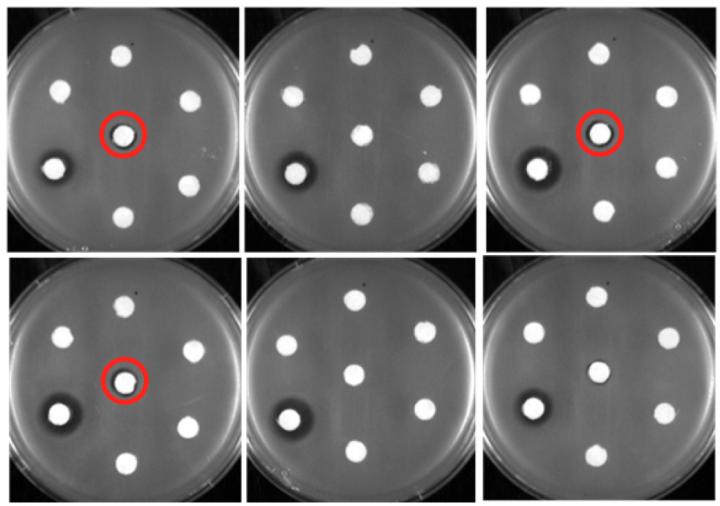
Like a dairy farmer tending to a herd of cows to produce milk, researchers are tending to colonies of the bacteria Escherichia coli (E. coli) to produce new forms of antibiotics -- including three that show promise in fighting drug-resistant bacteria.

The research, which will be published May 29 in the journal Science Advances, was led by Blaine A. Pfeifer, an associate professor of chemical and biological engineering in the University at Buffalo School of Engineering and Applied Sciences. His team included first author Guojian Zhang, Yi Li and Lei Fang, all in the Department of Chemical and Biological Engineering.

Singapore -- Scientists from A*STAR's Bioinformatics Institute (BII) have developed an analytical model and computational tool to rapidly and accurately predict the occurrence and locations of R-loop Forming Sequences (RLFSs) in any genome or artificial nucleic acid sequences. R-loops, which are three-stranded RNA and DNA hybrid structures, can be crucial to many normal biological processes and have also been associated with triggering mutations, DNA breaks and diseases. These hybrid structures provide intriguing possibilities for use as novel targets for diagnostics and treatment of diseases including cancer, autoimmune and neurodegenerative conditions.

Using a complex modeling program that helps analyze the physical dynamics of large, structurally complex protein molecules, a research team has made progress towards finding a weak spot in the architecture of a group of enzymes that are essential to antibiotic resistance in a number of bacteria.

In an article published in PLOS ONE, University of North Carolina at Charlotte senior biology major Jenna R. Brown and her faculty mentor, UNC Charlotte professor of bioinformatics and genomics Dennis R. Livesay, present an analysis of the four currently known protein structures of the class C beta-lactamase enzymes - molecular machines that have evolved to allow bacteria to dismantle a variety of antibiotic molecules, including third generation cephalosporins.

Some decisions arouse far more anxiety than others. Among the most anxiety-provoking are those that involve options with both positive and negative elements, such choosing to take a higher-paying job in a city far from family and friends, versus choosing to stay put with less pay.
MIT researchers have now identified a neural circuit that appears to underlie decision-making in this type of situation, which is known as approach-avoidance conflict. The findings could help researchers to discover new ways to treat psychiatric disorders that feature impaired decision-making, such as depression, schizophrenia, and borderline personality disorder.

The recent floods in Texas have caused some of the worst flooding since Hurricane Ike in 2008, causing the rainiest month in the state's history.

What lessons have been learned from Ike's devastation of the Galveston and Houston area, and how have they helped in the prediction of future such storms?

Researchers at the Institute for Computational Engineering and Sciences at the University of Texas at Austin have been studying computational models and simulations of hurricanes like Ike in order to predict the consequences of such natural disasters and better prepare the Texas Gulf Coast for their effects.