Banner
Here's Where Your Backyard Was 300 Million Years Ago

We may use terms like "grounded" and terra firma to mean stability and consistency but geology...

Convergent Evolution Cheat Sheet Now 120 Million Years Old

One tenet of natural selection is a random walk of genes but nature may be more predictable than...

Synchrotron Could Shed Light On Exotic Dark Photons

There are many hypothetical particles proposed to explain dark matter and one idea to explore how...

The Pain Scale Is Broken But This May Fix It

Chronic pain is reported by over 20 percent of the global population but there is no scientific...

User picture.
News StaffRSS Feed of this column.

News Releases From All Over The World, Right To You... Read More »

Blogroll

A study has found that individual differences in brain structure could help to determine the risk for future drug addiction. The study found that occasional users who subsequently increased their drug use compared with those who did not, showed brain structural differences when they started using drugs.

A new study led by investigators at Brigham and Women's Hospital (BWH) reports the discovery of a genetic variant that is associated with a patient's likelihood of responding to interferon-beta, one of the medications used in treating multiple sclerosis (MS). Published in the Annals of Neurology on May 14, the study also presents evidence that the affected gene, SLC9A9, may have a broader role in regulating the development and activity of certain immune cells that play important roles in inflammatory diseases like MS.

A proportion of MS patients experience disease activity despite treatment. The early identification of the most effective drug for a given individual is critical to impact long-term outcome and to move toward a personalized treatment approach.

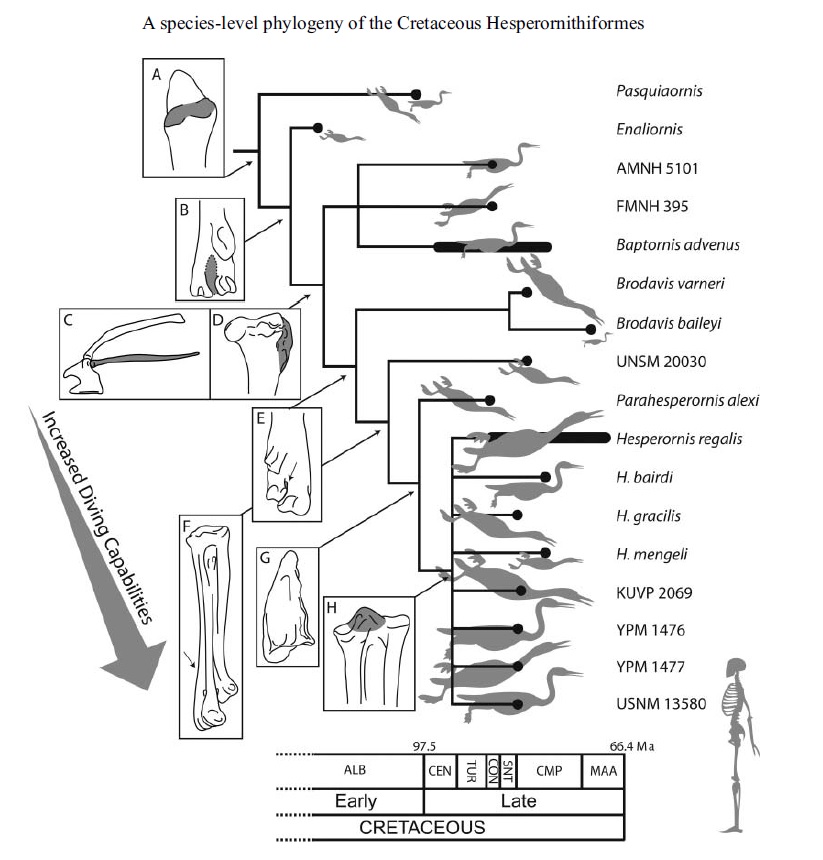
A new study of some Hesperornithiform bird fossils from the Cretaceous shows how several separate lineages evolved adaptations for diving. They began to go fishing.

Living at the same time as the dinosaurs,  Hesperornithiform has been found in North America, Europe and Asia in 65–95 million years old rocks. Dr. Alyssa Bell and Professor Luis Chiappe of the Dinosaur Institute, Natural History Museum of Los Angeles County, undertook a detailed analysis of their evolution, showing that separate lineages became progressively more adept at diving into water to catch fishes, like modern day loons and grebes.
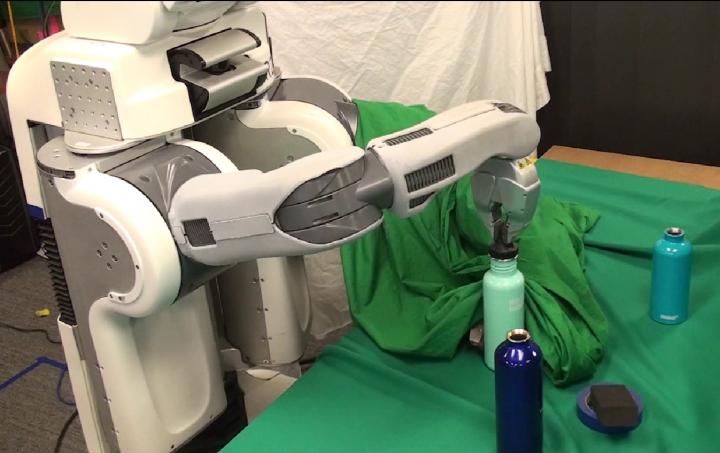
Researchers have developed algorithms that enable robots to learn motor tasks through trial and error, using a process that more closely approximates the way humans learn.

They demonstrated their technique, a type of reinforcement learning, by having a robot complete various tasks -- putting a clothes hanger on a rack, assembling a toy plane, screwing a cap on a water bottle, and more -- without pre-programmed details about its surroundings. 
Though the popular imagery of farming is a small family operation on a tiny patch of land, that isn't really the case.

Over 90 percent of American farms are run by families but they are high-tech operations. Farmers want yields to go up and costs to come down and that means having data.

In recent years, the popularity of "electronic dance music" (EDM) and dance festivals has increased substantially throughout the US and worldwide.

Even though data from national samples suggests drug use among adolescents in the general US population has been declining, targeted samples have shown nightclub attendees tend to report high rates of drug use, above that of the general population. In spite of increasing deaths among dance festival attendees in recent years, no nationally representative studies have examined potential associations between nightlife attendance and drug use.