

Banner
Synchrotron Could Shed Light On Exotic Dark Photons

There are many hypothetical particles proposed to explain dark matter and one idea to explore how...

The Pain Scale Is Broken But This May Fix It

Chronic pain is reported by over 20 percent of the global population but there is no scientific...
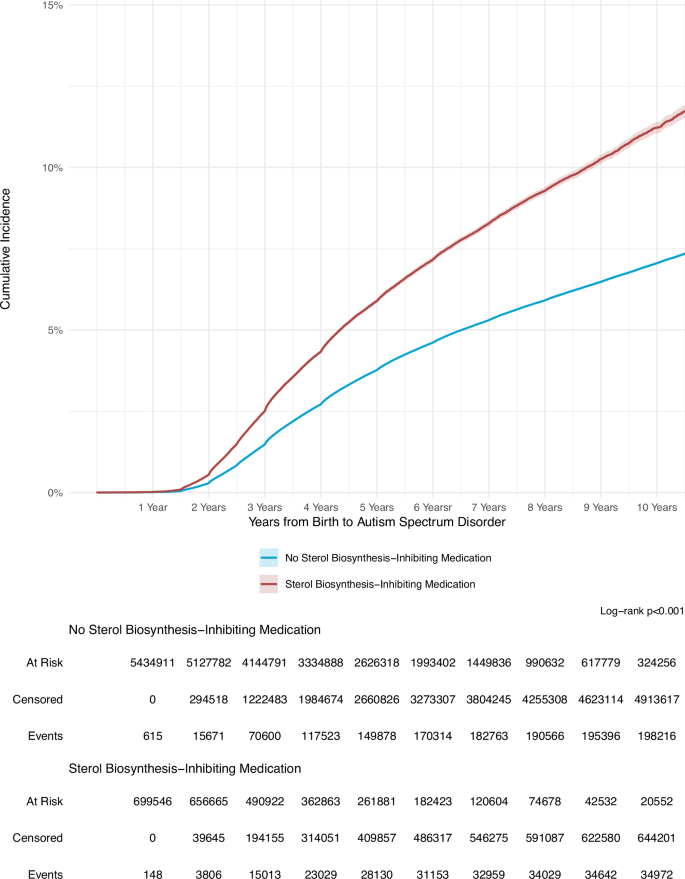
Study Links Antidepressants, Beta-blockers and Statins To Increased Autism Risk

An analysis of 6.14 million maternal-child health records  has linked prescription medications...

Pilot Study: Fibromyalgia Fatigue Improved By TENS Therapy

Fibromyalgia is the term for a poorly-understood condition where people experience pain and fatigue...

User picture.
News StaffRSS Feed of this column.

News Releases From All Over The World, Right To You... Read More »

Blogroll

Parents are always worried about their special snowflakes - unless a phone call needs to be  made. Then, parents are no less likely to engage in cell phone and other distracting behavior than the general public, according to a new paper in Academic Pediatrics.

The use of lamps that emit UV radiation in nail salons has raised some concern about the risk of cancer, but previous studies have lacked a large enough sampling of lights from a variety of salons.

To create a more authoritative sample, the authors of a new study tested 17 light units from 16 salons with a wide range of bulbs, wattage and irradiance emitted by each device for their research letter.

Higher-wattage light sources were correlated with higher UV-A irradiance emitted.

University of California, Berkeley, geologist William Dietrich pioneered the application of airborne LIDAR, light detection and ranging, to map mountainous terrain, stripping away the vegetation to see the underlying ground surface - but he still couldn't see what was under the surface: the depth of the soil, the underlying weathered rock and the deep bedrock.

He and geology graduate student Daniella Rempe have now proposed a method to determine these underground details without drilling, potentially providing a more precise way to predict water runoff, the moisture available to plants, landslides and how these will respond to climate change.

Over 60 years of data collected across 8 states by citizen scientists may demonstrate their potential to contribute to monitoring long-term lake water trends over a large area, according to results published April 30, 2014, in the open access journal PLOS ONE by Noah Lottig from University of Wisconsin and colleagues.

A good guitar player tunes their guitar by putting a tuning fork in their mouth and matching the vibrations. They made need it when they are older.

A new paper in Occupational & Environmental Medicine finds that professional musicians are almost four times as likely to develop noise induced hearing loss as the general public, and they are 57% more likely to develop tinnitus - incessant ringing in the ears - as a result of their job.

In light of recent results from the "world's longest experiment", spanning more than 90 years, at the University of Queensland, a group of researchers from Trinity College Dublin explain the background behind their own pitch-drop experiment in this month's Physics World and offer an explanation as to why their research hit the headlines in 2013.






