Banner
Synchrotron Could Shed Light On Exotic Dark Photons

There are many hypothetical particles proposed to explain dark matter and one idea to explore how...

The Pain Scale Is Broken But This May Fix It

Chronic pain is reported by over 20 percent of the global population but there is no scientific...
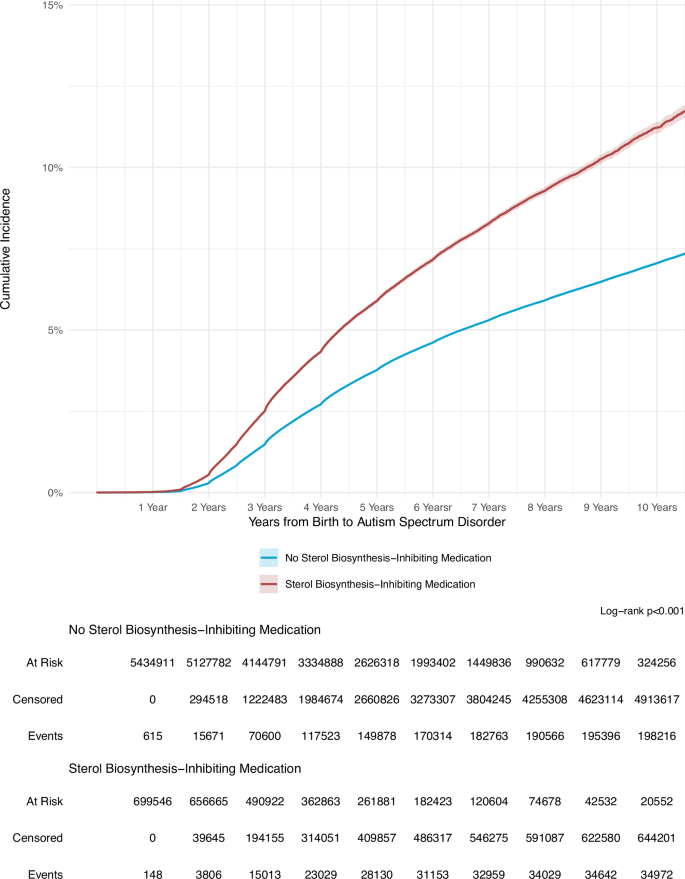
Study Links Antidepressants, Beta-blockers and Statins To Increased Autism Risk

An analysis of 6.14 million maternal-child health records  has linked prescription medications...

Pilot Study: Fibromyalgia Fatigue Improved By TENS Therapy

Fibromyalgia is the term for a poorly-understood condition where people experience pain and fatigue...

User picture.
News StaffRSS Feed of this column.

News Releases From All Over The World, Right To You... Read More »

Blogroll

Boston, MA — People who increased the amount of coffee they drank each day by more than one cup over a four-year period had a 11% lower risk for type 2 diabetes than those who made no changes to their coffee consumption, according to a new study led by Harvard School of Public Health (HSPH) researchers. In addition, the study found that those who decreased their coffee consumption by more than a cup per day increased their type 2 diabetes risk by 17%.

A decade-long effort by members of the International Glossina Genome Initiative (IGGI) has produced the first complete genome sequence of the tsetse fly, Glossina morsitans. The blood-sucking insect is the sole transmitter of sleeping sickness, a potentially deadly disease endemic in sub-Saharan Africa. The vast store of genetic data will help researchers develop new ways to prevent the disease and provide insights into the tsetse fly's unique biology.

The tsetse fly is quite unique in the insect world: it feeds exclusively on the blood of humans and animals, gives birth to live young and provides nutrition to its young by lactation.

Suicide is a general risk for people with psychosis. According to the Journal of Psychiatry, 20 percent to 40 percent of those diagnosed with psychosis attempt suicide, and up to 10 percent succeed.

And teens with psychotic symptoms are nearly 70 times more likely to attempt suicide than adolescents in the general population, according to a 2013 study in JAMA Psychiatry.

But what contributes to such high numbers?

Jane Timmons-Mitchell, PhD, from Case Western Reserve University's social work school, and Tatiana Falcone, MD, from the Cleveland Clinic, reviewed studies of teenagers with psychosis to better understand why they are more at risk for suicide than other groups similarly diagnosed.

While our chromosomes are relatively stable within our lifetimes, the genetic material found in our mitochondria is highly variable across individuals and may impact upon human health, say researchers at the University of Montreal and its affiliated CHU Sainte-Justine Hospital.

Genomes are changing, they say, not just from generation to generation, but even and in fact within our individual cells. The researchers are the first to identify the extent to which the editing processes of RNA code can vary across a large number of individuals.

Scholars say they have created a breakthrough on understanding the demographic history of Stone-Age humans.

A genomic analysis of eleven Stone-Age human remains from Scandinavia revealed that expanding Stone-age farmers assimilated local hunter-gatherers and that the hunter-gatherers were historically in lower numbers than the farmers. 

A team of researchers led by Robert Quimby at the Kavli Institute for the Physics and Mathematics of the Universe (Kavli IPMU) has announced the discovery of a galaxy that magnified a background, Type Ia supernova thirtyfold through gravitational lensing. This is the first example of strong gravitational lensing of a supernova confirms the team's previous explanation for the unusual properties of this supernova.