Banner
Synchrotron Could Shed Light On Exotic Dark Photons

There are many hypothetical particles proposed to explain dark matter and one idea to explore how...

The Pain Scale Is Broken But This May Fix It

Chronic pain is reported by over 20 percent of the global population but there is no scientific...
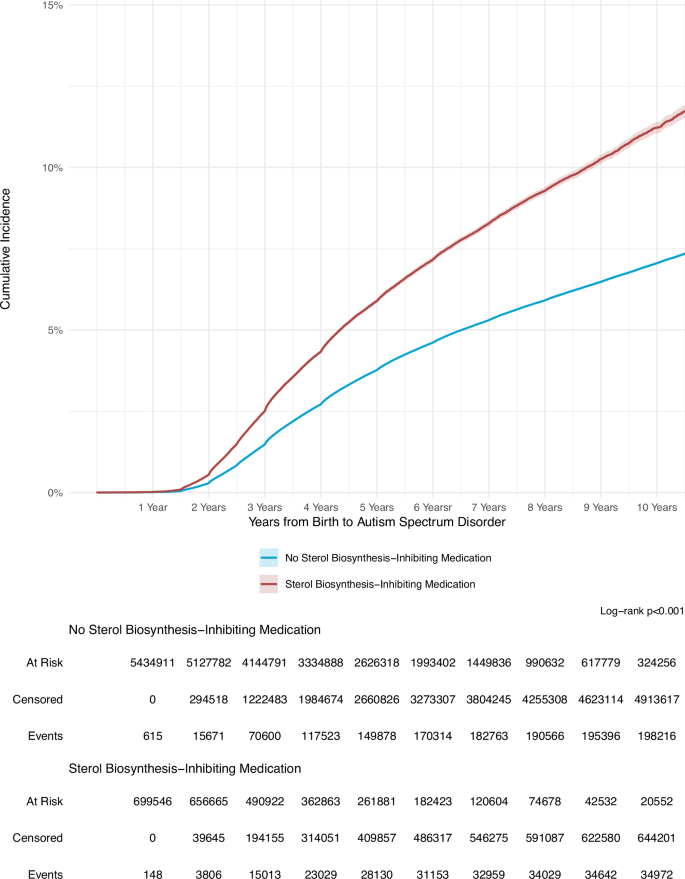
Study Links Antidepressants, Beta-blockers and Statins To Increased Autism Risk

An analysis of 6.14 million maternal-child health records  has linked prescription medications...

Pilot Study: Fibromyalgia Fatigue Improved By TENS Therapy

Fibromyalgia is the term for a poorly-understood condition where people experience pain and fatigue...

User picture.
News StaffRSS Feed of this column.

News Releases From All Over The World, Right To You... Read More »

Blogroll

A new version of SPASER (surface plasmon amplification by stimulated emission of radiation) technology being investigated could mean that mobile phones become so small, efficient, and flexible they could be printed on clothing. 'Hey, is that your t-shirt ringing or mine?'

Researchers have modeled the world's first SPASER to be made completely of carbon.

As you guessed by the definition, because the SP replaces the L in LASER, a
SPASER
is effectively a nanoscale laser or nanolaser. It emits a beam of light through the vibration of free electrons, rather than the space-consuming electromagnetic wave emission process of a traditional laser.

There's a hidden battle happening planet-wide at the microbe level. 

Researchers have discovered that Arabidopsis thaliana, a small flowering plant widely used as a model organism in plant biology, puts out a welcome mat to bacteria seeking to invade, and a new study reveals new targets during the battle between microbe and host that researchers can exploit to protect plants.
Basically, if the winter annual is putting out a welcome met, scientists have discovered that mat's molecular mix.

The study reveals new targets during the battle between microbe and host that researchers can exploit to protect plants.

Just a few grams of the new substance are enough to tag the entire olive oil production of Italy. If counterfeiting were suspected, the particles added at the place of origin could be extracted from the oil and analysed, enabling a definitive identification of the producer. "The method is equivalent to a label that cannot be removed," says Robert Grass, lecturer in the Department of Chemistry and Applied Biosciences at ETH Zurich.

The universe we can see is made up of billions of galaxies, each containing anywhere from hundreds of thousands to hundreds of billions of stars.

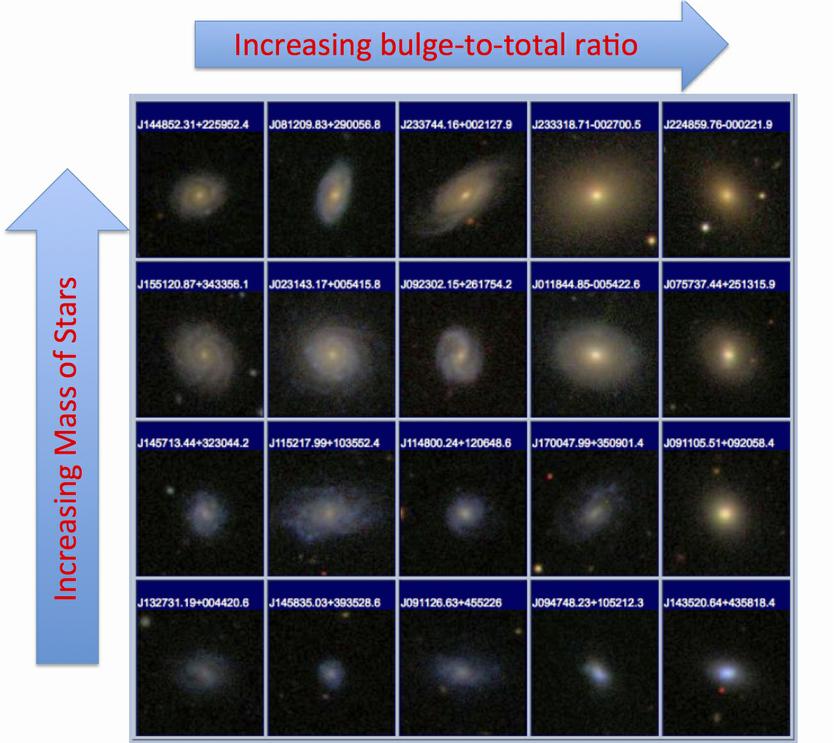
Large numbers of galaxies are elliptical in shape, red and mostly made up of old stars. Another (more familiar) type is the spiral, where arms wind out in a blue thin disk from a central red bulge.

On average stars in spiral galaxies tend to be much younger than those in ellipticals.

Now a group of astronomers led by Asa Bluck of the University of Victoria in Canada have found a (relatively) simple relationship between the color of a galaxy and the size of its bulge – the more massive the bulge the redder the galaxy.
Relativity says that spacetime is smooth, and only big things can warp it, in ways that are exactly known. Quantum theory says that the smallest parts of the universe are constantly fluctuating and dramatically uncertain. How can something be both smooth and fluctuating, both exact and uncertain?

How, in other words, can we make a quantum theory of gravity? It's unknown. String theory and loop quantum gravity have tried, but a unified theory has remained out of reach.

Enter – of all things – condensed matter physics.

SensaBubble is a chrono-sensory mid-air display system that generates scented bubbles to deliver information to people using different senses. The bubble-based technology creates bubbles with a specified size and frequency, fills them with an opaque fog that is optionally scented, controls their route, tracks their location and projects an image onto them.