

Banner
Synchrotron Could Shed Light On Exotic Dark Photons

There are many hypothetical particles proposed to explain dark matter and one idea to explore how...

The Pain Scale Is Broken But This May Fix It

Chronic pain is reported by over 20 percent of the global population but there is no scientific...
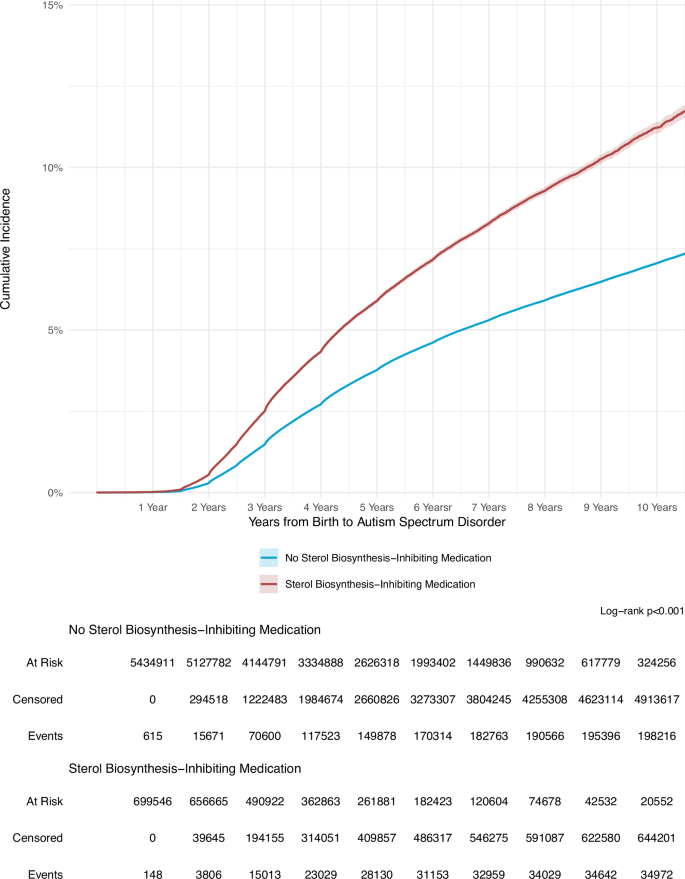
Study Links Antidepressants, Beta-blockers and Statins To Increased Autism Risk

An analysis of 6.14 million maternal-child health records  has linked prescription medications...

Pilot Study: Fibromyalgia Fatigue Improved By TENS Therapy

Fibromyalgia is the term for a poorly-understood condition where people experience pain and fatigue...

User picture.
News StaffRSS Feed of this column.

News Releases From All Over The World, Right To You... Read More »

Blogroll

Neuroscientists have discovered a brain pathway that underlies the emotional behaviours critical for survival.

New research by the University of Bristol, published in the Journal of Physiology today [23 April], has identified a chain of neural connections which links central survival circuits to the spinal cord, causing the body to freeze when experiencing fear.

Understanding how these central neural pathways work is a fundamental step towards developing effective treatments for emotional disorders such as anxiety, panic attacks and phobias.

Cougars may have survived the mass extinction that took place about 12,000 years ago because they were not particular about what they ate, unlike their more finicky cousins--the saber-tooth cat and American lion. Both perished along with the woolly mammoth and many of the other supersized mammals that walked the Earth during the late Pleistocene.

That is the conclusion of a new analysis of the microscopic wear marks on the teeth of cougars, saber-tooth cats and American lions described in the April 23 issue of the journal Biology Letters.

Inspired by the fist-like club of a mantis shrimp, researchers have developed a design structure for composite materials that is more impact resistant and tougher than the standard used in airplanes.

The peacock mantis shrimp, or stomatopod, is a 4- to 6-inch-long rainbow-colored crustacean with a fist-like club that accelerates underwater faster than a 22-caliber bullet. Researchers, led by Kisailus, an associate professor of chemical engineering, are interested in the club because it can strike prey thousands of times without breaking.

Canadians may seem polite to outsiders, that maple leaf on a backpack says pacificism all over the world, but they are apparently quite hard on their kids.

A
Canadian Medical Association Journal articles says that almost one-third of adults in Canada have experienced sexual abuse, child abuse or been exposed to intimate partner violence, such as parental, step-parental or guardian violence in their home. Child abuse has been linked to mental disorders and suicidal ideation (thoughts) or suicide attempts.

Last month, scientists announced the first hard evidence for cosmic inflation, the process by which the infant universe swelled from microscopic to cosmic size in an instant.

While this almost unimaginably fast expansion was theorized more than three decades ago, there had been no evidence. Then researchers from the BICEP2 collaboration announced the first direct evidence for cosmic inflation and the first images of gravitational waves, or ripples in space-time, described as the "first tremors of the Big Bang."

"Not tonight, dear, I have a headache." Generally speaking, that line is attributed to the wife in a couple, implying that women's sexual desire is more affected by pain than men's.

Now, researchers from McGill University and Concordia University in Montreal have investigated, possibly for the first time in any species, the direct impact of pain on sexual behaviour in mice. Their study, published in the April 23 issue of the Journal of Neuroscience, found that pain from inflammation greatly reduced sexual motivation in female mice in heat -- but had no such effect on male mice.


