

Banner
Synchrotron Could Shed Light On Exotic Dark Photons

There are many hypothetical particles proposed to explain dark matter and one idea to explore how...

The Pain Scale Is Broken But This May Fix It

Chronic pain is reported by over 20 percent of the global population but there is no scientific...
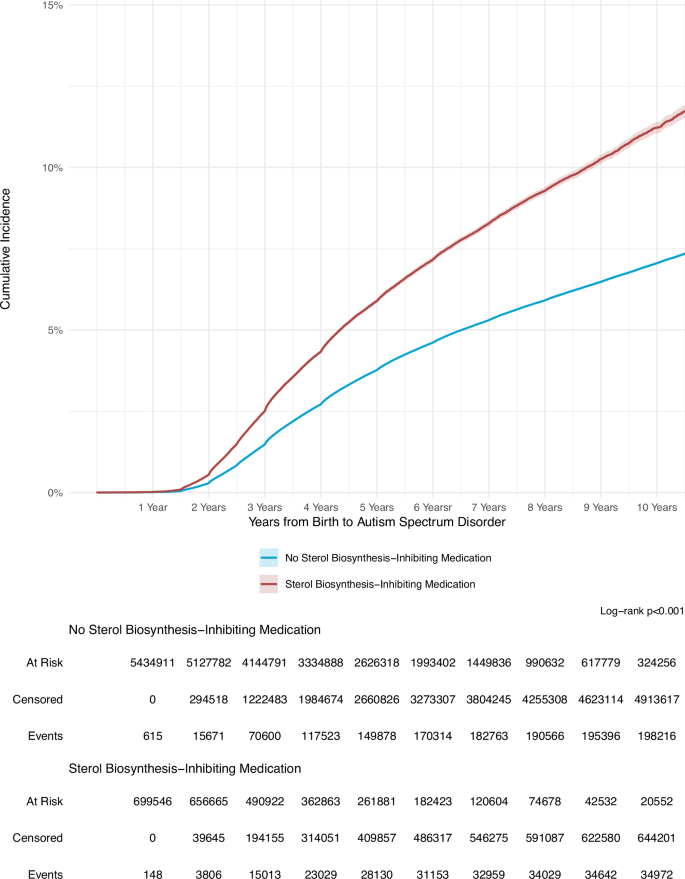
Study Links Antidepressants, Beta-blockers and Statins To Increased Autism Risk

An analysis of 6.14 million maternal-child health records  has linked prescription medications...

Pilot Study: Fibromyalgia Fatigue Improved By TENS Therapy

Fibromyalgia is the term for a poorly-understood condition where people experience pain and fatigue...

User picture.
News StaffRSS Feed of this column.

News Releases From All Over The World, Right To You... Read More »

Blogroll

Most stars with masses similar to that of our Sun will end their lives as white dwarfs; small, very dense, and hot bodies that slowly cool down over billions of years. On the way to this final phase of their lives the stars throw their atmospheres out into the space and create planetary nebulae, colorful glowing clouds of gas surrounding the small, bright stellar relics.

An captured by ESO's Very Large Telescope (VLT), shows the remarkably round planetary nebula Abell 33, located about 1,500 light-years from Earth. A round appearance is uncommon. Usually something - for example, the way the star spins, or if the central star is one component of a double or multiple star system - disturbs the symmetry and causes the planetary nebula to display irregular shapes.

A breakthrough could speed recovery and limit disfigurement for patients who have suffered large soft tissue trauma, as occurs with serious injury or cancer surgery.  

By biomedically engineering a muscle flap that includes a patient's own blood vessels, the team created tissue that could be transferred to other parts of the body along with the patient's blood supply. Current techniques – including grafts and synthetic material – for reconstructing such trauma often fail because of lost blood supply.  The scientists fabricated the flap using a variety of added cells and connective tissues to strengthen it. They tested it by reconstructing deep abdominal wall tissue defects in mice.

Global health funding hit an all-time high of $31.3 billion in 2013, five times greater than in 1990, but its 3.9% growth from 2012 to 2013 shows it is at least slowing down a little, according to a new analysis by the Institute for Health Metrics and Evaluation (IHME) at the University of Washington in Health Affairs.

As funding from many bilateral donors and development banks has declined, growth in funding from the GAVI Alliance, the Global Fund to Fight AIDS, Tuberculosis and Malaria, non-governmental organizations, and the UK government is counteracting these cuts.

Global health funding remains small relative to what high-income countries spend on their own health, representing only 1% of these countries' health expenditure.

The mandate for health insurance isn't just raising the costs for the health care of almost all Americans,  it will also alter costs for several major types of liability insurance, according to a new RAND Corporation report.

Automobile, workers' compensation and general business liability insurance costs may fall under the Affordable Care Act, while costs for medical malpractice coverage could be higher, according to the study.

Researchers say the changes could be as much as 5 percent of costs in some states, but caution there is considerable uncertainty surrounding such estimates. The findings are from one of the first systematic studies of how the Affordable Care Act could influence costs for liability and related lines of insurance.

Genetically Modified crops - GMOs – are not popular with organic shoppers and anyone else obsessed with the naturalistic fallacy. When program topics at a food conference include "Enforcing the consumer’s right to be stupid", you can be sure they are not talking about raw milk. Wednesday, April 9th, Queen's University Belfast will see the Food Integrity and Traceability Conference - ASSET 2014 - take place.

WASHINGTON D.C., April 8, 2014 -- Some 90 years ago, British polymath J.B.S. Haldane proposed that for every animal there is an optimal size -- one which allows it to make best use of its environment and the physical laws that govern its activities, whether hiding, hunting, hoofing or hibernating. Today, three researchers are asking whether there is a "right" size for another type of huge beast: the U.S. power grid.

David Newman, a physicist at the University of Alaska, believes that smaller grids would reduce the likelihood of severe outages, such as the 2003 Northeast blackout that cut power to 50 million people in the United States and Canada for up to two days.




