

Banner
Synchrotron Could Shed Light On Exotic Dark Photons

There are many hypothetical particles proposed to explain dark matter and one idea to explore how...

The Pain Scale Is Broken But This May Fix It

Chronic pain is reported by over 20 percent of the global population but there is no scientific...
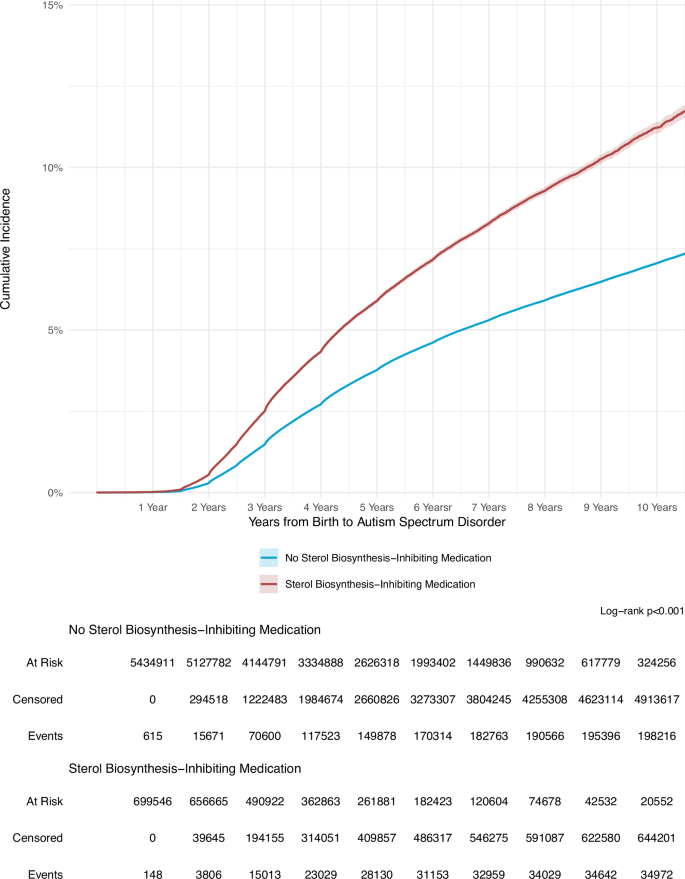
Study Links Antidepressants, Beta-blockers and Statins To Increased Autism Risk

An analysis of 6.14 million maternal-child health records  has linked prescription medications...

Pilot Study: Fibromyalgia Fatigue Improved By TENS Therapy

Fibromyalgia is the term for a poorly-understood condition where people experience pain and fatigue...

User picture.
News StaffRSS Feed of this column.

News Releases From All Over The World, Right To You... Read More »

Blogroll

Is there a link between maternal obesity during pregnancy and the risk of developmental disorders in a child? In the wide world of epigenetics and causalation there can be, because no one can prove there can't be. However, if obesity is a link at all, paternal obesity could be a greater risk factor than maternal obesity, according to a new paper from the Norwegian Institute of Public Health. 

Dr. Pål Surén claims to be the first to study the role of paternal obesity in autism and emphasizes that this is still speculation on its way to becoming a hypothesis. Surén
notes it requires much more research before anyone can discuss possible causal relationships but they have what they have. 

Antipsychotic medications are often used for in 'second-generation' form - that is, for unlabeled indications, such as treatment of children and adolescents with attention-deficit hyperactivity disorder (ADHD). Currently, atypical antipsychotic medications are FDA approved for use only in youth for schizophrenia, bipolar disorder, and irritability associated with autism. To date, no atypical antipsychotic agent has an FDA-labeled indication for use in behavioral disorders in children and adolescents.

Each year prostate tissue samples are taken from over a million men around the world, in most cases using 12 large biopsy needles, to check whether they have prostate cancer.

Surely in 2014 something more modern can be developed, especially when 70 percent of men getting those don't have cancer, it's unnecessarily painful and is also costly to carry out.

A patient-friendly examination, which drastically reduces the need for biopsies, and may even eliminate them altogether, has been developed at Eindhoven University of Technology (TU/e), together with AMC Amsterdam and will be presented at the European Association of Urology Congress in Stockholm next week.

Of the uncertainties facing climate modelers, climate feedbacks from decomposition by soil microbes are among the biggest. 

The dynamics among soil microbes allow them to work more efficiently and flexibly as they break down organic matter – spewing less carbon dioxide into the atmosphere than previously thought, according to a new study from the International Institute for Applied Systems Analysis (IIASA) and the University of Vienna published in Ecology Letters.

The 2008 Mumbai terrorist attacks, where a group of gunmen killed 165 and injured 304 people, the May 2012 shooting of five people by a gunman in Seattle and the recall of four million cars by Toyota in 2009 and 2010 because of a faulty accelerator pedal show the power of social media - and the problems.

When the online community is creating and exchanging the news rather than official news channels, credibility is unknown and it can not only exaggerate the unfolding situation, but also turn it into misinformation, diverting attention from the real problems.

Anti-anxiety drugs and sleeping pills have been linked to an increased risk of death, according to a large study published in BMJ which shows that several anxiolytic (anti-anxiety) drugs or hypnotic drugs (sleeping pills) are associated with a doubling in the risk of mortality.  

The findings are based on routine data but need to be interpreted cautiously.

The study accounted, where possible, for other factors such as age, smoking and alcohol use, other prescriptions and socioeconomic status. Crucially, the team controlled for contributing risk factors such as sleep disorders, anxiety disorders and other psychiatric illness in all participants.




