Banner
Here's Where Your Backyard Was 300 Million Years Ago

We may use terms like "grounded" and terra firma to mean stability and consistency but geology...

Convergent Evolution Cheat Sheet Now 120 Million Years Old

One tenet of natural selection is a random walk of genes but nature may be more predictable than...

Synchrotron Could Shed Light On Exotic Dark Photons

There are many hypothetical particles proposed to explain dark matter and one idea to explore how...

The Pain Scale Is Broken But This May Fix It

Chronic pain is reported by over 20 percent of the global population but there is no scientific...

User picture.
News StaffRSS Feed of this column.

News Releases From All Over The World, Right To You... Read More »

Blogroll

The heart becomes more spherical when exposed to long periods of microgravity in space, according to a study of 12 astronauts. The research has implications if any progress toward a trip to Mars ever gets made. NASA already has a zero-risk culture and cute robots don't have heart attacks whereas a spaceflight of 18 months or more that could affect astronauts' heart strength may be a concern.

In space, no one can hear your heartbeats - as easily. The heart works a lot less and that leads to less muscle mass, even over a relatively short duration.

Still feeling the residual effects of springing ahead for daylight saving time? The hour of sleep lost – or gained – may play a bigger, perhaps more dangerous role in our body's natural rhythm than we think. It seems moving the clock forward or backward may alter the timing of when heart attacks occur in the week following these time changes, according to research to be presented at the American College of Cardiology's 63rd Annual Scientific Session.

Ammonia pollution from agricultural sources poses larger health costs than previously estimated, according to a numerical model by Harvard University researchers Fabien Paulot and Daniel Jacob, who estimated chemical reactions in the atmosphere to better represent how ammonia interacts in the atmosphere to form harmful particulate matter. The improved simulation helped the scientists narrow in on the estimated health costs from air pollution associated with food produced for export – a growing sector of agriculture and a source of trade surplus.

"The 'cost' is an economic concept to measure how much people are willing to pay to avoid a risk," Paulot said. "This is used to quantify the cost for society but also to evaluate the benefits of mitigation."

BUFFALO, N.Y. – One of the serious health consequences of obesity is elevated blood pressure (BP), a particular problem in children because research has found that high BP in children usually follows them into adulthood, carrying with it a wide range of possible negative consequences.

Even modest elevations in the BP of adolescents, according to recent research, can pose cardiovascular problems later in life.

A systematic review and meta-analysis of published studies of the effect of child obesity intervention programs on blood pressure has found that whether such programs prevented obesity or not, many of them reduced BP in children. It also found that the most effective programs in this regard promoted both healthy eating and physical activity.

For decades, Americans have been told that high blood cholesterol as a result of heavy saturated fat intake causes cardiovascular disease.

As such, Statin drugs are often prescribed to curb cardiovascular disease  risk by lowering cholesterol. That convention was challenged by a recent paper.

So now what?
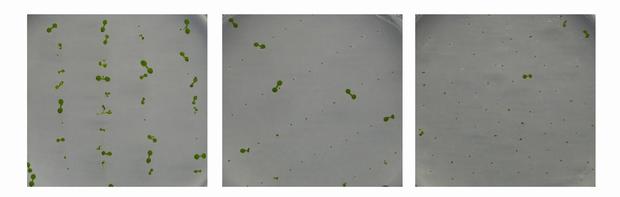
Researchers have discovered a new way of improving the longevity of plant seeds using genetic engineering. 

The key is over-expression of the ATHB25 gene. This gene encodes a protein that regulates gene expression, producing a new mutant that gives the seed new properties. Researchers have proven that this mutant has more gibberellin -the hormone that promotes plant growth-, which means the seed coat is reinforced as well.

This mechanism is new, as tolerance to stresses such as aging has always been associated with another hormone, abscisic acid, which regulates defenses based on proteins and small protective molecules, instead of producing the growth of structures like gibberellin does.