Banner
Here's Where Your Backyard Was 300 Million Years Ago

We may use terms like "grounded" and terra firma to mean stability and consistency but geology...

Convergent Evolution Cheat Sheet Now 120 Million Years Old

One tenet of natural selection is a random walk of genes but nature may be more predictable than...

Synchrotron Could Shed Light On Exotic Dark Photons

There are many hypothetical particles proposed to explain dark matter and one idea to explore how...

The Pain Scale Is Broken But This May Fix It

Chronic pain is reported by over 20 percent of the global population but there is no scientific...

User picture.
News StaffRSS Feed of this column.

News Releases From All Over The World, Right To You... Read More »

Blogroll

The Smithsonian's Submillimeter Array (SMA) telescope has providec the most detailed view yet of stellar nurseries within the Snake nebula and what they found lends new insight into how cosmic seeds can grow into massive stars.

Stretching across almost 100 light-years of space, the Snake nebula is located about 11,700 light-years from Earth in the direction of the constellation Ophiuchus.

In images from NASA's Spitzer Space Telescope it appears as a sinuous, dark tendril against the starry background, thus the name. It was targeted in the new study because it shows the potential to form many massive stars - stars that are 8 times heavier than our Sun.

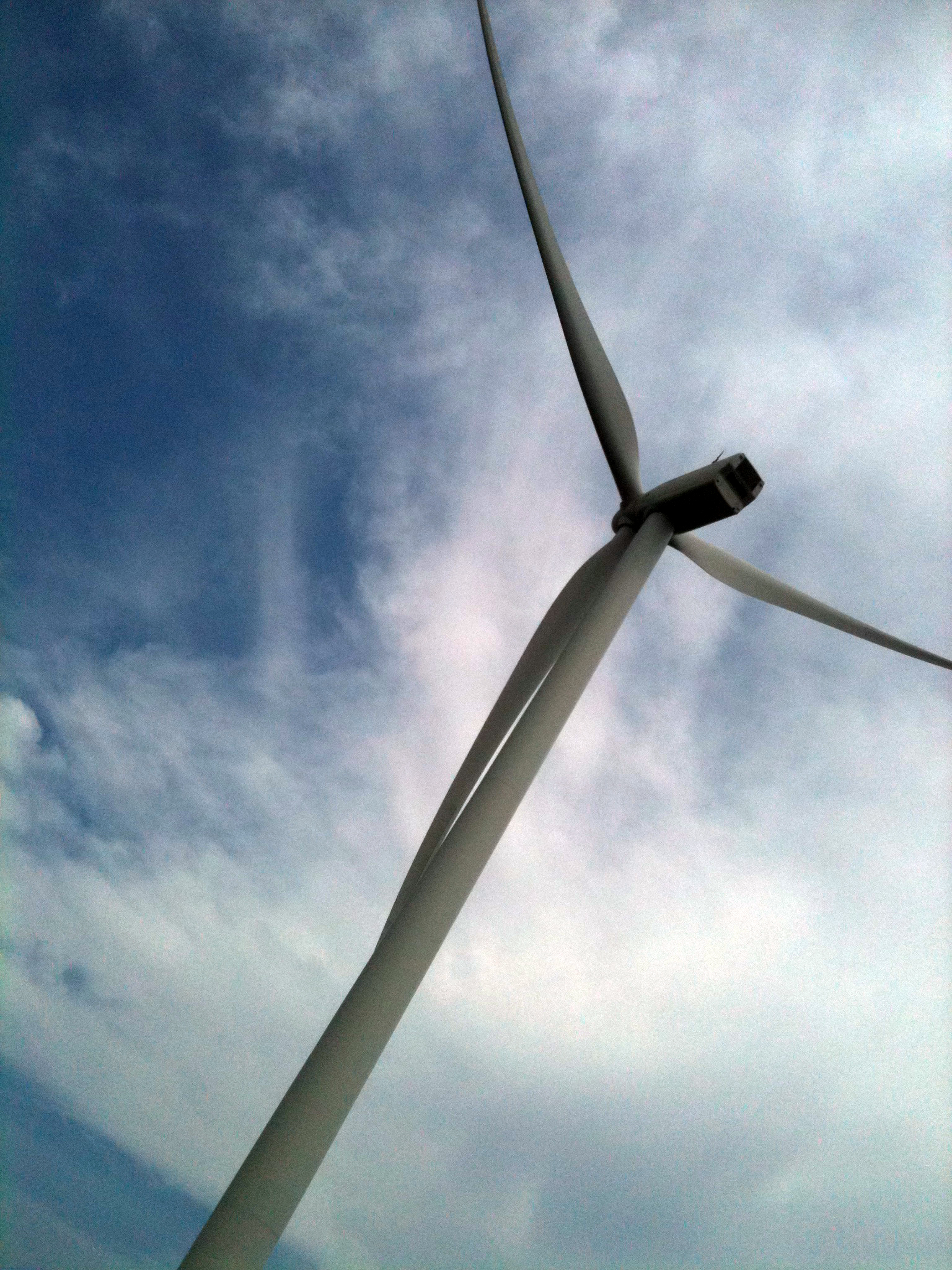
Wind farms are not very good. Yes, politicians embrace them because the unions advocating them donate heavily to campaigns, and environmentalists advocate them because they always advocate something new until it becomes popular (natural gas the 1980s, ethanol in the 1990s, then wind - anything but nuclear) but aside from a lot of dead endangered birds, wind hasn't helped much.

But concern that wind farms would cause more global warming are overblown. They don't help, and they are unsightly and ridiculously expensive, but they sure don't hurt, even though they were previously implicated in more heat and rainfall in Europe.

The eggs produced by adolescent girls are not the same as the ones produced by adult women, according to a recent study in Human Molecular Genetics, which lists evidence that there are two completely distinct types of eggs in the mammalian ovary – "the first wave" and "the adult wave".

 Professor Kui Liu from the University of Gothenburg and colleagues used two genetically modified mouse models to show that the first wave of eggs, which starts immediately after birth, contributes to the onset of puberty and provides fertilizable eggs into the transition from adolescence to adulthood.

In contrast, the adult wave remains in a state of dormancy until activated during the adult life and then provides eggs throughout the entire reproductive lifespan.

If a name is ambiguous and given without context, humans struggle to understand the meaning, so you can imagine the struggle computers have.

 When Germans read the last name "Merkel" without context, they will not know if it refers to the Chancellor of Germany Angela Merkel or tsoccer coach Max Merkel.  And 

Two computer scientists at at the University of Liverpool think they have successfully cracked the Erdős discrepancy problem (for a particular discrepancy bound C=2), an 80 year old maths puzzle proposed by the Hungarian mathematician Paul Erdős, who offered $500 for its solution.

They just can't be sure, because it is too big for a human to replicate.The resulting proof generated is an enormous 13 gigabytes, 30 percent larger than downloading all of the content on Wikipedia.

Autism diagnoses have gone up a lot in the last generation. It was to the 2000s what ADD diagnoses were to the 1990s. 

And so people have rushed to attribute blame. Vaccines, GMOs, even BPA. If someone is selling alternative medicine, food or culture they have found a way to link their competition to autism. And then there is the idea that it is simply better diagnoses. And the charge that it has been over-diagnosed.

New diagnosis guidelines by the American Psychiatric Association (APA) have therapists and some families in a panic, because in an effort to be more scientific and less subjectively symptom-based, the new guidelines could leave them without a diagnosis. No diagnosis means no insurance coverage.