Banner
Here's Where Your Backyard Was 300 Million Years Ago

We may use terms like "grounded" and terra firma to mean stability and consistency but geology...

Convergent Evolution Cheat Sheet Now 120 Million Years Old

One tenet of natural selection is a random walk of genes but nature may be more predictable than...

Synchrotron Could Shed Light On Exotic Dark Photons

There are many hypothetical particles proposed to explain dark matter and one idea to explore how...

The Pain Scale Is Broken But This May Fix It

Chronic pain is reported by over 20 percent of the global population but there is no scientific...

User picture.
News StaffRSS Feed of this column.

News Releases From All Over The World, Right To You... Read More »

Blogroll

The crocodile is a pretty shrewd hunter - they even use lures to hunt their prey, according to Vladimir Dinets, assistant professor in the Department of Psychology at University of Tennessee, Knoxville, and colleagues, who say they have observed two crocodilian species, muggers and American alligators, using twigs and sticks to lure birds, particularly during nest-building time. 

The live vaccine Bacille Calmette-Guérin, used in some parts of the world to prevent tuberculosis, may help prevent multiple sclerosis (MS) in people who show the beginning signs of the disease, according to a new study in Neurology.  

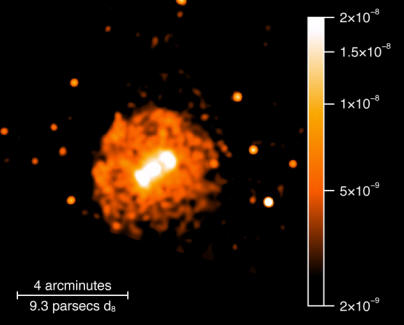
Astronomers have identified the glowing wreck of a star that exploded a mere 2,500 years ago — the blink of an eye in astronomical terms - and revealed an astrophysical novelty of the Milky Way.

Quantum entanglement, the phenomenon of quantum mechanics that Albert Einstein once referred to as "spooky action at a distance," could be even spookier - hypothetically.

Quantum entanglement occurs when a pair or a group of particles interact in ways that dictate that each particle's behavior is relative to the behavior of the others. In a pair of entangled particles, if one particle is observed to have a specific spin, for example, the other particle observed at the same time will have the opposite spin.

Loofahs, those exfoliating things for skin that men pretend they don't use in the shower, may be a new potential tool to advance sustainability efforts of both energy and waste, according to a paper in the journal Environmental Science&Technology.

The study describes the pairing of loofahs with bacteria to create a power-generating microbial fuel cell (MFC). Shungui Zhou and colleagues note that MFCs, which harness the ability of some bacteria to convert waste into electric power, could help address both the world's growing waste problem and its need for clean power. Current MFC devices can be expensive and complicated to make. In addition, the holes, or pores, in the cells' electrodes are often too small for bacteria to spread out in.

The black Périgord truffle is a fungus that grows underground around the roots of oak and hazelnut trees in winter. It has become a staple during holidays in France, where cooks slip bits of it under the skin of roasting turkeys to add a luxurious flavor.

Holiday cooking would not be complete with an examination of why things work and so scientists are revealing the secrets that give the culinary world's "black diamond" its unique, pungent aroma. The results could  also lead to better ways to determine the freshness and authenticity of the pricey delicacy.