Banner
Here's Where Your Backyard Was 300 Million Years Ago

We may use terms like "grounded" and terra firma to mean stability and consistency but geology...

Convergent Evolution Cheat Sheet Now 120 Million Years Old

One tenet of natural selection is a random walk of genes but nature may be more predictable than...

Synchrotron Could Shed Light On Exotic Dark Photons

There are many hypothetical particles proposed to explain dark matter and one idea to explore how...

The Pain Scale Is Broken But This May Fix It

Chronic pain is reported by over 20 percent of the global population but there is no scientific...

User picture.
News StaffRSS Feed of this column.

News Releases From All Over The World, Right To You... Read More »

Blogroll

Kissing helps us size up potential partners and, once in a relationship, may be a way of getting a partner to stick around, according to psychologists in a new paper.

The scholars set up an online questionnaire in which over 900 adults answered questions about the importance of kissing in both short-term and long-term relationships. 

The survey responses were that women rated kissing as generally more important in relationships than men. Furthermore, men and women who rated themselves as being attractive, or who tended to have more short-term relationships and casual encounters, also rated kissing as being more important.

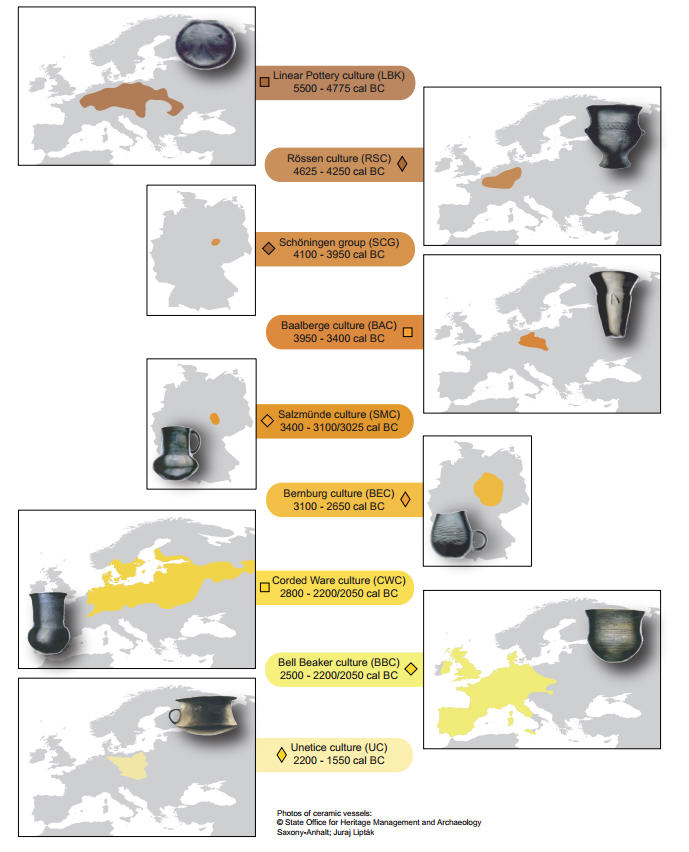
Research using DNA to map the history of human migration is helping unravel the timing and source of human settlement in Central Europe.

One of the great debates in archaeological research for the past century has been the degree to which cultures or people move. When you see a pronounced cultural shift in the archaeological record, for instance, is it because of a new people appearing on the scene, or is it simply the diffusion of a new culture? This new Genographic study shows definitively that, for Germany over a four-millennia-long time span from 5500 B.C. to 1500 B.C., it was people who were on the move, carrying their genes with them.

Children who stutter have less grey matter in key regions of the brain responsible for speech production than children who do not stutter, according to brain scans of 28 children ranging from five to 12 years old. Half the children were diagnosed with stuttering; the other half served as a control. 

Results showed that the inferior frontal gyrus region of the brain develops abnormally in children who stutter. This is important because that part of the brain is thought to control articulatory coding—taking information our brain understands about language and sounds and coding it into speech movements.

One of the more controversial issues from the recent first part of Intergovernmental Panel on Climate Change (IPCC) Fifth Assessment Report (AR5) is the failure of global climate models to predict a hiatus in warming of global surface temperatures since 1998.

Several ideas have been put forward to explain this hiatus, including what the IPCC refers to as 'unpredictable climate variability' that is associated with large-scale circulation regimes in the atmosphere and ocean.

If you talk to social scientists, egoism and narcissism appear are on the rise while empathy is on the decline.

In recent years, the ability to put ourselves in other people's shoes has been deemed extremely important for our coexistence - nuclear bombs will do that to a society -  but our own feelings can distort our capacity for empathy, according to a new paper. Emotionally driven egocentricity is recognized and corrected by the brain, they say, but when the right supramarginal gyrus doesn't function properly or when we have to make particularly quick decisions, our empathy is severely limited. 

A new study says it has confirmed for the first time that the smell of stress sweat does  significantly alter how women are perceived by both males and females.

Research has shown the ability of human body odor to communicate information between individuals. Not only have body odor signals been shown to convey messages about genetic connection, dating and general health, but body odors produced from individuals in specific emotional states have been shown to affect both the neural and behavioral states of the receiver, whether or not they are consciously aware of the source of the body odor.