Banner
Here's Where Your Backyard Was 300 Million Years Ago

We may use terms like "grounded" and terra firma to mean stability and consistency but geology...

Convergent Evolution Cheat Sheet Now 120 Million Years Old

One tenet of natural selection is a random walk of genes but nature may be more predictable than...

Synchrotron Could Shed Light On Exotic Dark Photons

There are many hypothetical particles proposed to explain dark matter and one idea to explore how...

The Pain Scale Is Broken But This May Fix It

Chronic pain is reported by over 20 percent of the global population but there is no scientific...

User picture.
News StaffRSS Feed of this column.

News Releases From All Over The World, Right To You... Read More »

Blogroll

Dr. Ian Marcus, recent Ph.D. from the U.C. Riverside Bourns College of Engineering, wanted to better understand how bacteria impact the environment . So he spent nearly a year building a system that replicates a human colon, septic tank and groundwater and "fed" the colon three times a day during week-long experiments to simulate human eating.

scientists typically study bacteria in an isolated environment under ideal growing conditions. That presents a problem because bacteria typically proliferate in microbial communities with other microorganisms such as archaea, fungi and protozoa.

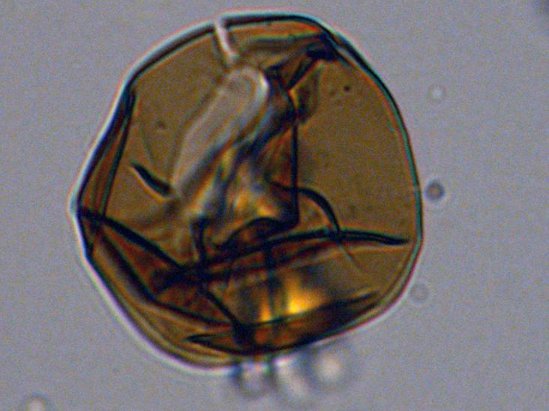
Before the Oligocene epoch some 33.6 million years ago, the Earth was a warm place with a tropical climate. In this region, plankton diversity was high until glaciation - the Antarctic continental ice cap - reduced the populations leaving only those capable of surviving in the new climate.

Since that time, we have had seasonal primary productivity of plankton communities. This ice-cap is associated with the ice-pack, the frozen part that disappears and reappears as a function of seasonal climate changes. This phenomenon, still active today, influences global food webs, according to a paper in Science which used information contained in ice sediments from different depths.
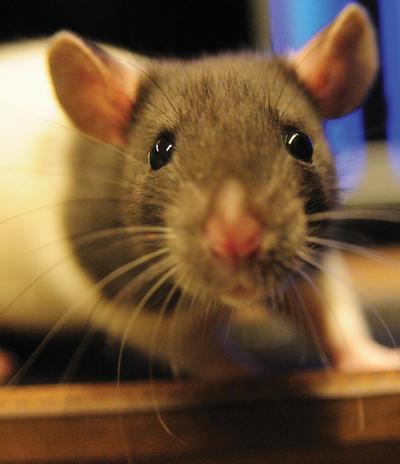
Rats move their eyes in opposite directions in both the horizontal and the vertical plane when running around. Each eye moves in a different direction, depending on the change in the animal’s head position,  according to a behavioral tracking study that used miniaturized high-speed cameras.

Like many mammals, rats have their eyes on the sides of their heads. This gives them a very wide visual field, useful for detection of predators. However, three-dimensional vision requires overlap of the visual fields of the two eyes. Thus, the visual system of these animals needs to meet two conflicting demands at the same time; on the one hand maximum surveillance and on the other hand detailed binocular vision.

Modern human mothers wean their babies earlier than our closest primate relatives - well, not all human mothers. As a TIME magazine cover made famous, some mothers never stop. 

But what about our extinct relatives, the Neanderthals? Teeth tell the tale. 

Archaeologists think they have some responses for the hypothesis that our early forebears were forced out of the trees and onto two feet when climate change reduced tree cover.

Our earliest ancestors changed from tree dwelling quadrupeds to upright bipeds capable of walking and scrambling and the authors in Antiquity ('Complex Topography and Human Evolution: the Missing Link') say our upright gait may have its origins in the rugged landscape of East and South Africa, which was shaped during the Pliocene epoch by volcanoes and shifting tectonic plates.

As men get older they are more likely to suffer from andropausal syndrome (AS), also known as 'menopause' and by other complicated terms 'androgen deficiency in the aging male' or' late-onset hypogonadism'.

Men with andropausal syndrome have decreased levels of anabolic hormones, including testosterone, and it has been suggested that these hormone deficiencies are what cause the clinical symptoms.