Banner
Here's Where Your Backyard Was 300 Million Years Ago

We may use terms like "grounded" and terra firma to mean stability and consistency but geology...

Convergent Evolution Cheat Sheet Now 120 Million Years Old

One tenet of natural selection is a random walk of genes but nature may be more predictable than...

Synchrotron Could Shed Light On Exotic Dark Photons

There are many hypothetical particles proposed to explain dark matter and one idea to explore how...

The Pain Scale Is Broken But This May Fix It

Chronic pain is reported by over 20 percent of the global population but there is no scientific...

User picture.
News StaffRSS Feed of this column.

News Releases From All Over The World, Right To You... Read More »

Blogroll

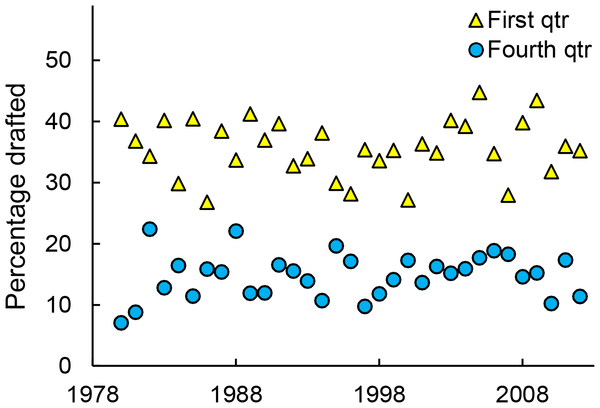
A new paper says a hockey player's birthday strongly biases how professional teams assess his talent. 

The authors found that, on average, National Hockey League (NHL) draftees born between July and December are much more likely than those born in the first three months of the year to have successful careers. In particular, 34 percent of draftees were born in the last six months of the year, but these individuals played 42 percent of the games and scored 44 percent of the points accumulated by those in the study. By contrast, those born in the first three months of the year constituted 36 percent of draftees but only played 28 percent of the games and only scored 25 percent of the points.

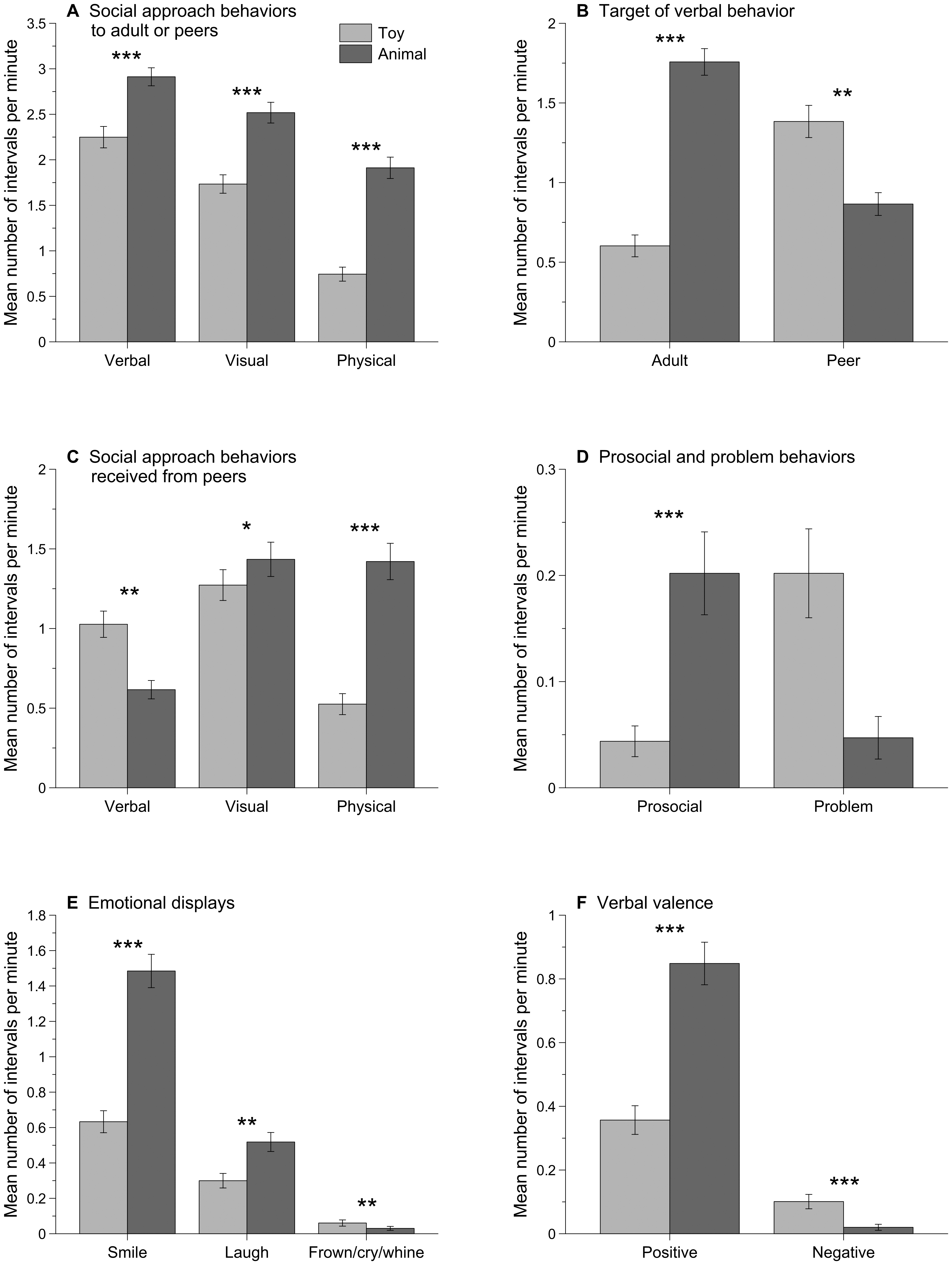
The presence of an animal can significantly increase positive social behaviors in children with autism spectrum disorders (ASD), according to a new paper.

Obesity rates across Canada are at alarming levels and continuing to climb, according to a new paper in the Canadian Journal of Public Health, which provides the first comprehensive look at adult obesity rates across Canada since 1998 - complete with "obesity maps."

If you liked FoxTrax, that glowing hockey puck shooting around the ice during NHL games, you will love what engineers from Carnegie Mellon University and the University of Electro-Communications (UEC) in Tokyo have done: they put a camera inside a football.

The camera is embedded in the side of a rubber-sheathed plastic foam football can record video while the ball is in flight. Want a ball's-eye view of the playing field? Now you have it. But because a football can spin at 600 rpm, the raw video is an unwatchable blur so the researchers also developed a computer algorithm that converts the raw video into a stable, wide-angle view.

Scientists say they have done laboratory resurrections of several 2 to 3 billion-year-old proteins, ancient ancestors of the enzymes that enable today's antibiotic-resistant bacteria to shrug off huge doses of penicillins, cephalosporins and other modern drugs.

Antibiotic resistance existed long before Alexander Fleming discovered the first antibiotic in 1928. Genes that contain instructions for making the proteins responsible for antibiotic resistance have been found in 30,000-year-old permafrost sediment and other ancient sites. The new study research focused on beta-lactamases, enzymes responsible for resistance to the family of antibiotics that includes penicillin, which scientists believe originated billions of years ago.

Older people who don't expect a satisfying future may be more likely to live longer, healthier lives than those who see brighter days ahead, according to a paper in
Psychology and Aging

Scholars examined data collected from 1993 to 2003 for the national German Socio-Economic Panel, an annual survey of private households consisting of approximately 40,000 people 18 to 96 years old. The researchers divided the data according to age groups: 18 to 39 years old, 40 to 64 years old and 65 years old and above.

Through mostly in-person interviews, respondents were asked to rate how satisfied they were with their lives and how satisfied they thought they would be in five years.