Banner
Ousiometrics Analysis Says All Human Language Is Biased

A new tool drawing on billions of uses of more than 20,000 words and diverse real-world texts claims...

Wavelengths Of Light Are Why CO2 Cools The Upper Atmosphere But Warms Earth

There are concerns about projected warming on the Earth’s surface and in the lower atmosphere...

Here's Where Your Backyard Was 300 Million Years Ago

We may use terms like "grounded" and terra firma to mean stability and consistency but geology...

Convergent Evolution Cheat Sheet Now 120 Million Years Old

One tenet of natural selection is a random walk of genes but nature may be more predictable than...

User picture.
News StaffRSS Feed of this column.

News Releases From All Over The World, Right To You... Read More »

Blogroll
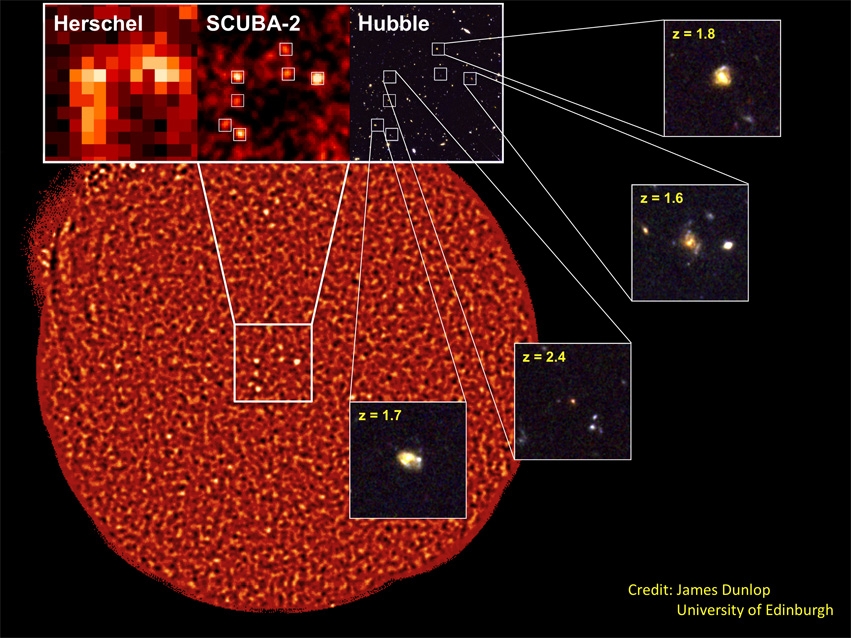
SCUBA-2, the most powerful camera ever developed for observing light at ‘sub-mm’ wavelengths (light that has a wavelength 1000 times longer than we can see with our eyes), has begun a revolutionary new study of cosmic star-formation history.
Are you ugly?  Maybe that's something else to blame your mother about.

Female cognitive ability can impact how handsome males become over evolutionary time, say biologists from The University of Texas at Austin, Louisiana State University Health Sciences Center and the Smithsonian Tropical Research Institute. Males across the animal world have evolved elaborate traits to attract females, from huge peacock tails to complex bird songs and frog calls. But there is a price - predators are attracted to increased elaboration, placing an enormous cost to males with these sexy traits. In a new paper, a group of biologists have shown that females can also limit the evolution of increased elaboration.
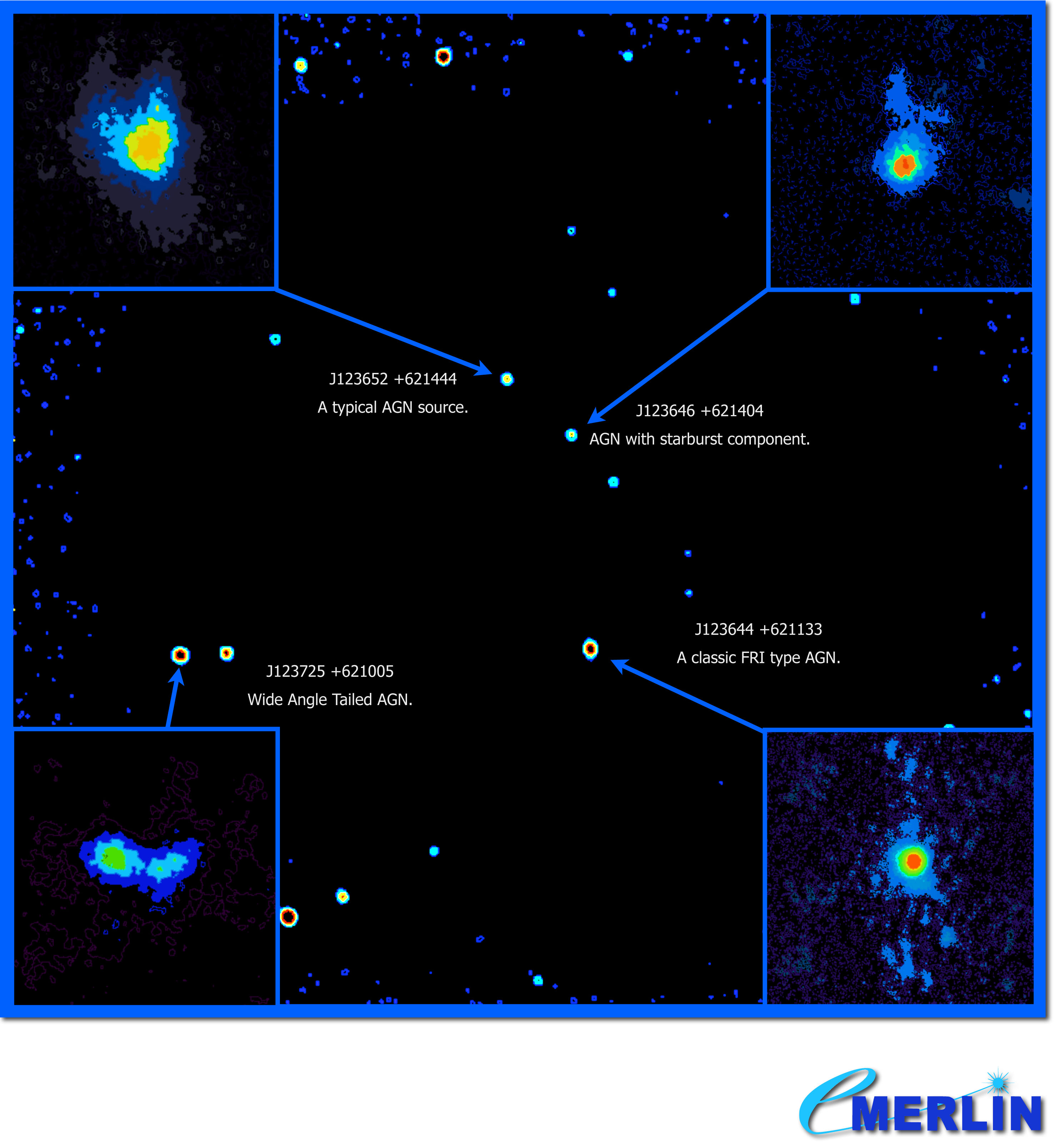
The region around the Hubble Deep Field (HDF), originally captured by the Hubble Space Telescope (HST) in the mid 1990s, led to the discovery of numerous galaxies billions of light years distant and provided direct visual evidence of the evolution of the Universe. First results from the new imaging, which uses observations from the UK's newly upgraded e-MERLIN radio telescope array together with the EVLA radio array based in New Mexico, show galaxies some 7 billion light years away in unprecedented detail. 
After WikiLeaks released classified and sensitive government documents, predictions of the scale and significance of their impact were overstated.

The desire/hope of proponents that the WikiLeaks disclosures of 2010 meant conventional mechanisms for controlling government-held information wee breaking down, heralding a new world of 'radical transparency', were short-lived. Old-style secrecy is still there, argues Alasdair Roberts of Suffolk University Law School.  Leak, publish, and wait for the inevitable outrage is easily defeated in practice.

It turns out radical transparency is hard to achieve and  a technological fix alone will not do it.
A device the size of a home washing machine uses bacteria growing in municipal sewage to make electricity - and also clean up the sewage at the same time. 

Current wastewater treatment technology involves a number of steps designed to separate the solid and liquid components of sewage and clean the wastewater before it is released into a waterway. This often involves settling tanks, macerators that break down larger objects, membranes to filter particles, biological digestion steps and chemicals that kill harmful microbes. One estimate puts their energy use at 2 percent of overall consumption in the U.S.
In the era of Big Science, it is often assumed that cutting-edge research can't be done cheaply.  Yet even now a piece of tape can lead to a Nobel prize.  Andre Geim and Konstantin Novoselov  got one that way, for their discovery of graphene, a type of carbon one atom thick but more than 100 times stronger than steel.

Sure, we all know graphene will lead to bendable computer screens and ultralight materials but it turns out graphene may also revolutionize genetic sequencing.