An extremely hot, massive young galaxy cluster named ACT-CL J0102-4915 is the largest ever seen in the distant Universe, and has been has been nicknamed El Gordo — the "big" or "fat one" in Spanish. It consists of two separate galaxy sub-clusters colliding at several million miles per hour, and is so far away that its light has traveled for seven billion years to reach Earth.
Welcome to the world's slowest clock.
The 'argon-argon clock' works by measuring the ratio of the amount of radioactive potassium in a sample of rock to the amount of its decay product, argon. As scientists already know the half-life of argon's radioactive decay - 1.25 billion years - it can be used to date rocks back to the time of the formation of the Earth, some 4.5 billion years ago. The older a rock is, the more potassium has decayed and the more argon is found in the rock.
New research has been able to improve the calibration of the 'argon-argon clock' and that could mean up to a 1.2 per cent difference in a rock's age from the original calculation.
One of the most effective arguments for science solutions to agriculture issues is the misuse of pesticides. It's one area where activists and scientists agree.
Brown planthoppers are one of a rice farmer's worst fears. Considered a major scourge in rice-producing countries, planthoppers cause considerable damage by sucking sap from rice plants, causing them to wilt and die. They also transmit three viral diseases that stunt rice plants and prevent grain formation. The obvious solution of the past few decades has been to rely on pesticides but beneficial insects that prey on planthoppers are killed inadvertently when insecticides are misused or are used indiscriminately.
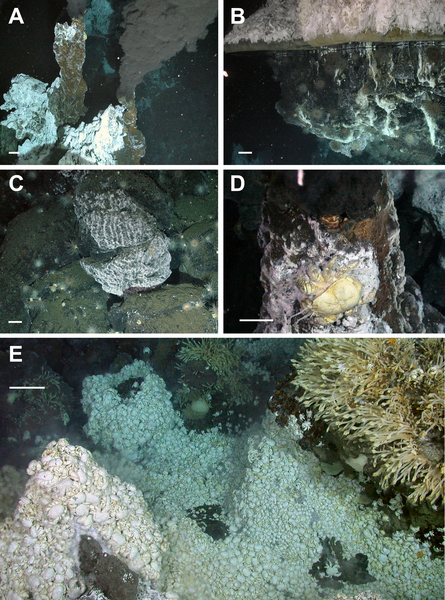
In the East Scotia Ridge deep beneath the Southern Ocean, hydrothermal vents including 'black smokers' reaching temperatures of up to 382 degrees Celsius have created a unique environment that lacks sunlight, but is rich in certain chemicals.
It also has communities of species previously unknown to science on the seafloor.
This hot, dark environment surrounding hydrothermal vents was explored using a Remotely Operated Vehicle (ROV) and the researchers found new species of yeti crab, starfish, barnacles, sea anemones, and potentially an octopus.
Two recent studies are providing a foundation for a more complete understanding of distinct kidney cancer subtypes, which could pave the way for better treatments.
In a study published in Cancer Cell led by Kyle Furge, Ph.D. and Aikseng Ooi, Ph.D. of Van Andel Research Institute, they provide a more complete understanding of the biology of Type 2 papillary renal cell carcinoma (PRCC2), an aggressive type of kidney cancer with no effective treatment, which lays the foundation for the development of effective treatment strategies.
The previous year has forced us to confront difficult science questions: Was processing patents Einstein’s real strength? Are there any other planets out there like Earth? Why is the universe composed of matter instead of antimatter? 2011 had a bumper crop of fascinating science and technology stories, so many that it’s impossible to call ten stories "the top” but the audience expects it. So, courtesy of Ysabel Yates at Txchnologist, here are ten notable events from a long list, in no particular order and slightly edited.


 Ousiometrics Analysis Says All Human Language Is Biased
  Wavelengths Of Light Are Why CO2 Cools The Upper Atmosphere But Warms Earth
 Here's Where Your Backyard Was 300 Million Years Ago
 Convergent Evolution Cheat Sheet Now 120 Million Years Old