Banner
Ousiometrics Analysis Says All Human Language Is Biased

A new tool drawing on billions of uses of more than 20,000 words and diverse real-world texts claims...

Wavelengths Of Light Are Why CO2 Cools The Upper Atmosphere But Warms Earth

There are concerns about projected warming on the Earth’s surface and in the lower atmosphere...

Here's Where Your Backyard Was 300 Million Years Ago

We may use terms like "grounded" and terra firma to mean stability and consistency but geology...

Convergent Evolution Cheat Sheet Now 120 Million Years Old

One tenet of natural selection is a random walk of genes but nature may be more predictable than...

User picture.
News StaffRSS Feed of this column.

News Releases From All Over The World, Right To You... Read More »

Blogroll
What is five times the tensile strength of steel and  the best currently available synthetic fibers?  If you read the title you already know. 

 Spider thread is a fascinating and often-studied material but no one has managed to produce it on an industrial scale. Scientists of the TU Muenchen (TUM) and the Universitaet Bayreuth (UBT) say they have now succeeded in discovering another secret of silk proteins and the mechanism that imparts spider silk with its strength.

How do spiders manage to first store the silk proteins in the silk gland and to then assemble them in the spinning passage in a split second to form threads with these extraordinary characteristics? And what exactly gives the threads their tremendous tensile strength?
Scientists at the Smithsonian and partnering organizations have discovered a remarkably primitive eel they have named Protoanguilla palau in a fringing reef off the coast of the Republic of Palau.

This fish exhibits many primitive anatomical features unknown in the other 19 families and more than 800 species of living eels, resulting in its classification as a new species belonging to a new genus and family. 
Usually when you think of drugs, you think of mules, but camels have also unique properties, except those can be used in future drug development.

Members of the camelid family have particular heavy-chain antibodies in their blood known as nanobodies that may serve as therapeutic proteins. One of the most powerful advantages of nanobodies is that they can be easily attached to other proteins and nanoparticles by simple chemical procedures. 

Scientists at the Department of Pharmaceutics and Analytical Chemistry, University of Copenhagen, have designed nanoparticle systems of smaller than 150nm that are decorated with nanobodies expressing high specificity for the cancer marker Mucin-1, which is connected to breast and colon cancer.

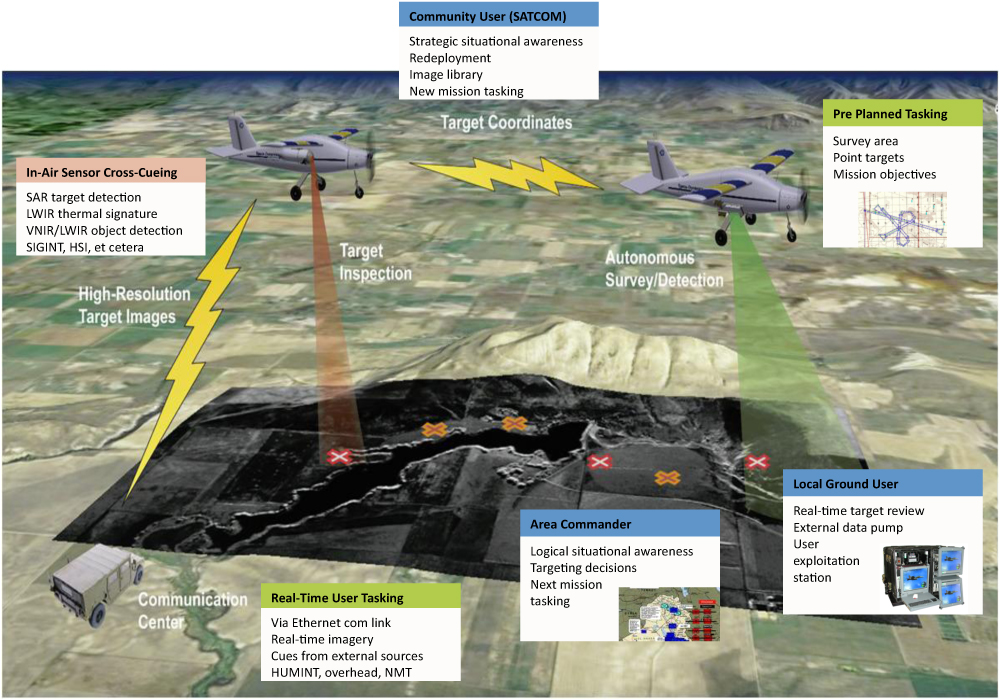
In the modern world, even residents of London generate more intelligence, surveillance and reconnaissance (ISR) data than human operators can collate and that can severely limit the ability of an analyst to generate intelligence reports in operationally relevant time frames, like when ambassadors and looters are rioting and claiming it is for social justice.

Naval Research Laboratory may have the answer - a multi-user tracking capability which enables the system to manage collection of imagery without continuous monitoring by a ground or airborne operator, thus requiring fewer personnel and freeing up operational assets.
Here's a trivia question; what's the longest alliance in history?

Unless you went by the title, you were probably stumped.  Maybe you believe it is England and Portugal at 638 years.   You were unlikely to guess Scotland and France but a University of Manchester historian says she has uncovered evidence which shows a defensive alliance  between Scotland and France (against the English, naturally) might never have formally ended – potentially making it the longest in history.

In a paper to be published next year, Dr. Siobhan Talbott argues the Franco-Scottish Auld Alliance of 1295 survived numerous wars between Britain and France, even after the Act of Union was signed in 1707. Trade, she says, is a major reason for its longevity.

Weakened immunity is a serious issue for older people. Because our immune systems become less effective as we age we suffer from more infections and these are often more severe. This is an important process that has probably evolved to prevent certain cancers, but as the proportion of inactive cells builds up over time our defenses become weakened. This takes a serious toll on health and quality of life. 

Research in the Journal of Immunology outlines a new mechanism controlling aging in white blood cells. The research opens up the possibility of temporarily reversing the effects of aging on immunity and could, in the future, allow for the short-term boosting of the immune systems of older people.