Banner
Ousiometrics Analysis Says All Human Language Is Biased

A new tool drawing on billions of uses of more than 20,000 words and diverse real-world texts claims...

Wavelengths Of Light Are Why CO2 Cools The Upper Atmosphere But Warms Earth

There are concerns about projected warming on the Earth’s surface and in the lower atmosphere...

Here's Where Your Backyard Was 300 Million Years Ago

We may use terms like "grounded" and terra firma to mean stability and consistency but geology...

Convergent Evolution Cheat Sheet Now 120 Million Years Old

One tenet of natural selection is a random walk of genes but nature may be more predictable than...

User picture.
News StaffRSS Feed of this column.

News Releases From All Over The World, Right To You... Read More »

Blogroll
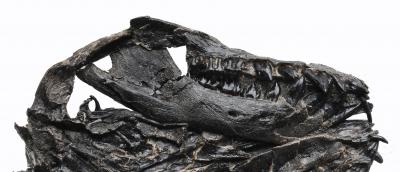
Liaoconodon hui, a complete fossil mammal from the Mesozoic, has been found in China and includes a long-sought transitional middle ear. The specimen shows the bones associated with hearing in mammals (the malleus, incus, and ectotympanic) decoupled from the lower jaw, as had been predicted, but were held in place by an ossified cartilage that rested in a groove on the lower jaw.

 The paper in Nature also suggests that the middle ear evolved at least twice in mammals, for monotremes and for the marsupial-placental group.
When we are 'up', we are happy, 'down' not so much.  'Right' is trustworthy while 'in left field' not so much, according to language and culture. 

But we don't all think right is right. Take handedness - people associate 'goodness' with the side they can act more fluently on.   Right-handed people prefer the product or job applicant positioned to their right. Lefties prefer the opposite. And those linguistic tropes? They probably "enshrine the preferences of the right-handed majority," 
says psychologist Daniel Casasanto, who believes "We use mental metaphors to structure our thinking about abstract things.   One of those metaphors is space." 

For 20 years, some seismologists in Japan, such as Katsuhiko Ishibashi, now professor emeritus at Kobe University, have warned of the seismic and tsunami hazards to the safety of nuclear power plants. 

Yet in the immediate aftermath of the magnitude-9.1 earthquake that struck Tohoku on 11 March, pundits could be found on many Japanese TV stations saying that it was “unforeseeable”.

That's because the 'foreseen' earthquakes were using flawed methodology, argues Robert J. Geller in a Nature Comment piece.   Geller is in the Department of Earth and Planetary Science, Graduate School of Science, University of Tokyo, and he calls on seismologists in Japan to stop

A study of twin veterans has linked antidepressant use to thicker arteries and therefore possibly increased risk of heart disease and stroke, according to data presented last week at the American College of Cardiology meeting in New Orleans.

The study included 513 middle-aged male twins who both served in the U.S. military during the Vietnam War. Twins are genetically the same but may be different when it comes to other risk factors such as diet, smoking and exercise, so studying them is a good way to distill out the effects of genetics.
Ants and termites have a significant positive impact on crop yields in dryland agriculture, according to a paper published in Nature Communications.   The authors say it is the first study to show a crop yield increase due to soil fauna in the field.

Ants and termites perform the same ecosystem service functions in dryland agriculture that earthworms perform in cooler and wetter areas, but the potential for ants and termites to provide these benefits has received little attention until now, they state.


Their studies on ants and termites in soil showed an average 36 per cent higher wheat crop yield under low tillage but otherwise conventional agricultural management.
A paper published in the Proceedings of the National Academy of Sciences says the mosquito branched off the same evolutionary tree as the house fly around 220 million years ago.   Though only a few species of flies gain public attention - pests like house flies, March flies and mosquitoes – there are 152,000 named species of flies, representing around 10 per cent of all species on Earth.   The March fly branched off some 175 million years ago, while the common house fly branched off about 50 million years ago.

Flies originated in wet environments and as they evolved they adapted to feed in almost any nutrient-rich substrate in almost any environment on earth.