Banner
Here's Where Your Backyard Was 300 Million Years Ago

We may use terms like "grounded" and terra firma to mean stability and consistency but geology...

Convergent Evolution Cheat Sheet Now 120 Million Years Old

One tenet of natural selection is a random walk of genes but nature may be more predictable than...

Synchrotron Could Shed Light On Exotic Dark Photons

There are many hypothetical particles proposed to explain dark matter and one idea to explore how...

The Pain Scale Is Broken But This May Fix It

Chronic pain is reported by over 20 percent of the global population but there is no scientific...

User picture.
News StaffRSS Feed of this column.

News Releases From All Over The World, Right To You... Read More »

Blogroll
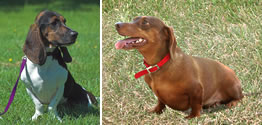
A single evolutionary event appears to explain the short, curved legs that characterize all of today's dachshunds, corgis, basset hounds and at least 16 other breeds of dogs.

The research team led by the National Human Genome Research Institute (NHGRI) scientist Elaine Ostrander, Ph.D., examined DNA samples from 835 dogs, including 95 with short legs. Their survey of more than 40,000 markers of DNA variation uncovered a genetic signature exclusive to short-legged breeds. Through follow-up DNA sequencing and computational analyses, the researchers determined the dogs' disproportionately short limbs can be traced to one mutational event in the canine genome - a DNA insertion - that occurred early in the evolution of domestic dogs. 
What separates us from the animals?   Some of us contend it's technology while others say it's Pynchon novels but really how we learn has to be in the top five.

Researchers in neuroscience, psychology, education, and machine learning are trying to synthesize a new 'science of learning' that will reshape how we think about education and perhaps help us imagine a new classroom for the 21st century.
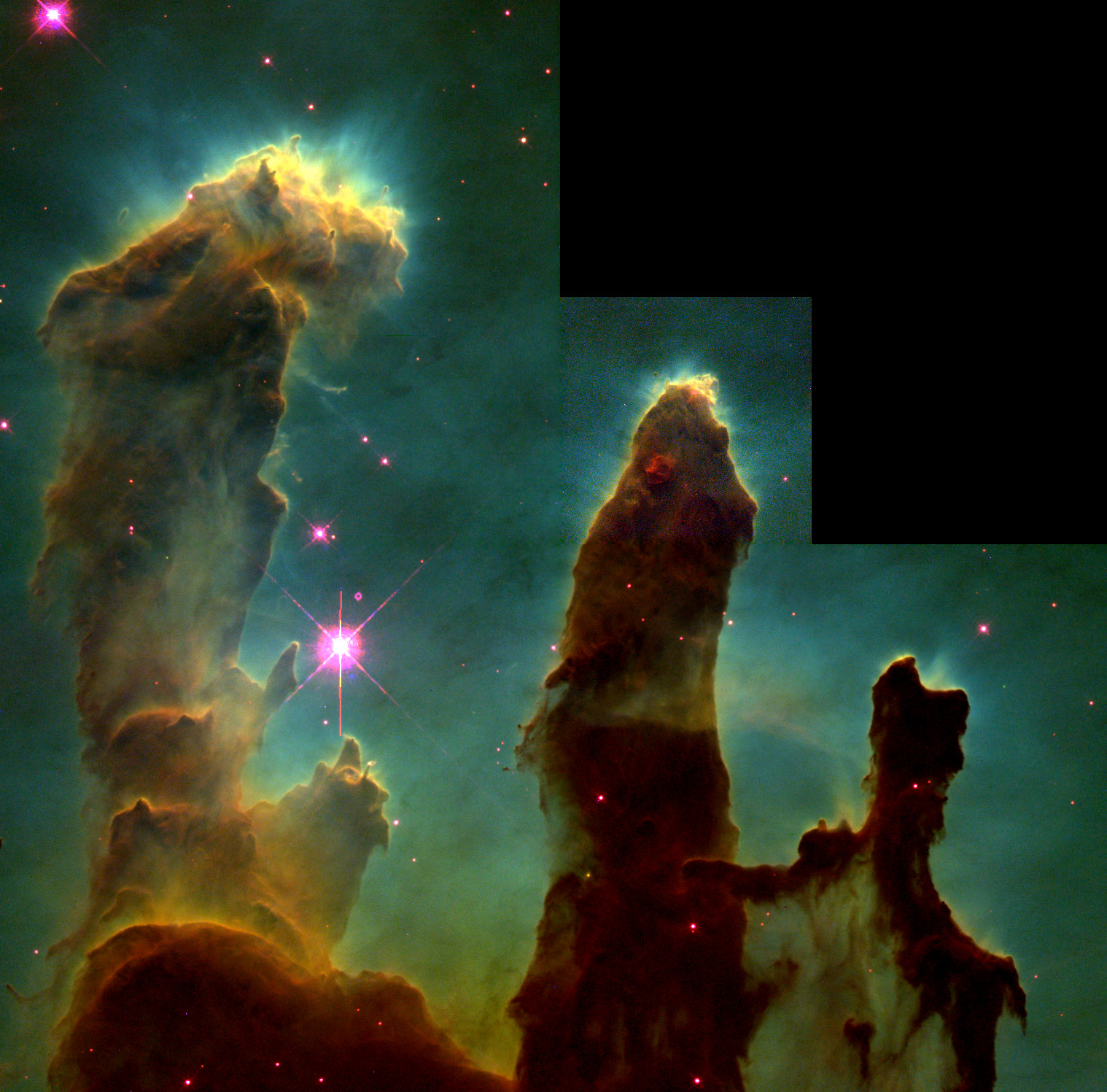
The Eagle Nebula is a dazzling stellar nursery located 7000 light-years away near the constellation of Serpens - the Snake.  In the Eagle Nebula, a region of gas and dust where young stars are currently being formed, a cluster of massive, hot stars named NGC 6611 has just been born.

The powerful light and strong winds from these massive new arrivals are shaping light-year long pillars, seen in the image partly silhouetted against the bright background of the nebula. The nebula itself has a shape vaguely reminiscent of an eagle, with the central pillars being the "talons".

As part of  their series about the cultural response toward an H1N1 flu outbreak, the Harvard Opinion Research Program is releasing a national poll that focuses on Americans' views and concerns about the potential for a more severe outbreak of Influenza A H1N1 (Swine Flu) in the fall or winter. The polling was done June 22-28, 2009.

Approximately six in ten Americans (59%) believe it is very or somewhat likely that there will be widespread cases of Influenza A (H1N1) with people getting very sick this coming fall or winter. Parents are more likely than people without children to believe this will occur, with roughly two thirds of parents (65%) saying it is very or somewhat likely compared to 56% of people without children.
In the early days of global warming concern, prior to 1994, there was doubt because some researchers used data that skewed results during predictable events,  like El Niño, from locations in the tropical Pacific Ocean and that lack of scientific impartiality made it more difficult to convince people going forward despite more rigorous methods.
The worst thing that can happen to the American economy is a tax on current carbon-using businesses that then subsidizes flaky alternatives that already don't work, like current ethanol and solar panels.

It may be too late but Richard Hess from the Idaho National Laboratory in Idaho Falls in the US and his team issued a new report in Cellulose laying out some ways to keep biofuels in the hunt, even ethanol.