Banner
Here's Where Your Backyard Was 300 Million Years Ago

We may use terms like "grounded" and terra firma to mean stability and consistency but geology...

Convergent Evolution Cheat Sheet Now 120 Million Years Old

One tenet of natural selection is a random walk of genes but nature may be more predictable than...

Synchrotron Could Shed Light On Exotic Dark Photons

There are many hypothetical particles proposed to explain dark matter and one idea to explore how...

The Pain Scale Is Broken But This May Fix It

Chronic pain is reported by over 20 percent of the global population but there is no scientific...

User picture.
News StaffRSS Feed of this column.

News Releases From All Over The World, Right To You... Read More »

Blogroll

A French study of the 1918-1919 influenza pandemic, which analysed mortality rates in approximately three-quarters of the European population, has concluded that it is unlikely that the virus, often described as Spanish Flu, originated in Europe.

Published in the May issue of Influenza and Other Respiratory Viruses, the research shows a high degree of synchronicity in the 14 countries studied, including Spain, with the flu peaking in October to November 1918.

The study, carried out by a team from INSERM, the French National Institute for Health and Medical Research, provides invaluable background briefing for clinicians and media during the current pandemic alert.

Key facts highlighted by the research – which can be viewed free online - include:

People aren't the only ones who've got rhythm. Two reports published online on April 30th in Current Biology, a Cell Press publication, reveal that birds – and parrots in particular – can also bob their heads, tap their feet, and sway their bodies along to a musical beat. The findings show that a very basic aspect of the human response to music is shared with other species, according to the researchers. 
A disease spread simulation has emphasized that flu interventions must be imposed quickly, if they are to be effective. Researchers writing in BMC Public Health have shown that staying at home, closing schools and isolating infected people within the home should reduce infection, but only if they are used in combination, activated without delay and maintained for a relatively long period.
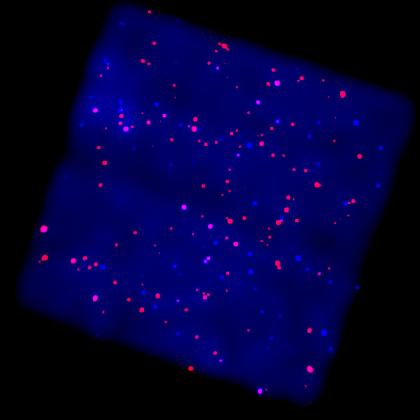
An extremely deep Chandra X-ray Observatory image of a region near the center of our Galaxy has resolved a long-standing mystery about an X-ray glow along the plane of the Galaxy. The glow in the region covered by the Chandra image was discovered to be caused by hundreds of point-like X- ray sources, implying that the glow along the plane of the Galaxy is due to millions of such sources.

This image shows an infrared view from the Spitzer Space Telescope of the central region of the Milky Way, with a pullout showing a Chandra image of a region located only 1.4 degrees away from the center of the Galaxy.
Ultrafast, light-sensitive video cameras are needed for observing high-speed events such as shockwaves, communication between living cells and a Usain Bolt sprint. To catch such elusive moments, a camera must be able to capture millions or billions of images continuously with a very high frame rate. Conventional cameras have not been up to the task but researchers at the UCLA Henry Samueli School of Engineering and Applied Science say they have developed a novel, continuously running camera that captures images roughly a thousand times faster than any existing conventional camera.
 
Quantum cryptography, a completely secure means of communication, is much closer to being used practically as researchers from Toshiba and Cambridge University's Cavendish Laboratory have now developed high speed detectors capable of receiving information with much higher key rates, thereby able to receive more information faster.

Published as part of IOP Publishing's New Journal of Physics' Focus Issue on 'Quantum Cryptography: Theory and Practice', the journal paper, 'Practical gigahertz quantum key distribution based on avalanche photodiodes', details how quantum communication can be made possible without having to use cryogenic cooling and/or complicated optical setups, making it much more likely to become commercially viable soon.