Banner
Here's Where Your Backyard Was 300 Million Years Ago

We may use terms like "grounded" and terra firma to mean stability and consistency but geology...

Convergent Evolution Cheat Sheet Now 120 Million Years Old

One tenet of natural selection is a random walk of genes but nature may be more predictable than...

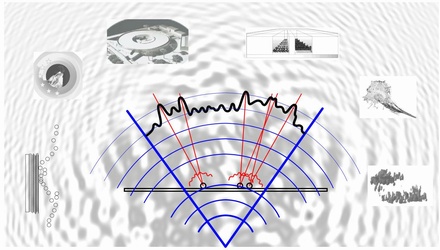
Synchrotron Could Shed Light On Exotic Dark Photons

There are many hypothetical particles proposed to explain dark matter and one idea to explore how...

The Pain Scale Is Broken But This May Fix It

Chronic pain is reported by over 20 percent of the global population but there is no scientific...

User picture.
News StaffRSS Feed of this column.

News Releases From All Over The World, Right To You... Read More »

Blogroll

Two new greenhouse gases are accumulating in the atmosphere, according to an international research team led by scientists from the Scripps Institution of Oceanography in the US and CSIRO scientist, Dr Paul Fraser, from the Centre for Australian Weather and Climate Research.

Nitrogen trifluoride (NF3) and sulfuryl fluoride (SO2F2) are powerful greenhouse gases that have recently been discovered to be growing quickly in the global background atmosphere.

These gases are used in industrial processes, partly as alternatives to other harmful greenhouse and ozone depleting gases.

Johns Hopkins researchers have discovered a new energy-making biochemical twist in determining the lifespan of yeast cells, one so valuable to longevity that it is likely to also functions in humans. 

Their findings, published in the March 20 issue of Cell, reveal that making glucose is highly influenced by a large enzyme complex already known to fix damaged DNA, and which apparently affects yeast life span through a common chemical process—acetylation. 

In a series of experiments, the Hopkins team showed that when continuously acetylated, the so-called NuA4 enzyme complex causes yeast cells to live longer than they would under normal conditions. 
There was once a theory in manufacturing and business; 'planned obsolescence.'  If you didn't make products with limitations, no one would ever buy new ones.

Then along came a bunch of Asian companies who made better products and American manufacturing took a dive.    Made In America became a political point of pride rather than a mark of quality.

But quality is making a comeback because warranty costs are the next big cost items, write researchers in the International Journal of Six Sigma and Competitive Advantage - so manufacturers need to design for reliability.
A receptor for glutamate, the most prominent neurotransmitter in the brain, plays a key role in the process of "unlearning," report researchers at the Salk Institute for Biological Studies. Their findings in the Journal of Neuroscience, could eventually help scientists develop new drug therapies to treat a variety of disorders, including phobias and anxiety disorders, particularly post-traumatic stress disorder. 

Post-traumatic stress disorder or PTSD is an anxiety disorder that can develop after exposure to a terrifying event or ordeal in which grave physical harm occurred or was threatened. PTSD is affecting approximately 5.2 million Americans, according to the National Institute of Health. As many as one in eight returning soldiers suffer from PTSD.
Physicists at Michigan Technological University have filled in some longtime blank spaces on the periodic table, calculating electron affinities of the lanthanides, a series of 15 elements known as rare earths.

"Electron affinity" is the amount of energy required to detach an electron from an anion, or negative ion (an atom with an extra electron orbiting around its nucleus). Elements with low electron affinities (like iron) give up that extra electron easily. Elements with high electron affinities (like chlorine) do not.

"I remember learning about electron affinities in 10th grade chemistry," said Research Associate Steven O'Malley. "When I began working as a grad student in atomic physics, I was surprised to learn that many of them were still unknown."
Researchers at the ACS meeting in Salt Lake City say they have new evidence for the existence of low-energy nuclear reactions (LENR), the process once called "cold fusion."

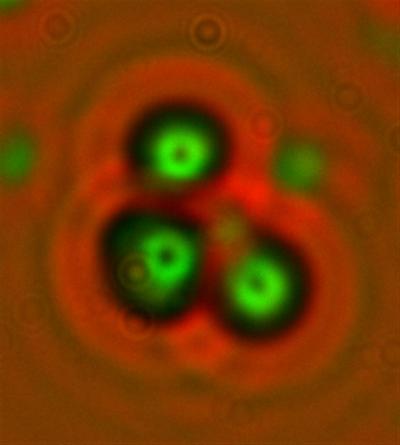
One group describes what it terms the first clear visual evidence that LENR devices can produce neutrons, subatomic particles that scientists view as tell-tale signs that nuclear reactions are occurring.