Neuroscientists at New York University and Harvard University say they have identified the neural systems involved in forming first impressions of others. The findings may show how we encode social information and then evaluate it in making these initial judgments, according to the study in Nature Neuroscience.
Making sense of others in a social interaction is not easy—each new person we meet may be a source of ambiguous and complex information. However, when encountering someone for the first time, we are often quick to judge whether we like that person or not. In fact, previous research has shown that people make relatively accurate and persistent evaluations based on rapid observations of even less than half a minute.
Researchers say they have discovered eight similar genes that, when mutated, appear to be responsible for medulloblastoma – the most common of childhood brain cancers.
About 250 Canadian children are diagnosed with various types of brain cancer every year. About 70 per cent of these survive. Brain tumors are the leading cause of childhood cancer deaths. The most common childhood brain cancer is medulloblastoma – a tumour that occurs at the back of the brain in the cerebellum. It is primarily a disease of very young children and is particularly deadly among babies under 18 months of age. In Canada, about 40 children are diagnosed with medulloblastoma every year and half of these will survive.
No, that isn't a New York Times headline(1), Swedish researchers really do say their studies of twins have showed significant genetic differences between men and women who smoke and develop lung disease - women are more susceptible to the consequences of smoking than men.
The team, led by Professor Magnus Svartengren from the Karolinska Institute, has been looking at the interaction of the environment with the genes of nearly 45,000 twins over 40 years old. They were interested in twins with chronic bronchitis or emphysema.
Pleasure and desire are essential to all human behavior, says Oxford University neuroscientist Morten Kringelbach , and he challenges us to trust our animal instincts in pursuit of those.
Pleasure and our sense of reward are produced by the interaction of many different brain regions, processed consciously or unconsciously. In the day-to-day routine of life, we may feel we are continually fighting our desires for what we really want. But doing so, he argues, is irrational and a huge waste of energy and resources, for it is pleasure and desire that underlie all our decisions and actions, and, therefore, our experiences.
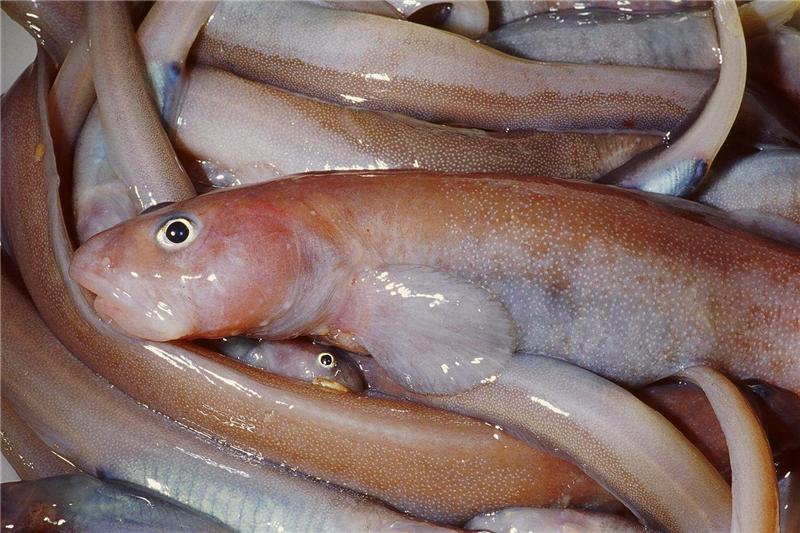
A new species of Antarctic fish, Gosztonyia antarctica, has been discovered at a depth of 650 meters in the Bellingshausen Sea in the Antarctic Ocean, an area which had not been studied since 1904 and where the fauna is "completely" unknown. Jesús Matallanas, the Spanish researcher responsible for the find, collected four specimens of the new species during Spanish Institute of Oceanography (IEO) campaigns in the southern hemisphere summers of 2003 and 2006.
Gamers caught an early glimpse of the future of serious games aimed at the health sector during the PlayMancer project’s demos at the latest Vienna Science Fair. The European PlayMancer project is working hard to improve the technology for serious game engines and tools for 3-D networked gaming.
The platform is being tested and validated physical rehabilitation and behavioral and addictive disorders with the inclusion of innovative multimodal I/O devices.
“We want to build actual games, serious games, around serious health-related problems like bulimia and chronic pain,” PlayMancer’s project manager Elias Kalapanidas tells ICT Results. “Using gaming in this way is really breaking new ground.”


 Here's Where Your Backyard Was 300 Million Years Ago
 Convergent Evolution Cheat Sheet Now 120 Million Years Old
 Synchrotron Could Shed Light On Exotic Dark Photons
 The Pain Scale Is Broken But This May Fix It