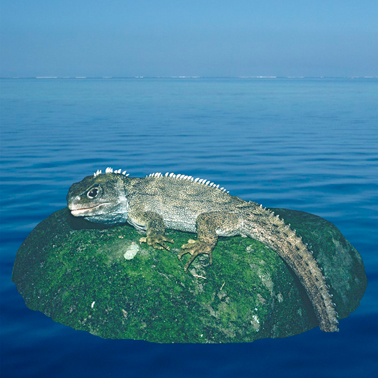
The fossil of a lizard-like New Zealand reptile has been identified by a team of scientists from University College London, University of Adelaide, and the Museum of New Zealand Te Papa Tongarewa. The fossil, dating back 18 million years, has triggered fresh arguments over whether the continent was fully submerged some 25 million years ago.
The endangered New Zealand tuatara (Sphenodon) is a lizard-like reptile that is the only survivor of a group that was globally widespread at the time of the dinosaurs. The tuatara lives on 35 islands scattered around the coast of New Zealand, mainland populations having become extinct with the arrival of humans and associated animals some 750 years ago.
Cosmic-rays detected half a mile underground in a disused U.S. iron-mine can be used to detect major weather events occurring 20 miles up in the Earth’s upper atmosphere, according to a new study published in Geophysical Research Letters and led by scientists from the UK’s National Centre for Atmospheric Science (NCAS) and the Science and Technology Facilities Council (STFC).
The study shows how the number of high-energy cosmic-rays reaching a detector deep underground, closely matches temperature measurements in the upper atmosphere (known as the stratosphere).
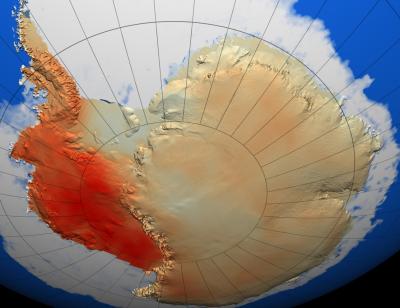
The consensus among scientists has been that while much of the globe has been getting warmer, a large part of Antarctica – the East Antarctic Ice Sheet – has actually been getting colder. Not so, say Eric Steig, a University of Washington professor of Earth and space sciences, and colleagues in Nature.
Galaxies are the building blocks of the Universe. Each of them comprises some hundred billion radiant stars, such as our sun, which extend across about 50,000 light years. Every galaxy is embedded in a spherical halo made of dark matter that cannot be seen but is detected through its massive gravitational attraction. The exact nature of this matter is still unknown.
People on low-carbohydrate diets are more dependent on the oxidation of fat in the liver for energy than those on a low-calorie diet, researchers at UT Southwestern Medical Center have found in a small clinical study published in Hepatology.
Although the study was not designed to determine which diet was more effective for losing weight, the average weight loss for the low-calorie dieters was about 5 pounds after two weeks, while the low-carbohydrate dieters lost about 9½ pounds on average.
Glucose, a form of sugar, and fat are both sources of energy that are metabolized in the liver and used as energy in the body. Glucose can be formed from lactate, amino acids or glycerol.
A new report, co-authored by a University of Hertfordshire academic, which will be launched this Thursday (22 January), has revealed that girls are more likely to have new technologies at home than boys and it is mothers rather than fathers who assist them.
The Learning in the Family report which looked at how families are involved in children’s learning, was funded by Becta, commissioned by Intuitive Media Research Services and co-authored by Robert Hart of Intuitive Media and Professor Karen Pine, at the University’s School of Psychology. They conducted two online surveys with a sample of 4,606 children aged six to fourteen, going into more depth with a further 2,535 children and then interviewed twelve families.


 Here's Where Your Backyard Was 300 Million Years Ago
 Convergent Evolution Cheat Sheet Now 120 Million Years Old
 Synchrotron Could Shed Light On Exotic Dark Photons
 The Pain Scale Is Broken But This May Fix It