Banner
Here's Where Your Backyard Was 300 Million Years Ago

We may use terms like "grounded" and terra firma to mean stability and consistency but geology...

Convergent Evolution Cheat Sheet Now 120 Million Years Old

One tenet of natural selection is a random walk of genes but nature may be more predictable than...

Synchrotron Could Shed Light On Exotic Dark Photons

There are many hypothetical particles proposed to explain dark matter and one idea to explore how...

The Pain Scale Is Broken But This May Fix It

Chronic pain is reported by over 20 percent of the global population but there is no scientific...

User picture.
News StaffRSS Feed of this column.

News Releases From All Over The World, Right To You... Read More »

Blogroll
Recent research by Tel Aviv University finds that young blood does a body good when it comes to fighting cancer.

The TAU researchers, led by Prof. Shamgar Ben-Eliyahu from the Department of Psychology's Neuroimmunology Research Unit, discovered that a transfusion of "young" blood –– blood which has been stored for less than 9 days –– increased the odds of survival in animals challenged with two types of cancer. This finding, reported in the journal Anesthesiology, may solve an age-old mystery as to why some blood transfusions during cancer-related surgeries may lead to an increased recurrence of cancer and others do not.
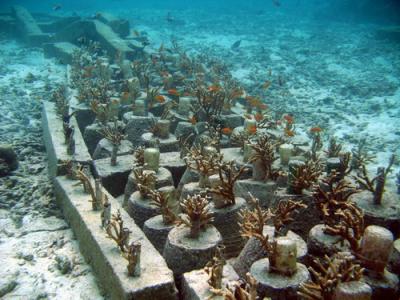
A team of scientists from the New York-based Wildlife Conservation Society (WCS) has reported a rapid recovery of coral reefs in areas of Indonesia, following the tsunami that devastated coastal regions throughout the Indian Ocean four years ago today.

The WCS team, working in conjunction with the Australian Research Council Centre of Excellence for Coral Reef Studies (ARCCoERS) along with government, community and non-government partners, has documented high densities of "baby corals" in areas that were severely impacted by the tsunami.
The Centers for Disease Control and Prevention and the American College of Sports Medicine recommends at least 30 minutes of moderate-intensity physical activity on most days of the week in order to maintain and improve optimal health. This recommendation is especially important for older Americans, who can be less likely to fulfill this requirement, yet are more at risk for chronic diseases associated with aging.
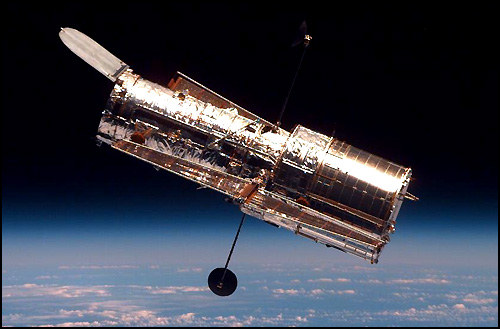
From troubled beginnings nearly 18 years ago, the Hubble Space Telescope has revolutionized astronomy and its stunning images have stirred the imaginations of people around the globe.

But as the International Year of Astronomy dawns, the renowned telescope is preparing for its final chapter, starting with the scheduled May 12 launch of the space shuttle Atlantis for NASA's fifth and final service mission to the telescope.

The repairs will provide Hubble with a future as bright, though perhaps not nearly as long, as its past, said Julianne Dalcanton, a University of Washington associate professor of astronomy who for nearly a decade has used the telescope for a major part of her research.


Group exercise programs, treadmill training and horseback riding can be healthy choices for children with developmental disabilities, a new review of studies concludes. 

With these kinds of activities, children with disorders such as autism, mental retardation and cerebral palsy can improve their coordination and aerobic fitness, according to research analyzed by Connie Johnson, PT, a physical therapist with the Fairfax County Public Schools in Virginia.

The findings are encouraging, since studies show that children with developmental disabilities tend to be less fit than their peers. In many cases, the children lack the resources and community support that would encourage them to be more active, Johnson said.
The International Year of Astronomy 2009 (IYA2009) has been launched by the International Astronomical Union (IAU) and the United Nations Educational, Scientific and Cultural Organization (UNESCO) under the theme, “The Universe, yours to discover”. Thousands of IYA2009 events are described on the national websites, as well as on astronomy2009.org, and a few of the global projects are listed here.