Fish oil protects against deaths from heart problems, but doesn't provide a clear benefit in heart rhythm problems (arrhythmias), according a study published on bmj.com today.
Consuming oily fish at least two to four times a week is recommended for patients after a heart attack. But the evidence for the protective effect of fish oil supplements is based on one large trial from over 10 years ago. More recent trials have showed no beneficial effect of fish oil on patient outcomes.
Deriving plentiful electricity from sunlight at a modest cost is a challenge with immense implications for energy, technology, and climate policy. A paper in a special energy issue of Optics Express, describes a relatively new approach to solar cells: lacing them with nanoscopic metal particles. As the authors describe in the article, this approach has the potential to greatly improve the ability of solar cells to harvest light efficiently.
Women should go for the broccoli when the relish tray comes around during holiday celebrations this season.
While it has been known for some time that eating cruciferous vegetables, such as broccoli, cauliflower, and cabbage, can help prevent breast cancer, the mechanism by which the active substances in these vegetables inhibit cell proliferation was unknown — until now.
Scientists in the UC Santa Barbara laboratories of Leslie Wilson, professor of biochemistry and pharmacology, and Mary Ann Jordan, adjunct professor in the Department of Molecular, Cellular, and Developmental Biology, have shown how the healing power of these vegetables works at the cellular level. Their research is published in this month's journal Carcinogenesis.
A South Dakota State University study showed that women who began menstruating at an earlier age had a higher percentage of body fat as adults than women who began menstruating later.
But women who began menstruating earlier also had higher bone mineral density in the hip as adult women. They also had greater bone mass and bone density in the femoral neck region of the hip, a common site for hip fracture.
These are among the findings in a study by assistant professor Teresa Binkley at SDSU’s Ethel Austin Martin Program in Human Nutrition. Binkley worked on the project with Courtney Grimsrud, an undergraduate research assistant at the time, and professor Bonny Specker, director of the Ethel Austin Martin Program.
Since its discovery in the 18th century, cocaine has been a scourge of western society. Strongly stimulating human reward centers in low doses, cocaine is extremely addictive and can be fatal in high doses.
But this potent compound did not evolve to ensnare humans in addiction, it is a powerful insect neurotoxin, protecting coca bushes from munching insects - without rewarding them.
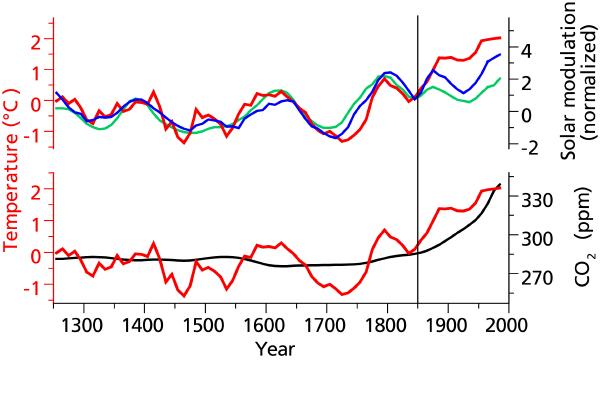
An ice core drilled at the Belukha glacier in the Siberian Altai by a Swiss-Russian research team under the leadership of the Paul Scherrer Institute (PSI) in 2001 has now provided new findings in climate research. Oxygen isotopes in the ice were used to reconstruct the temperatures in the Altai over the past 750 years. The scientists discovered a strong link between regional temperatures and the solar activity in the period 1250-1850, concluding that the sun was an important driver of preindustrial temperature changes in the Altai.


 Here's Where Your Backyard Was 300 Million Years Ago
 Convergent Evolution Cheat Sheet Now 120 Million Years Old
 Synchrotron Could Shed Light On Exotic Dark Photons
 The Pain Scale Is Broken But This May Fix It