A Harvard-based study led by Drs. Gottfried Schlaug and Ellen Winner and published in PLoS ONE has found that children who study a musical instrument for at least three years outperform children with no instrumental training on tests measuring verbal ability and visual pattern completion, skills not normally associated with music, along with tests of auditory discrimination and finger dexterity, which are traditionally skills honed by the study of a musical instrument.
A team led by a Montana State University professor has found a fungus that produces a new type of diesel fuel, which they say holds great promise. Calling the fungus' output "myco-diesel," Gary Strobel and his collaborators describe their initial observations in the November issue of Microbiology.
The discovery may offer an alternative to fossil fuels, said Strobel, MSU professor of plant sciences and plant pathology. The find is even bigger, he said, than his 1993 discovery of fungus that contained the anticancer drug taxol.
According to the international space agencies, 'space weather' like radiation from the sun and cosmic rays in a solar storm, is the single greatest obstacle to deep space travel. New research out today in Plasma Physics and Controlled Fusion shows how knowledge gained from the pursuit of nuclear fusion research may reduce the threat to acceptable levels, making man's first mission to Mars a much greater possibility.
The solar energetic particles, although just part of the 'cosmic rays' spectrum, are of greatest concern because they are the most likely to cause deadly radiation damage to the astronauts.
Take a close look at that cheap piece of scrap iron before you toss it in the trash. Wei-xian Zhang has a good use for it. Someday soon, much of the world might also. Zhang, a professor of civil and environmental engineering, recently concluded a five-year research project in which he and his colleagues at Tongji University in Shanghai used two million pounds of iron to
detoxify pollutants in industrial wastewater.
The fight against climate warming has an unexpected ally in mushrooms growing in dry spruce forests covering Alaska, Canada, Scandinavia and other northern regions, a new UC Irvine study finds. When soil in these forests is warmed, fungi that feed on dead plant material dry out and produce significantly less carbon dioxide than fungi in cooler, wetter soil. This came as a surprise to scientists, who expected warmer soil to emit larger amounts of carbon dioxide because extreme cold is believed to slow down the process by which fungi convert soil carbon into carbon dioxide.
Why are some species of plants and animals favored by natural selection? According to a UC Riverside-led research team, the answer lies in the rate of metabolism of a species – how fast a species consumes energy, per unit mass, per unit time. The researchers studied 3006 species, the largest number of species ever analyzed in a single study. The species list encompasses much of the range of biological diversity on Earth – from bacteria to elephants, and algae to sapling trees.
To the researchers' surprise, they found the mean metabolic rate of the species at rest fell on a narrow range of values – 0.3 to 9 Watts per kilogram.


 Synchrotron Could Shed Light On Exotic Dark Photons
 The Pain Scale Is Broken But This May Fix It
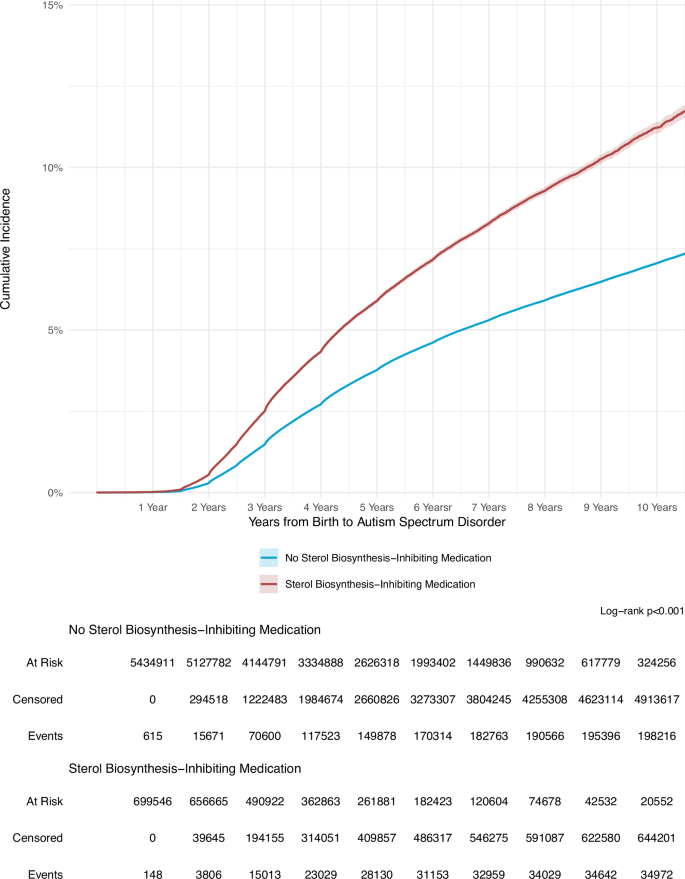 Study Links Antidepressants, Beta-blockers and Statins To Increased Autism Risk
 Pilot Study: Fibromyalgia Fatigue Improved By TENS Therapy









