Banner
Synchrotron Could Shed Light On Exotic Dark Photons

There are many hypothetical particles proposed to explain dark matter and one idea to explore how...

The Pain Scale Is Broken But This May Fix It

Chronic pain is reported by over 20 percent of the global population but there is no scientific...
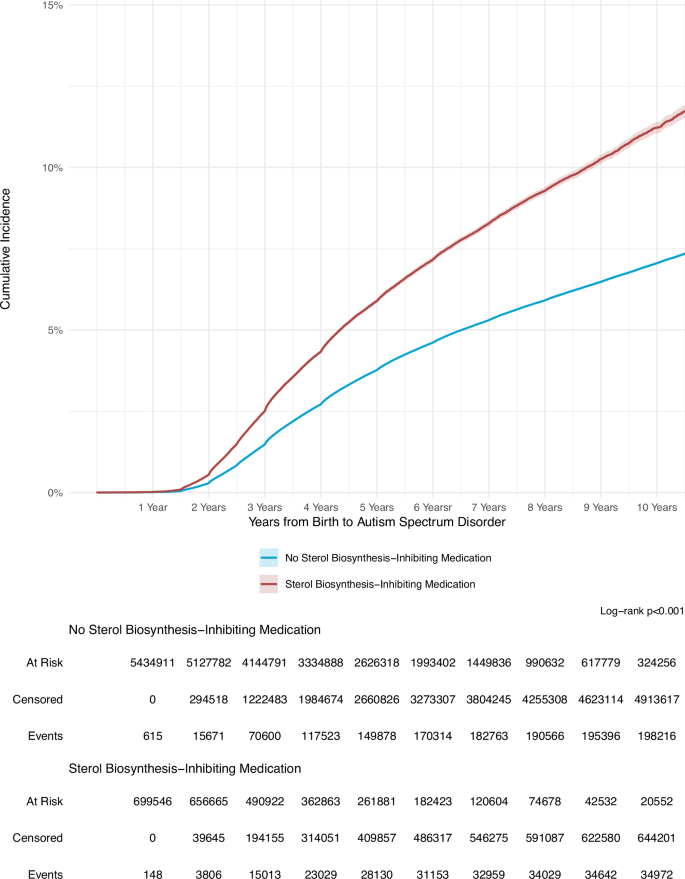
Study Links Antidepressants, Beta-blockers and Statins To Increased Autism Risk

An analysis of 6.14 million maternal-child health records  has linked prescription medications...

Pilot Study: Fibromyalgia Fatigue Improved By TENS Therapy

Fibromyalgia is the term for a poorly-understood condition where people experience pain and fatigue...

User picture.
News StaffRSS Feed of this column.

News Releases From All Over The World, Right To You... Read More »

Blogroll

Bioniche Life Sciences Inc., a research-based, technology-driven Canadian biopharmaceutical company, today announced that Econiche(TM), the world's first vaccine designed to reduce the shedding by cattle of Escherichia coli (E. coli) O157:H7, has received full licensing approval from the Canadian Food Inspection Agency (CFIA). Econiche is now available for unrestricted use by Canadian cattle producers and their veterinarians.

Econiche is a Canadian discovery developed by Bioniche Life Sciences Inc. The vaccine has the potential to significantly reduce the amount of E. coli O157 shed into the environment by beef and dairy cattle and, in turn, reduce the risk to human health.

The ability to make fire millennia ago was likely a key factor in the migration of prehistoric hominids from Africa into Eurasia, a researcher at the Hebrew University of Jerusalem's Institute of Archaeology believes on the basis of findings at the Gesher Benot Ya'aqov archaeological site in Israel. 

Earlier excavations there, carried out under the direction of Prof. Naama Goren-Inbar of the Institute of Archaeology, showed that the occupants of the site – who are identified as being part of the Acheulian culture that arose in Africa about 1.6 million years ago -- had mastered fire-making ability as long as 790,000 years ago. This revelation pushed back previously accepted dates for man's fire-making ability by a half-million years. 
Fraunhofer researchers from Stuttgart have developed a new technology that enables the production of energy-autonomous, low-maintenance sensors.   The original application is sensors in air compression systems.  At present, those sensors are either battery-driven or connected by complex wiring. This often makes it very difficult or even impossible to install sensors in places that are hard to reach.

The solution; make electricity from air or water in a closed environment - with no movable parts.  
Is schizophrenia a disorder of glutamate hyperactivity or hypoactivity?

 The predominant hypothesis for many years was that schizophrenia is a glutamate deficit disorder but there is evidence of glutamate hyperactivity as well.  A new study by Karlsson et al., appearing in the November 1st issue of Biological Psychiatry, reinforces this point with new data about the impact of deleting the gene for the glutamate transporter EAAT1.   EAAT1, implicated in schizophrenia, plays a critical role in inactivating glutamate by removing it from the synaptic and extracellular spaces. 
No one talks about John McCain's religion, though conservative Christians are supposed to be Republican.   Democrats are the more secular, liberal party, it is said, yet they have defended Barack Obama's link to his  controversial pastor.

During the campaign of 1960, when Catholic John F. Kennedy was running on the Democratic ticket, religion became an important voting issue, and it comes up again from time to time.   Voters in 1960 were concerned about a President who might listen to The Pope while John Kerry's Catholicism was barely worth a mention in 2004.  More often today, the discussion is on 'values.'

So, hyperbole from both sides notwithstanding, how much influence does religion have on values?
If we gave you data from NASA's 1976 Viking landing on Mars, could you read it?   No, and neither can anyone else.   Some of the data collected is already unreadable and lost forever.  According to the National Archives Web site, by the mid-1970s only two machines could read the data from the 1960 U.S. Census: One was in Japan, the other in the Smithsonian Institution. 

We're in the digital dark ages, we just don't know it.   Left alone, a framed photograph will fade and yellow over time, but your grandchildren will still be able to see it.   However, a digital photo file of that picture may be unreadable to future computers.