Banner
Synchrotron Could Shed Light On Exotic Dark Photons

There are many hypothetical particles proposed to explain dark matter and one idea to explore how...

The Pain Scale Is Broken But This May Fix It

Chronic pain is reported by over 20 percent of the global population but there is no scientific...
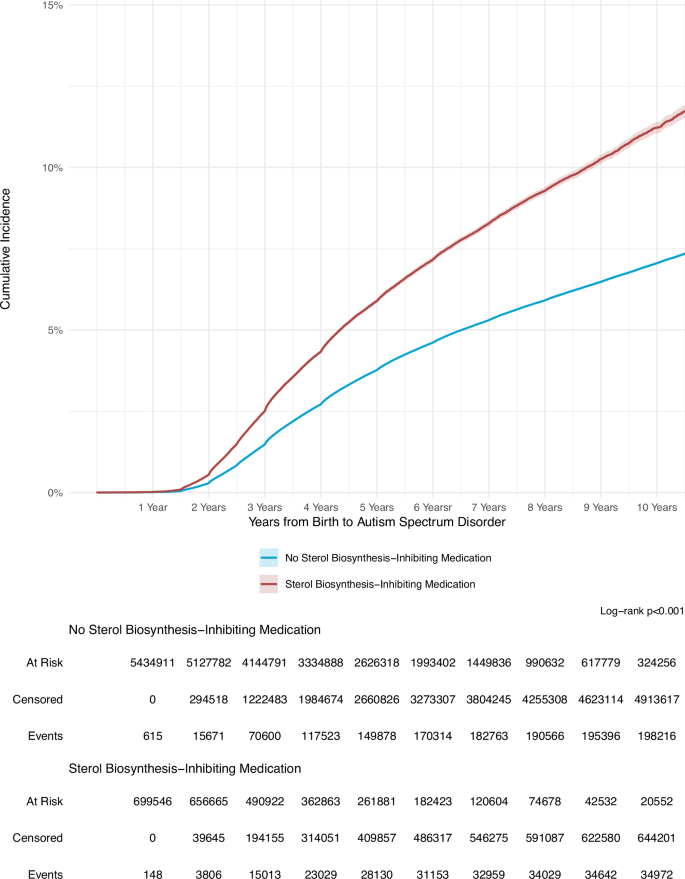
Study Links Antidepressants, Beta-blockers and Statins To Increased Autism Risk

An analysis of 6.14 million maternal-child health records  has linked prescription medications...

Pilot Study: Fibromyalgia Fatigue Improved By TENS Therapy

Fibromyalgia is the term for a poorly-understood condition where people experience pain and fatigue...

User picture.
News StaffRSS Feed of this column.

News Releases From All Over The World, Right To You... Read More »

Blogroll
Anyone with a nose knows the rotten-egg odor of hydrogen sulfide - the polite term is 'gas' when it is generated by bacteria living in the human colon. An international team of scientists has discovered that cells inside the blood vessels of mice naturally make the gassy stuff, and that it controls blood pressure. 
The Amazon rainforest is a puzzle of ecology.   Despite concerns about climate change, rainforests are thriving, even in the face of drought.   In a new Science study conducted in the Yasuni forest dynamics plot of the Pontificia Universidad Católica del Ecuador, the most diverse tropical forest site associated with the Center for Tropical Forest Science/Smithsonian Institution Global Earth Observatory network (CTFS/SIGEO), there are  600 species of birds and 170 of mammals and 1,100 species of trees in the 25 hectare plot―more than in all of the U.S. and Canada, combined.
Phones can do almost anything these days - photos, music, television - but safely protecting biometric data is something new.   Ileana Buhan, a PhD student at the University of Twente, has been researching this new way of employing biometrics. She receives her doctorate from the Faculty of Electrical Engineering, Mathematics and Computer Science on 23 October. 
The leading cause of death in all cancer patients continues to be the resistance of tumor cells to chemotherapy, a form of treatment in which chemicals are used to kill cells.   A study by UC Riverside biochemists that focuses on cancer cells reports that ingesting apigenin,  a naturally occurring dietary agent found in vegetables and fruit , improves cancer cells' response to chemotherapy.

Xuan Liu, a professor of biochemistry, and Xin Cai, a postdoctoral researcher working in her lab, found that apigenin localizes tumor suppressor p53, a protein, in the cell nucleus – a necessary step for killing the cell that results in some tumor cells responding to chemotherapy.
An enigma unique to flowering plants  has been solved, say researchers from the University of Leicester (UK) and POSTECH, South Korea.  Scientists already knew that flowering plants, unlike animals, require not one but two sperm cells for successful fertilization.  Double fertilization is essential for fertility and seed production in flowering plants so increased understanding of the process is important.

But the mystery of this ‘double fertilization’ process was how each single pollen grain could produce ‘twin’ sperm cells. One to join with the egg cell to produce the embryo, and the other to join with a second cell in the ovary to produce the endosperm, a nutrient-rich tissue, inside the seed.

The Bill Melinda Gates Foundation today announced 104 grants to explore bold and largely unproven ways to improve global health. The grants of US$100,000 each will be made to scientists from 22 countries and five continents. They mark the first round of funding from Grand Challenges Explorations, an initiative to help lower the barriers for testing innovative ideas in global health.

The initial set of grants will inject fresh perspective into research for preventing or curing infectious diseases such as HIV/AIDS and TB, and limiting the emergence of drug resistance.