Banner
Synchrotron Could Shed Light On Exotic Dark Photons

There are many hypothetical particles proposed to explain dark matter and one idea to explore how...

The Pain Scale Is Broken But This May Fix It

Chronic pain is reported by over 20 percent of the global population but there is no scientific...
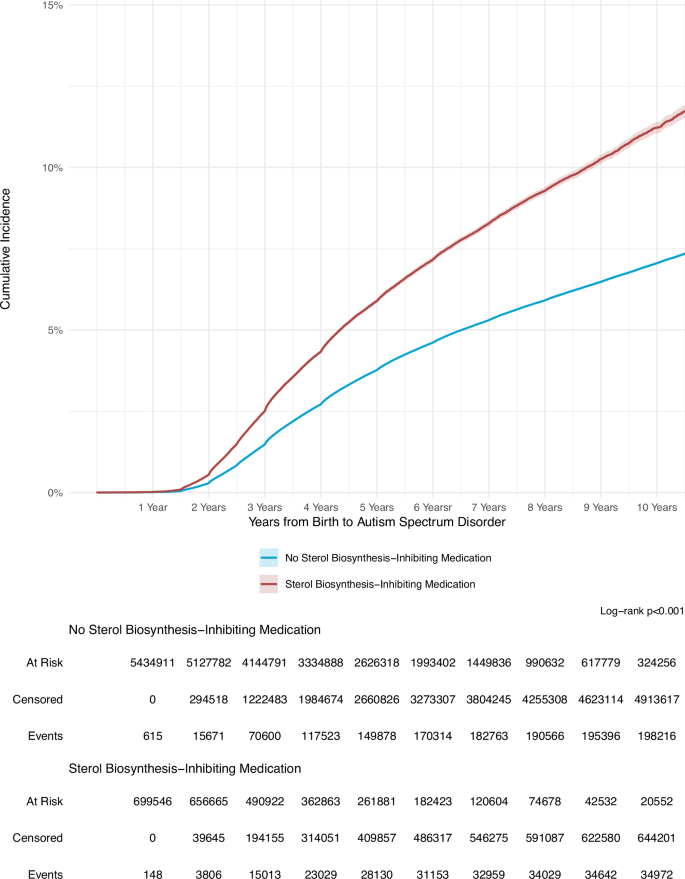
Study Links Antidepressants, Beta-blockers and Statins To Increased Autism Risk

An analysis of 6.14 million maternal-child health records  has linked prescription medications...

Pilot Study: Fibromyalgia Fatigue Improved By TENS Therapy

Fibromyalgia is the term for a poorly-understood condition where people experience pain and fatigue...

User picture.
News StaffRSS Feed of this column.

News Releases From All Over The World, Right To You... Read More »

Blogroll

The often-criticized components of the Western diet, like fried foods, salty snacks and meat, accounts for 30 percent of heart attack risk across the world, according to a study of dietary patterns in 52 countries reported in Circulation: Journal of the American Heart Association.

That's right, apparently Americans make the whole world eat bad.

Researchers identified three dietary patterns in the world:

  • Oriental: higher intake of tofu, soy and other sauces;
  • Prudent: higher intake of fruits and vegetables; and
  • Western: higher intake of fried foods, salty snacks, eggs and meat.

The Prudent diet was associated with a lower heart attack risk than the Oriental, researchers said.

What do presidential candidate Barack Obama and Snapple Iced Tea have in common? Patricia Turner, professor of African American and African studies at the University of California, Davis, whose research focuses on urban legends and conspiracy theories, notes that Snapple had to grapple with two false rumors when it became a sensation in 1993.


Did you ever hear that Snapple has ties to pro-life extremists or that it was owned by the Ku Klux Klan?  We haven't either but apparently that's what some people said and some people believed. 
A revolutionary heart operation technique using cutting edge technology will be performed on Monday 20 October and broadcast live to delegates at the Heart Rhythm Congress 2008 taking place in Birmingham.

The procedure to tackle heart rhythm disorder will be performed by Dr Andre Ng, Senior Lecturer in Cardiology at the University of Leicester and a Consultant Cardiologist at the University Hospitals of Leicester NHS Trust.

He will use technology that allows rapid and accurate location of the origin of the heart rhythm disturbance in a 3-dimensional geometry of the heart chambers and guides successful treatment with the use of catheter ablation.
Did you know there was such a thing as 'Quantum Darwinism'?  Indeed there is, and it postulates the theory that quantum mechanical states are selected and reproduced.

Theoretical proof of stable and measurable states extending over two quantum dots and creating offspring has now been provided, say researchers at the Institute of Physics at the University of Leoben, together
with colleagues from the Arizona State University. This supports the notion of what is known as Quantum Darwinism, which makes the selection and reproduction of quantum mechanical states responsible for the
way in which our reality is perceived.
 

New Jersey Institute of Technology professor Bruce Bukiet, a mathematician who has applied mathematical modeling techniques to the dynamics of scoring in baseball, has computed the probability of the Rays and Phillies winning the World Series now that the Rays have defeated the Boston Red Sox in the American League Championship Series. He recently released the names of those most deserving of Major League Baseball's prestigious 2008 Most Valuable Player (MVP) and Cy Young awards.

This is the eighth year that Bukiet has used his model to determine whether it is worthwhile to wager on games each day of the baseball season. His picks (posted on www.egrandslam.com) have led to positive results for six of the past eight years.

Heavy advertising by both Democratic and Republican presidential candidates during the 2008 election may actually make voters in battleground states more confused about which candidate to vote for, a new study suggests. 

A nationwide study found that voters in heavily contested states like Florida and Ohio become more ambivalent when they are exposed to a lot of opposing messages from the two candidates.