Banner
Synchrotron Could Shed Light On Exotic Dark Photons

There are many hypothetical particles proposed to explain dark matter and one idea to explore how...

The Pain Scale Is Broken But This May Fix It

Chronic pain is reported by over 20 percent of the global population but there is no scientific...

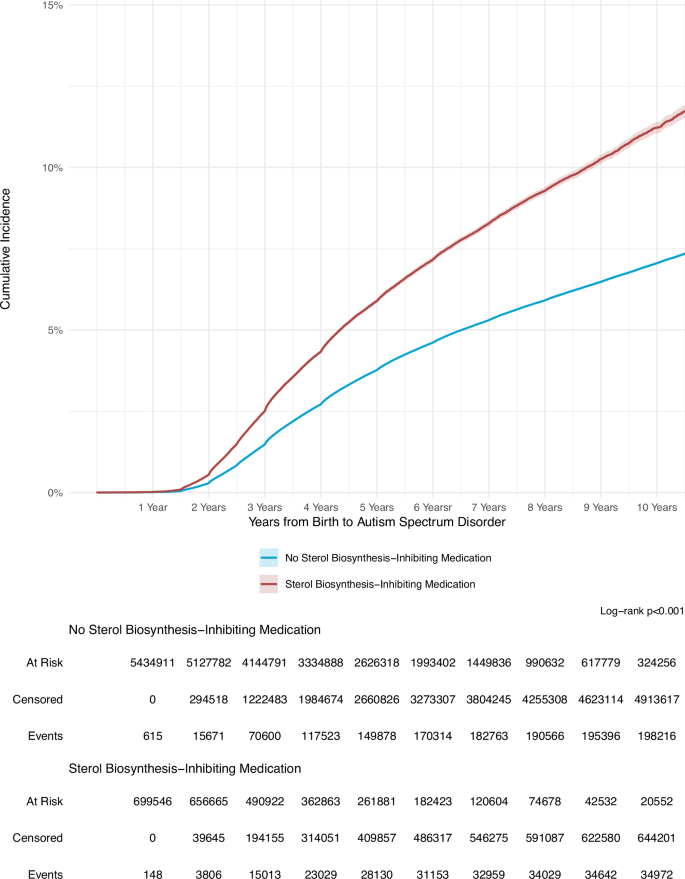
Study Links Antidepressants, Beta-blockers and Statins To Increased Autism Risk

An analysis of 6.14 million maternal-child health records  has linked prescription medications...

Pilot Study: Fibromyalgia Fatigue Improved By TENS Therapy

Fibromyalgia is the term for a poorly-understood condition where people experience pain and fatigue...

User picture.
News StaffRSS Feed of this column.

News Releases From All Over The World, Right To You... Read More »

Blogroll

For decades, scientists and resource managers have known that wildfires affect forest soils - in a direct sense because it kills vegetation and disrupts soil structure and then in an indirect sense because that then causes erosion. But, the lack of detailed knowledge of forest soils before they are burned by wildfire has hampered efforts to understand fire's effects on soil fertility and forest ecology.

A new study led by the Pacific Northwest (PNW) Research Station addresses this critical information gap and represents the first direct evidence of the toll wildfire can take on forest soil layers. It draws on data from the 2002 Biscuit Fire, which scorched some 500,000 acres in southwest Oregon, including half of a pre-existing study's experimental plots, which had been studied extensively before the fire. The result was a serendipitous and unprecedented opportunity to directly examine how wildfire changes soil by sampling soils before and after a wildfire. The study appears in the November issue of the Canadian Journal of Forest Research.

Modern nuclear techniques are giving the world's scientists and regulators better tools to fight pollution and other environmental threats – even those that may be lurking naturally at the beach or near your backyard. Many of the world's top "radioecologists" are in Morocco this week to assess a dynamic picture.

Environmental protection is drawing more attention in countries at all stages of development. A special area is monitoring the presence and movement of radionuclides in nature -- many of which are associated with societal activities -- to track and prevent contamination of soils, water, air, and food.

Studies reported this week, for example, cover mining in Romania and Kenya, electricity generation in Spain and Serbia, waste disposal in Lithuania, well water pumping in the USA, coastal climate changes in Sweden, ocean studies in Turkey, air pollution monitoring in Morocco, and phosphate fertilizer use in Cuba. Associated environmental and radioactive elements include isotopes of radon, potassium, polonium, thorium, carbon, uranium, and lead.

Reports were presented at the 4th International Symposium on Nuclear Metrology as a Tool for Radioecology, being hosted in Rabat by Morocco's National Centre for Energy, Sciences and Nuclear Techniques (CNESTEN) with the support of the IAEA and other regional and global partners.

Many activities are outside the nuclear industry, and involve what are known as "naturally occurring radioactive materials" or NORM for short. The activities pose different levels of risk, and are regulated in different ways, sometimes not at all. Through its programmes, the IAEA is reviewing issues related to the management and regulation of NORM industries, with a view to developing additional guidance documents on specific activities.

"Human activities are increasingly having an impact on the environment," noted Francois Brechignac of the International Union of Radioecology in Morocco this week. "But we are too often reacting once the impacts are already there, sometimes too late to counteract environmental detriment."


In a series of experiments with sleeping mice, researchers at the Duke University Medical Center say they have shown that the part of the brain that processes scents is a key part of forming long-term memories, especially involving other individuals.

"We can all relate to the experience of walking into a room and smelling something that sparks a vivid, emotional memory about a family member from years or even decades ago," says Stephen Shea, Ph.D., the lead author of the study published in The Journal of Neuroscience. "This research sought to understand that phenomenon on a cellular level."

The researchers examined how strong memories are formed by creating new memories in the minds of mice while under sedation and monitoring their response to a memory-inducing stimulus afterwards, when they were awake.

Think you knew spent too much time pondering the wonders of beer in college? These Rice University students have you beat. They're using genetic engineering to create beer that contains resveratrol, a chemical in wine that's been shown to reduce cancer and heart disease in lab animals.

Rice's "BioBeer" will be entered in the International Genetically Engineered Machine (iGEM) competition Nov. 8-9 in Cambridge, Mass. It's the world's largest synthetic biology competition, a contest where teams use a standard toolkit of DNA building blocks -- think genetic LEGO blocks -- to create living organisms that do odd things.

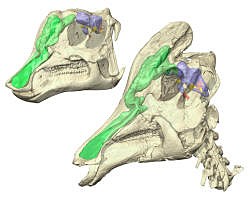
Paleontologists have long debated the function of the strange, bony crests on the heads of the duck-billed dinosaurs known as lambeosaurs. The structures contain incredibly long, convoluted nasal passages that loop up over the tops of their skulls.

Scientists at the University of Toronto, Ohio University and Montana State University now have used CT-scanning to look inside these mysterious crests and reconstruct the brains and nasal cavities of four different lambeosaur species.

At the annual meeting of the Society for Vertebrate Paleontology in Cleveland, Ohio, the team today announced new findings that suggest the crests were used for communication.

Eating too much fructose can induce leptin resistance, a condition that can easily lead to becoming overweight when combined with a high-fat, high-calorie diet, according to a new study with rats.

Although previous studies have shown that being leptin resistant can lead to rapid weight gain on a high-fat, high-calorie diet, this is the first study to show that leptin resistance can develop as a result of high fructose consumption. The study also showed for the first time that leptin resistance can develop silently, that is, with little indication that it is happening.